Alocasia Pink Dragon New Leaf Won’t Unfurl: Causes and Fast Fixes
Is your Alocasia Pink Dragon leaf stuck and not unfurling? Learn the real causes—from humidity to root stress—and how to fix it safely.

We are an Ad-free community driven site. When you purchase through links here, we may earn an affiliate commission, which helps sustain our blog!
This is one of the most common (and misunderstood) Alocasia pink dragon issues. Sometimes a stuck leaf is completely normal. Other times, it’s a warning sign tied to humidity, watering, roots, or energy limits. The trick is knowing which situation you’re dealing with before you intervene.
Let’s break down why Alocasia Pink Dragon leaves get stuck, what actually helps, and what can quietly make things worse.
Summary
Why Alocasia Pink Dragon Leaves Sometimes Stall
A leaf that won’t unfurl is usually a sign that the plant paused mid-growth due to limited energy. Low light, cool temperatures, or inconsistent watering commonly slow the unfurling process. The plant protects itself by waiting until conditions feel safe again.
Common Causes of a Leaf That Won’t Open
Insufficient humidity, compacted soil, or roots staying too wet are the most frequent culprits. These conditions reduce water and nutrient movement to the developing leaf. Stress during leaf formation almost always shows up at the unfurling stage.
How to Fix a Stuck Leaf Safely
Improving light, raising humidity slightly, and stabilizing watering usually gets the leaf moving again. The goal is to support the plant, not force the leaf open. Healthy leaves unfurl on their own once internal pressure and hydration normalize.
When a Stuck Leaf Is Normal vs a Warning Sign
If the leaf stays firm and green, it’s usually just slow growth. If it turns yellow, soft, or collapses before opening, the issue is deeper—often root-related. Texture and color matter more than timing.
What to Do If the Leaf Never Unfurls
Sometimes the plant abandons a leaf it can’t support and redirects energy elsewhere. This doesn’t mean failure if the next leaf emerges normally. Focus on improving conditions so future leaves develop without stalling.
How Alocasia Pink Dragon Leaves Normally Unfurl
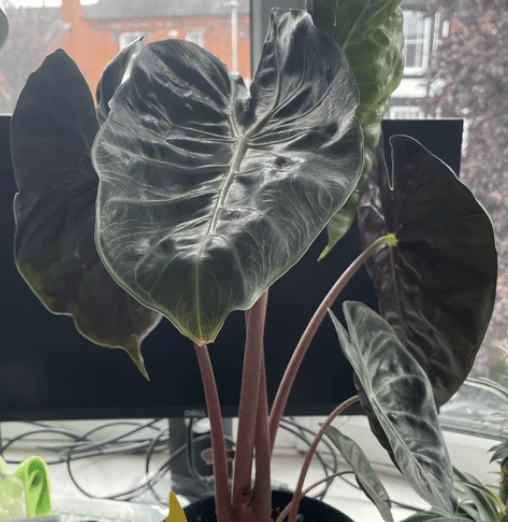
What a normal unfurling timeline looks like
A normal unfurling timeline for Alocasia Pink Dragon is slower than most people expect. From the moment a new leaf spear appears to full expansion, it can take anywhere from 7 to 21 days indoors. When readers search alocasia pink dragon leaf not unfurling or alocasia leaf emerging but not opening, this slow pace is usually the reason. Slow does not mean stuck, it just means the plant is pacing itself.
Why Alocasia leaves emerge tightly rolled
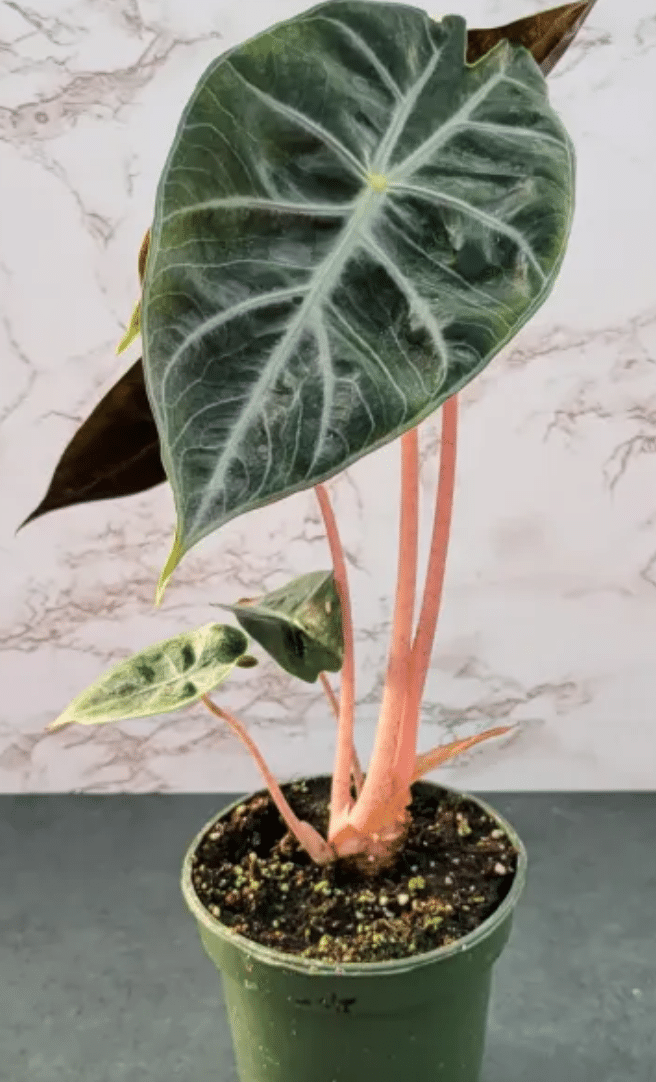
Alocasia leaves come out tightly rolled to protect delicate tissue during early development. That tight roll reduces moisture loss and mechanical damage while the leaf is still soft. When people see an alocasia leaf stuck rolled or pink dragon alocasia new leaf stuck, it’s often just the leaf still strengthening internally. This is a normal stage in alocasia leaf development stages, not an unfurling problem yet.
How long unfurling can take in ideal conditions
In ideal indoor conditions, unfurling usually speeds up once the leaf tip loosens. Bright indirect light, steady warmth, and adequate humidity support leaf expansion without forcing it. When humidity is low, searches like alocasia humidity leaf unfurling and alocasia indoor humidity problems suddenly make a lot of sense. Even then, full leaf expansion can still take several days after the roll opens.
Why patience matters more than force
Trying to manually open a stuck leaf almost always backfires. Forced unfurling causes tearing, browning edges, or aborted leaves, which shows up later as alocasia leaf browning while unfurling or alocasia leaf aborting. Most alocasia leaf unfurling problems come from stress like low humidity, cold drafts, inconsistent watering, or root stress symptoms, not from the leaf being lazy. Patience allows the plant’s growth hormones to do their job without triggering additional alocasia plant stress signs.

Humidity, light, watering, root, and temperature causing the pink dragon to not unfurl
Why unfurling depends on moisture in the air
Leaf unfurling is a physical expansion process, and moisture in the air plays a direct role. Alocasia leaves rely on hydrated cells to stretch and flatten properly. When air moisture is adequate, the leaf tissue stays flexible long enough to open. Without that support, the leaf stalls mid-roll.
How dry indoor air affects leaf tissue
Dry indoor air causes leaf edges and rolled tissue to stiffen too early. Once that happens, the leaf can’t expand evenly and may stay partially closed. We’ve seen leaves harden in place even though the plant otherwise looked healthy. This is one of the most common indoor growth problems.
Why “bright indirect light” is often misunderstood
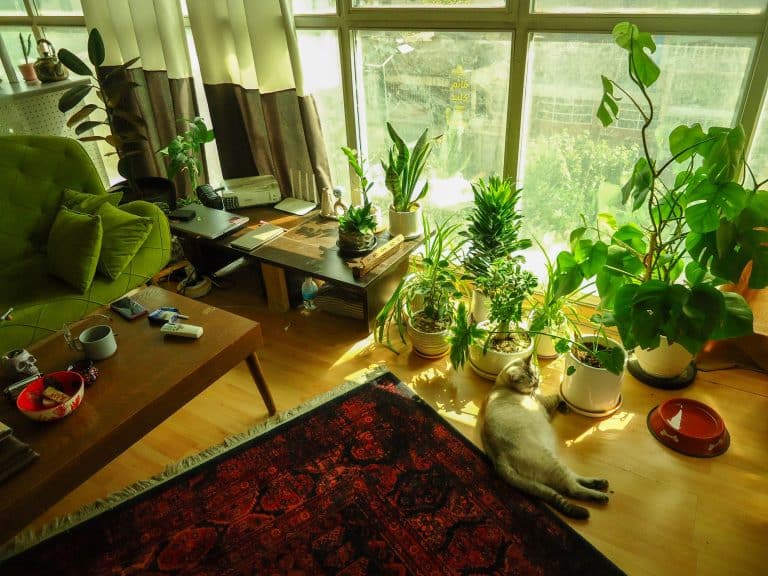
“Bright indirect light” indoors is frequently dimmer than people think. In winter or deeper rooms, light may be bright to our eyes but insufficient for plant energy needs. The plant initiates a new leaf but can’t finish the process. That gap shows up as a leaf that won’t unfurl.
The energy cost of pushing out a new leaf
Producing a new leaf is one of the most energy-intensive things an Alocasia does. The plant has to build tissue, transport water, and maintain pressure all at once. If energy supply drops mid-process, the leaf pauses. This is where unfurling problems usually start.
How underwatering reduces internal pressure
Leaves unfurl using internal water pressure, not time. When the plant is even slightly underwatered, that pressure drops. The leaf may emerge but fail to open fully. This often gets mistaken for a humidity problem when it’s actually hydration-related.
Why overwatering weakens roots even without rot
Overwatering doesn’t need visible rot to cause trouble. Saturated soil reduces oxygen availability, which weakens root function. Weak roots can’t move water efficiently to new leaves. The result is stalled or distorted unfurling.
Why stressed roots can’t support new growth
Root stress forces the plant into conservation mode. Instead of finishing a new leaf, it protects the rhizome and existing tissue. That’s why leaf development often stalls after repotting or prolonged stress. The plant is choosing survival over expansion.
How being rootbound changes leaf behavior
When roots are tightly packed, water and nutrient flow become uneven. The plant may start leaves but fail to sustain them through full expansion. We’ve noticed leaf size shrinks and unfurling slows in rootbound plants. It’s a capacity issue, not a mystery.
Ideal temperature range for leaf unfurling
Leaf unfurling works best in warm, stable temperatures. Alocasia generally prefers the mid-to-upper 60s and into the 70s indoors. Temperatures below that slow metabolic activity. Even brief dips can pause unfurling.
How cold nights slow growth hormones
Cold nights disrupt growth hormone activity inside the plant. Leaf cells stop elongating efficiently, even if daytime conditions seem fine. Drafts near windows or cold floors can cause this without obvious damage. The leaf waits, sometimes for weeks, until conditions stabilize.
Read also: spider mites on alocasia pink dragon fixes and causes


How to Fix an Alocasia Pink Dragon Leaf That’s Not Unfurling
Raising humidity safely and consistently
Humidity helps because unfurling depends on flexible, hydrated leaf tissue. We’ve had the best results by raising overall room humidity rather than misting the leaf itself, which can cause uneven moisture and spotting. A humidifier nearby or grouping plants works better than quick fixes. Consistency matters more than hitting a perfect number.
Improving light without burning leaves
Unfurling needs energy, and that comes from light. We move Pink Dragon closer to bright, indirect light rather than changing direction or giving sudden sun exposure. Gradual adjustments prevent shock while increasing usable energy. If the leaf stays firm and green, the light level is likely appropriate.
Stabilizing watering routines
Water pressure inside the plant is what physically opens the leaf. Irregular watering interrupts that pressure and causes the leaf to stall mid-roll. We aim for a predictable rhythm where the soil dries slightly but never fully collapses. Stability here often solves what looks like a humidity issue.
Supporting roots before chasing foliage
Roots decide how much leaf growth the plant can support. If roots are stressed, compacted, or recently disturbed, unfurling often pauses. We avoid repotting or fertilizing during this phase and focus on oxygen-rich soil and steady moisture. Once roots recover, leaves usually follow.
Setting realistic expectations for recovery
Not every stuck leaf will fully recover, and that’s okay. Sometimes a leaf opens slowly, sometimes it stays small, and sometimes the plant aborts it and tries again later. We’ve learned that forcing outcomes leads to more damage than patience. Recovery is often gradual, not dramatic.
Conclusion:
When an Alocasia Pink Dragon leaf is not unfurling, it’s rarely about the leaf itself. It’s about energy, pressure, and conditions lining up—or not.
The goal isn’t to force growth. It’s to remove the bottleneck holding it back. Once light, humidity, temperature, and roots are working together, the leaf usually finishes what it started—on its own.
Slow plants teach patience. Alocasias demand it.