Spider Mites on Alocasia: How to Identify, Treat, and Prevent Infestations
Spider mites on Alocasia can spread fast and destroy leaves. Learn how to identify spider mites early, treat them effectively, and prevent reinfestation.

We are an Ad-free community driven site. When you purchase through links here, we may earn an affiliate commission, which helps sustain our blog!
If you’re dealing with spider mites on Alocasia pink dragon, you know these pests move fast, multiply faster, and Alocasias happen to be one of their favorite targets.
The good news? Spider mites are treatable if you act early and use the right approach. The bad news? Many common “fixes” actually make infestations worse. In this guide, we’ll break down how to spot spider mites on Alocasia, what truly works, and how to keep them from coming back.
Summary
Why Alocasia Pink Dragon Leaves Sometimes Stall
A leaf that won’t unfurl is usually a sign that the plant paused mid-growth due to limited energy. Low light, cool temperatures, or inconsistent watering commonly slow the unfurling process. The plant protects itself by waiting until conditions feel safe again.
Common Causes of a Leaf That Won’t Open
Insufficient humidity, compacted soil, or roots staying too wet are the most frequent culprits. These conditions reduce water and nutrient movement to the developing leaf. Stress during leaf formation almost always shows up at the unfurling stage.
How to Fix a Stuck Leaf Safely
Improving light, raising humidity slightly, and stabilizing watering usually gets the leaf moving again. The goal is to support the plant, not force the leaf open. Healthy leaves unfurl on their own once internal pressure and hydration normalize.
When a Stuck Leaf Is Normal vs a Warning Sign
If the leaf stays firm and green, it’s usually just slow growth. If it turns yellow, soft, or collapses before opening, the issue is deeper—often root-related. Texture and color matter more than timing.
What to Do If the Leaf Never Unfurls
Sometimes the plant abandons a leaf it can’t support and redirects energy elsewhere. This doesn’t mean failure if the next leaf emerges normally. Focus on improving conditions so future leaves develop without stalling.
Read also: Why don’t the leaves of my alocasia pink dragon unfurl
What Are Spider Mites and Why Alocasias Are Vulnerable
What spider mites actually are (not insects)
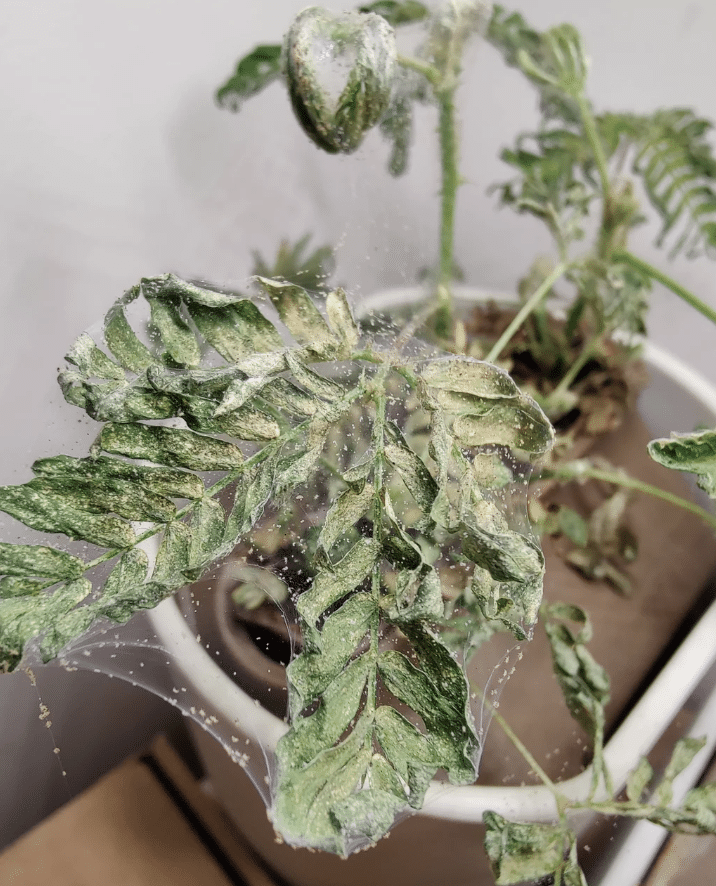
Spider mites aren’t insects at all, they’re tiny arachnids, closer to spiders and ticks. That’s why normal insect logic doesn’t always work on them, and why alocasia spider mite treatment can feel frustrating at first. They feed by piercing leaf cells and sucking out contents, which causes that classic stippled damage. Because of their size, spider mites on alocasia often go unnoticed until damage is already visible.
Why Alocasia leaf texture attracts mites
Alocasia leaves are thin, tender, and packed with moisture-rich cells. That soft leaf texture makes it easier for spider mites to pierce and feed, especially on new growth. The large surface area also gives mites plenty of room to spread unnoticed. This is why alocasia leaf damage pests often show up faster than on tougher-leaved houseplants.
How indoor conditions favor infestations
Spider mites thrive in warm, dry, still air, which describes most indoor environments, especially in winter. Low humidity weakens Alocasia defenses and makes leaves easier to exploit, linking directly to alocasia low humidity pests and alocasia winter pests. Indoors, there’s also no rain, wind, or predators to slow mites down. Once conditions are right, populations explode quietly.
Why infestations spread so quickly indoors
Spider mites reproduce fast and move easily between plants. They can crawl, hitch rides on hands, tools, or even air currents. In apartments, plants are close together, which accelerates spread. That’s why spider mites spreading indoors becomes a whole-house problem if caught late.


Early Signs of Spider Mites on Alocasia
Fine stippling or speckled leaf surfaces
The earliest sign is tiny pale dots scattered across the leaf, known as stippling. This happens as mites empty individual cells, creating alocasia yellow speckled leaves. From a distance the leaf looks faded, not sick. Up close, the damage becomes obvious.
Silvery or dusty-looking leaves
As feeding continues, leaves can take on a silvery or dull, dusty appearance. This often gets mistaken for residue or light damage at first. When people search alocasia spider mites symptoms, this is usually what they’re describing. The leaf surface loses its healthy sheen before it turns yellow.
Webbing along veins and petioles
Fine webbing is a later-stage sign and usually means the infestation is established. Webs often appear along veins, under leaves, or where the petiole meets the stem, showing alocasia webbing leaves. At this stage, mites are actively breeding. Immediate alocasia pest control becomes critical.
Leaves losing color before yellowing
Spider mite damage causes leaves to lose vibrancy before they turn yellow or drop. This gradual dulling is different from nutrient issues or watering problems. Eventually, weakened leaves may curl, yellow, or fall, linking to alocasia leaf drop spider mites. Catching this early greatly improves alocasia plant recovery.


How to Treat Spider Mites on Alocasia (Step-by-Step)
Maintaining adequate humidity
Low humidity makes alocasia more vulnerable to mites. Keeping indoor humidity moderate strengthens leaf tissue and reduces pest success. This is key for spider mites prevention houseplants. Humidity doesn’t kill mites, but it slows them.
Regular leaf cleaning habits
Clean leaves discourage pests from settling. We wipe leaves regularly to remove dust and early infestations. This also improves photosynthesis and plant health. Prevention starts with observation.
Monitoring during winter months
Winter is peak season for spider mites on indoor plants. Heating dries the air and weakens defenses. We check alocasia more often during this time. Early detection prevents major infestations.
Strengthening overall plant health
Healthy plants tolerate pests better and recover faster. Proper light, steady watering, and root health reduce alocasia pest problems overall. Spider mites target stressed plants first. Strong care is the best long-term control.
Read also: Alocasia pink dragon one leaf in one leaf out syndrome.
Conclusion:
Spider mites on Alocasia are aggressive—but they’re not unbeatable. Early detection, consistent treatment, and stable growing conditions make all the difference. Once you understand why spider mites appear and how they behave, prevention becomes easier than cure.
Healthy Alocasias resist pests better. Care for the environment, not just the infestation—and your plant will thank you.