5 Beautiful pet-safe Pink Indoor Plants (& Where to Buy!)
Explore our curated list of best pet safe pink indoor plants (ASPCA listed), grown in our Brooklyn community home. Discover the care and maintenance tips, along with how to decorate them in your home!

We are an AD-FREE community driven site. When you purchase through out links, we earn an affiliate commission, which helps sustain our blog!
Pink indoor plants feel like joy. But if you share your home with cats or dogs, that joy often comes with a knot in your stomach—is this plant safe, or am I risking my pet’s health for aesthetics?
In this guide, we’re sharing five of our favorite pink houseplants that are genuinely non-toxic to cats and dogs—plants you can enjoy fully, without hovering, hiding, or worrying. Because a home that’s beautiful should also feel safe.
We have also cross referenced with refer ASPCA to come up with the list. We also have our handy cat toxicity chart
Try our Best Indoor Plants tool for a personalized plant recommendation.
Read also: Pet safe low light indoor trees, Pet Safe purple houseplants, and Pet safe trailing houseplants
Summary:
What are the best Pink indoor plants?
Best pet safe pink indoor plants are: Pink Calathea, Pink Orchids, African Violets, Pink Bromeliad, and Pink Christmas Cactus.
Here are our 5 pet safe Pink Indoor plants
1. Pink calathea (rosy)
Pet safe
low light
Grows upto 3 feet
East/north windows
Pet safe
low light
grows to 3 feet
East/north facing windows
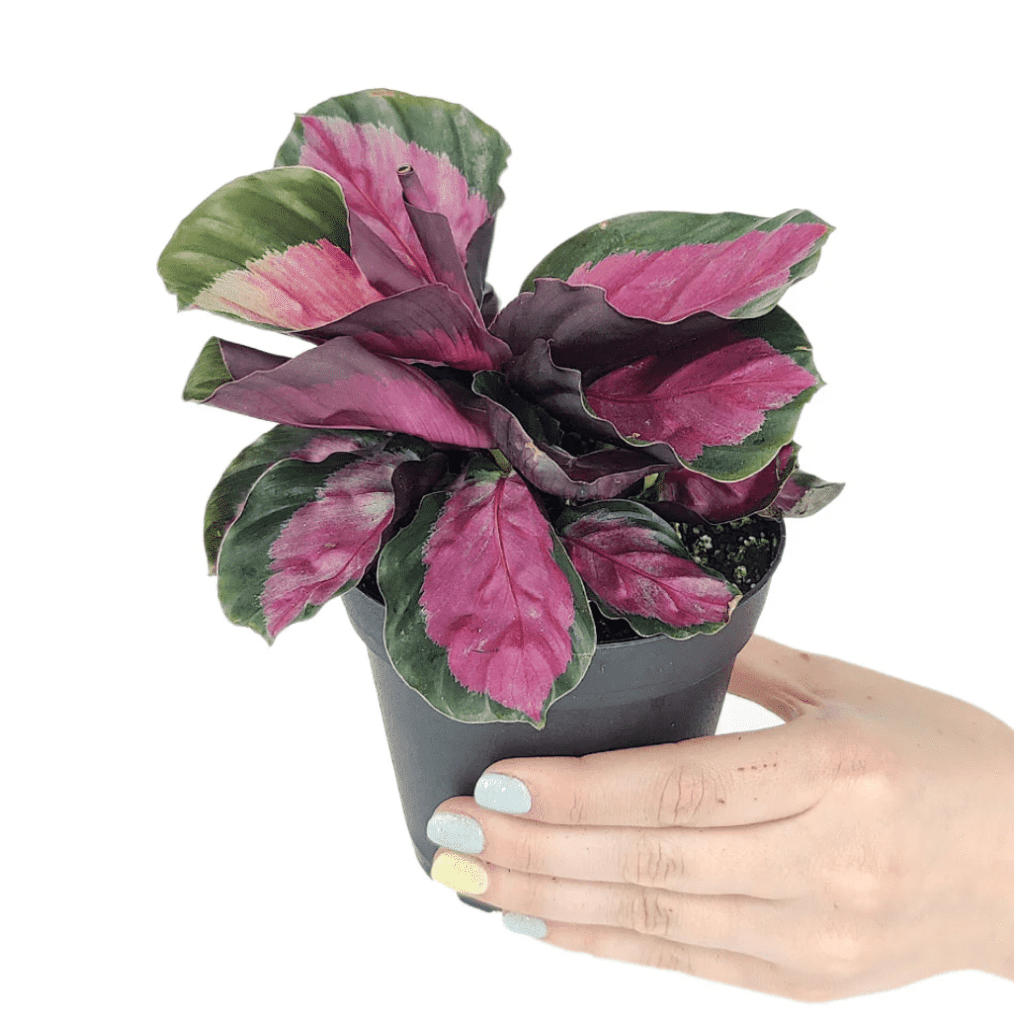
The pink calathea (rosy) Plant is from the Marantaceae family. This low light houseplant is a true eye-catcher. Each leaf looks like a piece of art, a blend of green, pink, and purple patterns that resemble a peacock’s feathers. We have placed our Calathea Plant in a beautiful ceramic planter that highlights its vibrant leaves. It grows up to 2 feet tall, and though it’s safe for pets, it does require high humidity and consistent watering to keep its foliage looking its best!
Read also: 15 Indoor plants not toxic to cats!
Care tip:
- Water it when the top inch of soil feels dry, usually once a week, and maintain high humidity by misting regularly or using a humidifier.
- Watch for curling or browning leaf edges, which indicate it needs more humidity.
- Keep it in a warm spot away from drafts and AC and heaters please!
Propagation tip:
- Divide the root clump during repotting, ensuring each division has several leaves and roots.
- Plant the divisions in well-draining soil and keep them in indirect light with high humidity.
- New growth should appear within a few weeks. Water propagation is not recommended for this plant!
Symbolism and zodiac signs:
- Symbolizes renewal and creativity, making it a perfect match for Pisces, who are known for their artistic and nurturing nature.
Pros and cons


$58
“The Calathea is stunning with its vibrant patterns. It does require a bit more humidity but it’s worth it.”
2. Christmas cactus
Pet safe
Medium light
Grows upto 2 feet
East/west windows
Pet safe
low light
grows to 3 feet
East/north facing windows
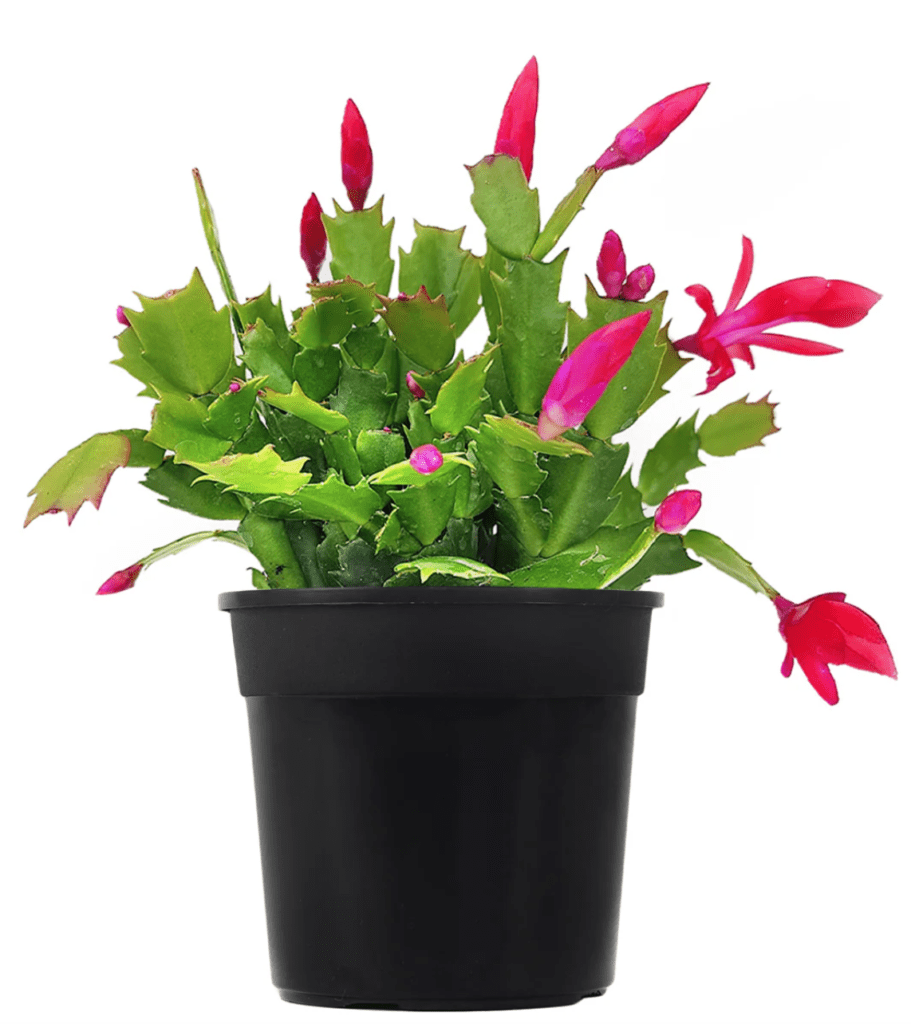
Meet the Christmas Cactus (aka Schlumbergera), a member of the Cactaceae family that is cherished not just for its resilience but also for its spectacular winter blooms. This is also a flowering houseplant has flat, segmented leaves that burst into vibrant pink or red flowers during the cooler months.
We’ve placed our Christmas Cactus in a ceramic hanging planter in the west-facing living room, where it receives bright, indirect light. As it matures, the Christmas Cactus can extend over the edges of its pot, which makes its cascading form particularly attractive in hanging displays. Its blooms last for months as well!
Read also: White Christmas cactus care and styling
Care tip:
- Water typically every 2 to 3 weeks, depending on the humidity in your home.
- To encourage blooming, place it in a cooler spot (about 50-65°F) during the fall.
- Watch for drooping leaves, which usually indicate under-watering.
- This plant prefers a slight drop in temperature at night and during its blooming period in the winter, so adjusting your room temperature accordingly can enhance its vibrant displays.
Propagation tip:
- Snip a segment of 2-3 joined segments from a healthy stem, and allow the cut to dry for a few hours to form a callus.
- Place the segment about an inch deep in a moistened mix of half potting soil and half sand.
- Keep it in indirect light and maintain slight soil moisture. Roots typically develop in 4-6 weeks
Symbolism and zodiac signs:
- Symbolizes purity and rebirth, making it particularly fitting for Scorpios, who are known for their resilience and capacity for transformation.
Pros and cons


$38
“it adds a festive touch to my space every year without fail! like signalling winter..”
3. Pink Bromeliad
Pet safe
low/Medium light
Grows upto 3 feet
East/West windows
Pet safe
low light
grows to 3 feet
East/West facing windows
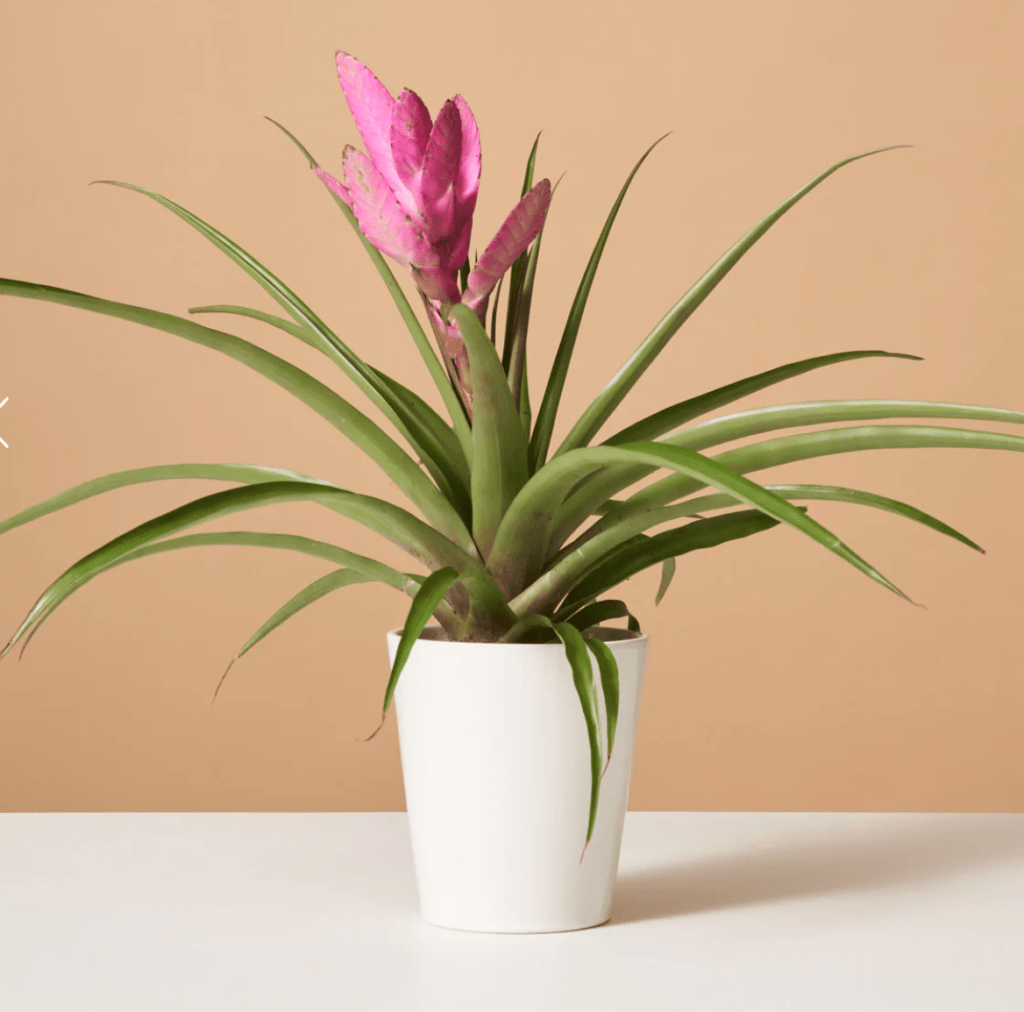
The Bromeliad (aka Bromeliaceae) is a striking pink flowering houseplant that belongs to the Bromeliaceae family. This can be a perfect addition to your bedroom, or to your office desk for its with soothing pink colors, and its compact growth. This plant boasts rosettes of stiff, spiny-edged leaves that form a central cup that is often filled with water.
One of its most captivating features is its flower that emerges from the center and can last several months!! We have placed it in our east-facing reading room where it receives indirect light and have styled in a ceramic planter. When mature, Bromeliads can reach up to 3 feet tall and wide!
Read also: Ultimate Bromeliad care guide
Care tip:
- Water your Bromeliad every 1-2 weeks. Central cup should be filled but not stagnant. –
- Place it in indirect light – an east-facing room. Watch for signs of dryness, like browning leaf tips, and ensure good air circulation to prevent rot.
- Bromeliads thrive on high humidity, so mist occasionally
Propagation tip:
- Wait until the “pups” (offsets) are at least one-third the size of the parent plant, then carefully cut them off with a sterilized knife.
- Place the pups in a well-draining mix of half orchid bark and half potting soil.
- It typically takes 2-3 months for the pups to establish roots. Propagation in water is not recommended for this one!
Symbolism and zodiac signs:
- Symbolizes resilience and uniqueness, making it a great match for the determined and resourceful Scorpio
Pros and cons


$58
“These vibrant colors in the flowers are like having bouquets all year long!”
4. Orchids
Pet safe
bright light
Grows upto 3 feet
East/west/south windows
Pet safe
Bright light
grows to 3 feet
East/west/south facing windows
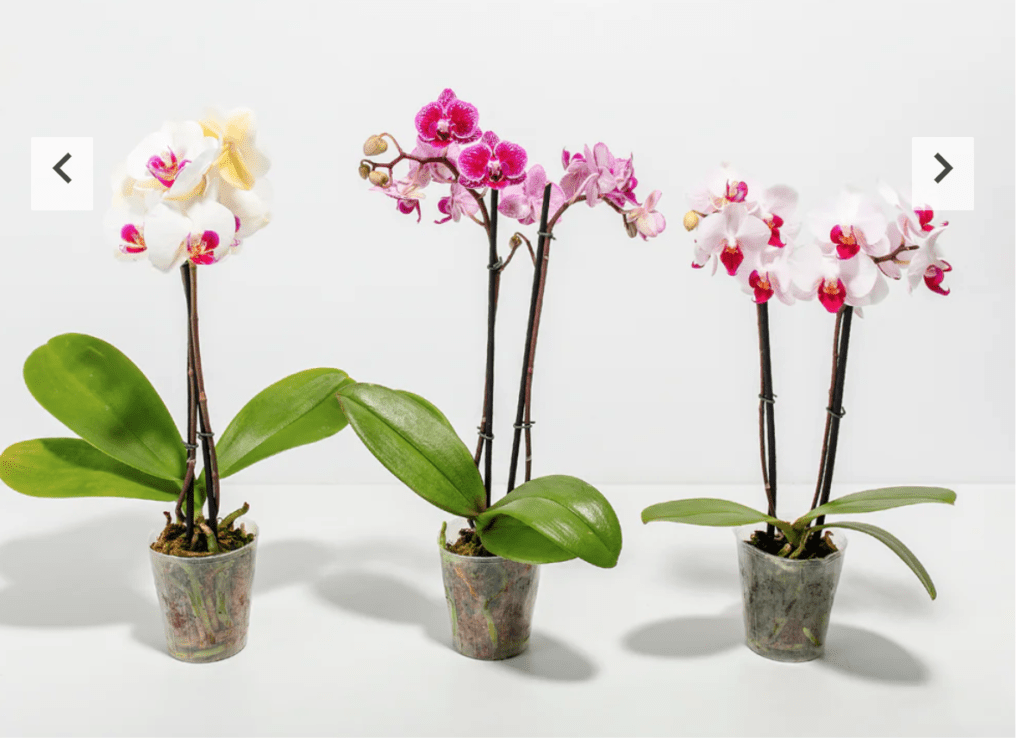
The Orchid (aka Orchidaceae): This pink flowered indoor plant is a perfect addition to your bedroom, or your living room, or even your office desk. Its a member of one of the largest flowering plant families, and has blooms that range from vibrant pinks to mysterious deep purples emitting a curious but delicate fragrance that vary across species.
We’ve placed our orchids in one of our east-facing room where they receive the bright, indirect sunlight. Here, they’re styled in sleek glass pots that not only complement the delicate beauty of the orchids but also allow us to monitor the moisture levels of the roots easily.
Read also: Ultimate orchids care guide
Care tip:
- Water them once a week. Keep an eye for limp leaves, a sign of too much water or insufficient light.
- Orchids enjoy humidity, so a bathroom with a window can be ideal spots.
Propagation tip:
- Remove a keiki (baby plant) with roots, ensuring roots are at least 2 inches long.
- Plant it in a well-draining orchid mix (ideally), and keep it in bright, indirect light. Roots should establish in a few weeks
Symbolism and zodiac signs:
- The Orchid symbolizes beauty, love, and strength — apt for Virgos who appreciate detail and elegance in their surroundings.
Pros and cons


$66
“I love the elegant blooms of this orchid. It’s very easy to care for and adds a touch of elegance to my home”
5. African Violet

Pet safe
Medium light
Grows upto 2 feet
West/east facing windows
Pet safe
Medium light
grows to 2 feet
West/East facing windows
African Violet plant has fuzzy green leaves form a soft mound, and the flowers—shades of purple, violet, or even bi-color pink and purple —bloom in cycles throughout the year with bright indirect light. Each bloom lasts about two to three weeks, and new buds appear regularly with proper light and care!
They stay under 6 inches tall and wide, making them perfect for desks, shelves, or tiny pots with personality. No smell, no risk—just color and cheer!
Care tip:
- Water them when the topsoil feels dry, but be careful to avoid getting water on the leaves as this can cause spots.
- Place them in a spot with bright, indirect light – an east-facing window is ideal.
- Watch for wilting or drooping, which usually means it’s time to water.
- Ensure they’re in a warm spot as they prefer temperatures between 65-75°F. Keep an eye out for crown rot which can occur if the plant sits in waterlogged soil.
Propagation tip:
- Select a healthy leaf with about 1.5 inches of stem, and place it in a small container of water, ensuring the stem is submerged but the leaf stays dry.
- Change the water weekly and roots should form in about 4 to 6 weeks.
- Once roots are an inch long, plant in small pot.
Symbolism and zodiac signs:
- Symbolizes loyalty and devotion, making it a fitting plant for Taurus, a zodiac sign known for its steadfastness and nurturing nature.
Pros and cons


$43
“The blooms keep coming in waves and stays for months!”
Common Mistakes to avoid with pet safe pink indoor plants

Assuming “pet safe” means zero supervision
Even non-toxic plants can still cause stomach upset if chewed heavily. We’ve seen pets test leaves out of boredom or curiosity, especially during seasonal changes. Pet safe means lower risk, not no responsibility!
Placing plants where pets naturally pass through
We made the mistake of putting a pet-safe plant right at floor level in a high-traffic area. It became a toy, not decor. Elevating plants or placing them slightly off-path reduced attention without needing barriers.
Ignoring light needs and losing pink color
Many pet-safe pink plants lose their color quickly in poor light, which leads people to overwater or overfertilize trying to “fix” it. That usually backfires. Proper light keeps plants healthier and reduces reactive care mistakes.
Overwatering gentle-rooted plants
Calathea, African violets, and orchids all hate soggy soil, even though they’re often grouped together as “easy.” We learned that pet-safe doesn’t mean stress-tolerant. Good drainage and patience matter more than frequent watering.
Buying plants without checking the exact variety
This one bit us early on. Some genera are pet safe, but specific hybrids or mislabeled plants are not always what they seem. We now double-check the exact plant name before bringing anything pink home.
How we chose these 5 pet safe pink indoor plants
- Starting with verified pet safety, not assumptions
We learned early that “pink” and “pretty” doesn’t mean safe, so our first filter was always verified non-toxicity for cats and dogs. We cross-checked Calathea, African violet, bromeliad, orchids, and Christmas cactus against veterinary-backed plant safety lists. If a plant lived in a gray area or had conflicting info, we skipped it completely. - Observing real pet behavior, not ideal scenarios
We didn’t choose plants assuming our pets would ignore them, because that’s never how it works in real homes. We watched how curious noses, paws, and the occasional nibble actually interacted with leaves and soil. Plants that could handle light contact without shedding irritating sap or brittle debris stayed on our list. - Balancing pink color with indoor reliability
Some pink plants look amazing in theory but fall apart indoors, which creates stress for both the plant and the household. We leaned toward pink that shows up in foliage patterns or blooms—like Calathea markings or African violet flowers—rather than fragile blush tones that fade fast. A calm, stable plant makes for a calmer home. - Choosing growth habits that fit shared spaces
We favored plants that stay compact or predictable, instead of sprawling wildly into pet traffic zones. Orchids and bromeliads worked well because they grow upright and contained. Christmas cactus earned its spot because it trails gently without brittle stems that snap if brushed. - Testing plants one at a time, not all at once
We never added multiple new plants at once when pets were involved. Introducing one plant at a time helped us see how pets reacted and how the plant adjusted to the space. That slow approach saved us from panic removals and unnecessary stress.
Pink Indoor plants that are toxic to pets (Avoid!)
- Tradescantia bubblegum and Tradescantia Zebrina – Toxic to cats and dogs if ingested.
- Pink Rubber Plant (Ficus elastica) – Causes irritation and digestive issues.
- Pink Anthurium.
- Pink Princess Philodendron
- Pink Caladium
Conclusion
A pet-friendly home doesn’t have to feel restricted or boring. With the right pink indoor plants, you get softness, warmth, and color—without hiding pots, hovering during playtime, or worrying about emergencies. The goal isn’t perfection; it’s a home that feels both beautiful and safe for everyone living in it. Hope this guide has inspired you to safely buy some pink plants while living with your pets!