Tradescantia Zebrina Care Guide
Discover watering, soil, fertilizing, pests, styling, and troubleshooting tips for Tradescantia from our experience growing and caring for it in our Brooklyn home!

We are an AD-FREE, community driven site. When you purchase through links, we may earn a commission, which helps sustain our blog!
Tradescantia Zebrina Care Guide
care at a glance
How to care for Tradescantia?
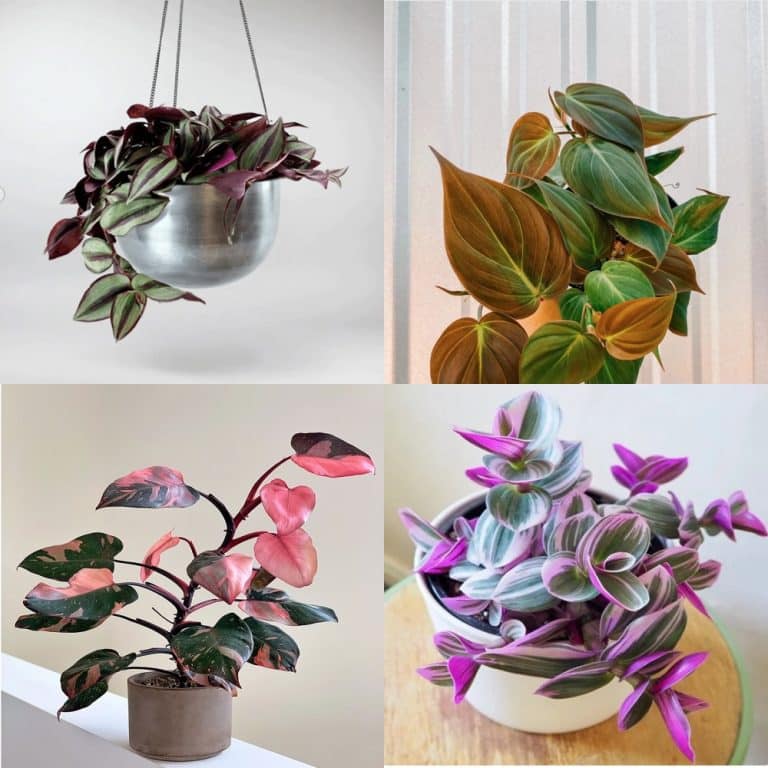
Tradescantia Zebrina from Tradescantia Family has trailing stems with vibrant green, purple, or striped leaves that spill gracefully over pots and hanging baskets.
- Light: Give it bright filtered or indirect light. Some gentle direct sun can deepen the color, but intense sun can bleach or scorch the foliage.
- Water: Water when the upper portion of the potting mix has dried rather than following a fixed weekly schedule.
- Soil: Use a loose, well-draining peat-free houseplant mix that holds some moisture without remaining saturated.
- Temperature: Normal warm indoor temperatures suit it well; protect it from frost and very cold drafts.
- Humidity: Average household humidity is usually sufficient.
- Fertilizer: Feed lightly about once a month while the plant is actively growing.
- Pruning: Pinch or cut long stems to maintain compact growth, and replant healthy cuttings into the pot when the crown becomes sparse.
- Propagation: Stem cuttings root readily from the nodes in water or directly in potting mix.
- Common problems: Leggy stems, a bare crown, faded color, yellow leaves from wet roots, and brown crispy foliage.
Our favorite soil and fertilizer for Tradescantia

2. Care mistakes we have learnt to avoid with Tradescantia plant
- Watering it like a succulent because “it grows fast”: Tradescantia drinks more than people think, and letting it dry out fully leads to crisping at the tips and leggy stems. It hates being bone dry, especially in our warm apartment. We keep the soil lightly moist and use a chunky mix so it never sits in water.
- Putting it too far from a window and expecting full, bushy growth: Dim corners make Tradescantia stretch fast, dropping lower leaves and losing its compact shape. Indoors, this plant demands bright, direct-adjacent light to stay full. We keep ours right beside an east window or within 2 feet of a south window with sheer curtains.
3. A real issue we have had with tradescantia in our home
Our Tradescantia kept going bald at the soil line even though the top growth looked full and colorful. We thought it needed more water, but the real cause was how quickly the lower nodes dried out in our warm Brooklyn apartment. Those bare spots were the plant telling us it wasn’t getting enough consistent moisture or light at the base. Moving it closer to the window and watering more evenly stopped the thinning, and new shoots filled in within a few weeks.
lineage and common questions

Tradescantia zebrina is the silver-and-purple trailing Tradescantia we grow most often in our Brooklyn home. Its fast-growing stems, closely spaced nodes and ability to root almost anywhere make it easy to propagate—but also easy to let become long and bare if the light is too weak.
The care in this guide is focused primarily on Tradescantia zebrina, sometimes called inch plant or silver inch plant. Other Tradescantia species and cultivars can have somewhat different needs.
Which Tradescantia Does This Guide Cover?
Tradescantia is a genus in the Commelinaceae family, not a single plant species.
This guide focuses on Tradescantia zebrina, the trailing species with green, silver and purple-striped foliage that is commonly grown indoors.
If you grow the pink-striped plant sold as Bubblegum, see our Tradescantia Bubblegum Care Guide instead. We keep that page separate because its coloration, growth habit and common problems deserve cultivar-specific advice.
Is Tradescantia the Same as Tradescantia Zebrina?
No.
Tradescantia is the genus. Tradescantia zebrina is one species within that genus.
Other plants in the genus include Tradescantia pallida, Tradescantia fluminensis, Tradescantia spathacea and many cultivated forms. Their basic care can overlap, but they are not interchangeable.
What Makes Tradescantia Zebrina Different?
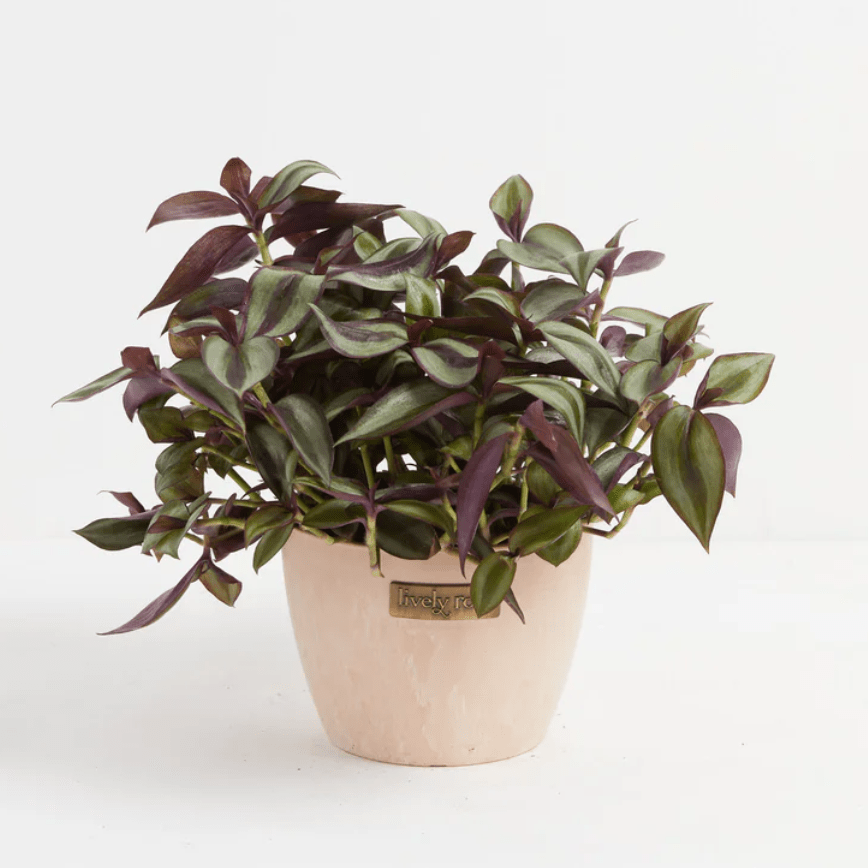
Tradescantia zebrina has trailing, succulent stems that root readily at their nodes. Its foliage typically combines green or bronze tones with two silvery longitudinal stripes and purple coloring underneath.
Those nodes are central to how we care for it. When a pot becomes bare near the soil line, we do not just keep trimming the ends—we cut healthy stems, root or replant them, and use the new cuttings to rebuild the top of the pot.
Low light can also make the stems stretch and cause the lower leaves to disappear, so we judge the plant by the spacing between new leaves as much as by leaf color.
Growing a pink Tradescantia instead? Our Tradescantia Bubblegum care guide covers pink coloration, legginess and the problems we see specifically on the plant sold under the Bubblegum name.
(~$11)
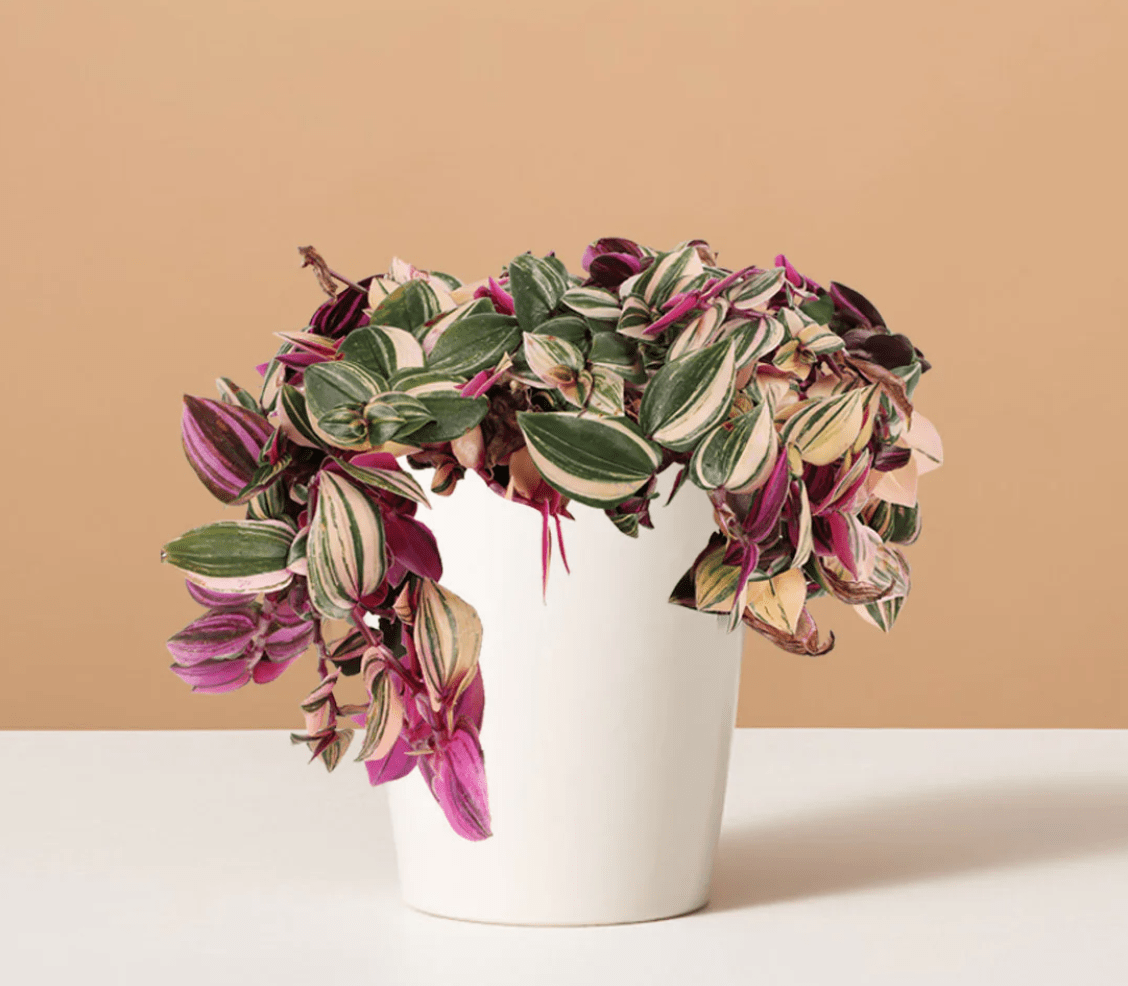
($19)
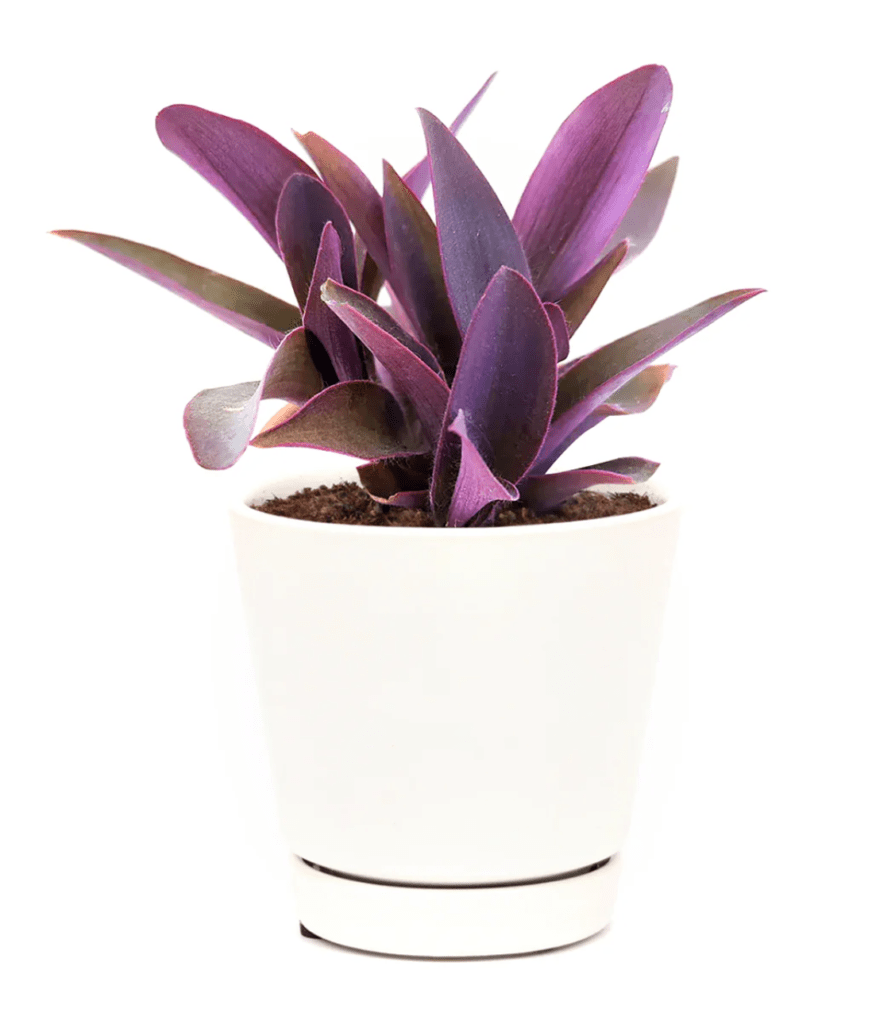
($19)
$43
“It thrives in various lighting conditions and the fast growth rate is incredibly satisfying”
What we wish we knew before buying
Its beauty is high-maintenance in a very specific way: The plant grows quickly, but it also gets leggy just as fast if the light isn’t strong and direct-adjacent. Those lush, full baskets you see online are usually grown in greenhouses with perfect light, not in dim apartments. We wish someone had told us that keeping Tradescantia compact indoors means giving it prime window space—not a decorative corner—otherwise you’re trimming and restarting it constantly.
Tradescantia plant care infographic
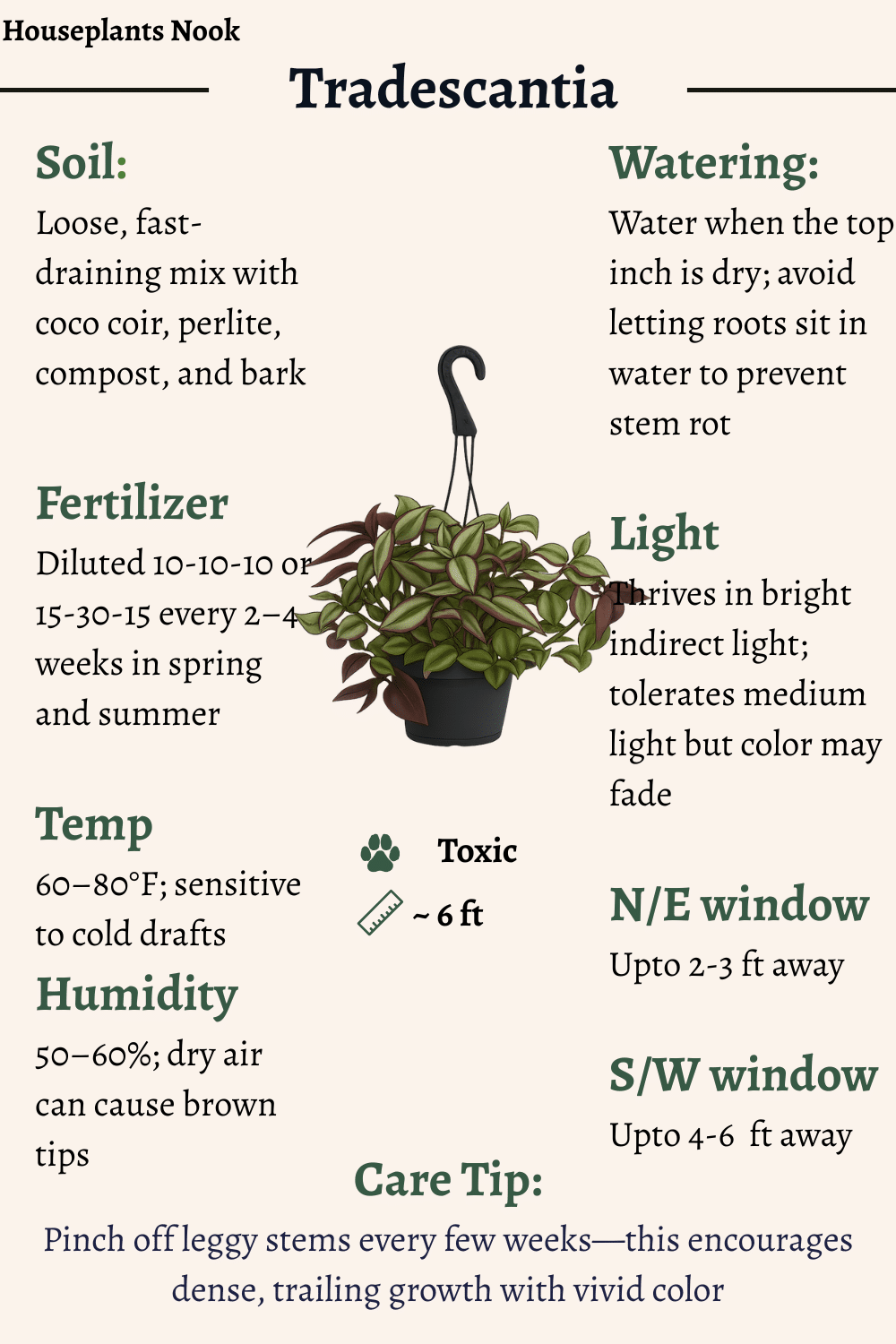
📋 Use this infographic on your site — copy the code below:
Plant that pairs well with similar care needs
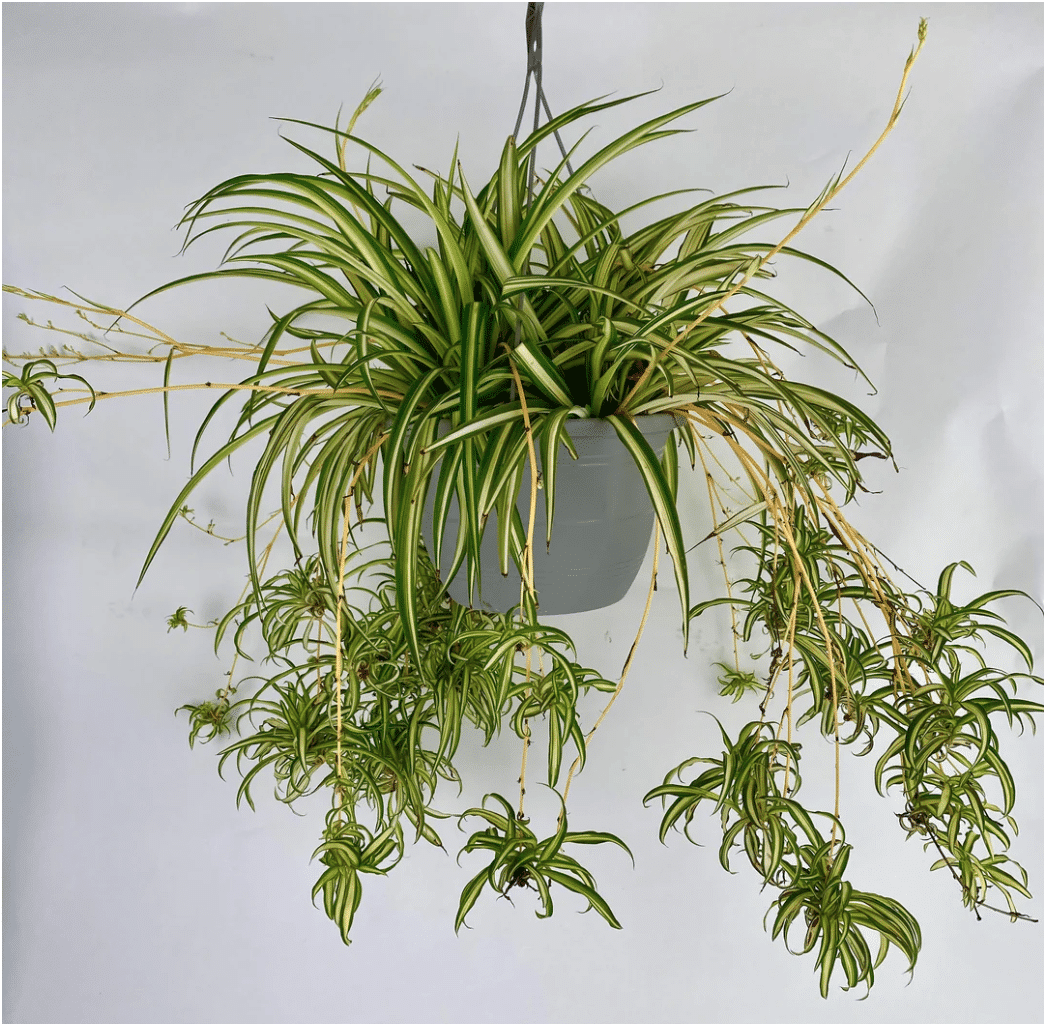
Light and placement and seasons
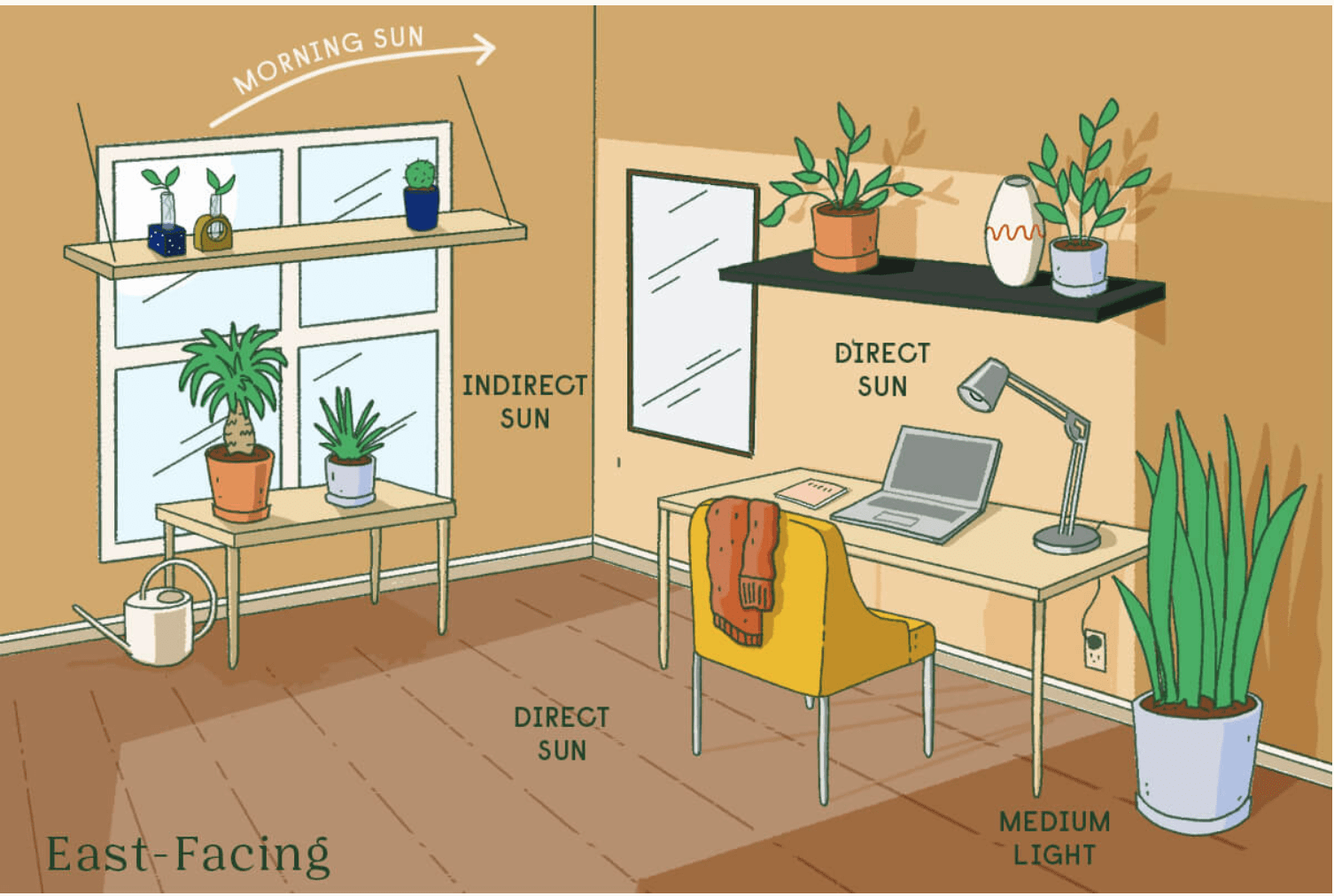
What is the light requirement for Tradescantia?
Our Tradescantia zebrina grows best in bright filtered light close to a window.
Lower light does not necessarily kill the plant, but the effect shows quickly in the growth: stems become longer between leaves, the crown becomes sparse and the silver-purple coloring can become less pronounced.
A little gentle direct sun can intensify the foliage color. Strong afternoon sun, especially when a plant has not been acclimated to it, can bleach or scorch the leaves.
We watch the new growth rather than relying only on window direction. Closely spaced, strongly colored new leaves tell us much more than simply calling a room “bright” or “low light.”
How to know if Tradescantia is not getting right amount of light?
If your Tradescantia Zebrina looks washed-out or leggy, it’s likely not getting enough light. Leaves may turn pale green or lose their variegation entirely. You’ll also notice the stems stretching toward the window, with more space between leaves. If tips are scorched or curling, it may be reacting to too much direct sunlight.
Where to place Tradescantia and where to avoid?
Tradescantia Zebrina should be placed near an east or bright north-facing window. It can also do well near a south or west window if filtered through sheer curtains. Avoid placing it in deep shade or under artificial lighting only — it can survive but won’t thrive.
We keep ours hanging just a few feet from a window — where the vines trail naturally and catch soft light all day.
Read also: How much light do most purple houseplants need
How tradescantia behaves through the seasons?
Spring: Growth explodes once light returns, and stems thicken with new nodes. We water more often because the soil dries quickly, and we start monthly fertilizing. We keep it right beside an east window for strong morning light. Legginess begins if we don’t rotate it weekly.
Summer: This is its peak—fast, colorful, and sometimes unruly. We water deeply but let the top inch dry to avoid stem rot, and we fertilize lightly every few weeks. Bright light from a south or west window keeps it compact, but direct sun can scorch tender tips. Heat makes it dry out fast, so we check moisture every couple of days.
Fall: Growth slows and stems start stretching toward shrinking daylight. We ease off watering because cooler nights hold moisture longer. We move it closer to the window to compensate for dimmer light. Occasional yellow leaves show up as the plant shifts gears, and we prune to keep it full.
Winter: Growth nearly stops, and the plant becomes sensitive to soggy soil. We water lightly and less frequently, sometimes every 10–14 days depending on radiator heat. Our brightest windows help prevent severe stretching, so we leave it right at the sill. Crispy tips show up from dry air, but we trim them instead of misting, which only worsens fungus on Tradescantia indoors.
Soil
What soil composition to use for Tradescantia?

A light, well-draining mix is essential for Tradescantia. The best blend includes:
- Coconut coir or fine bark for moisture retention without compacting
- Perlite or coarse sand for aeration
- Worm castings for nutrients
- Avoid peat — it compacts too much over time
We’ve had luck mixing 1 part coco coir, 1 part perlite, and 1 part organic compost..
Best soil to use for Tradescantia?
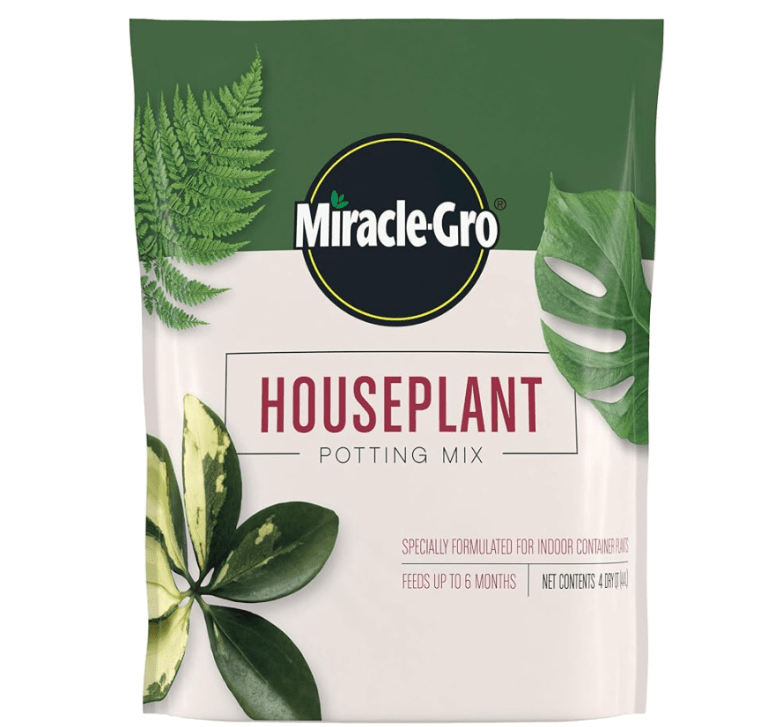
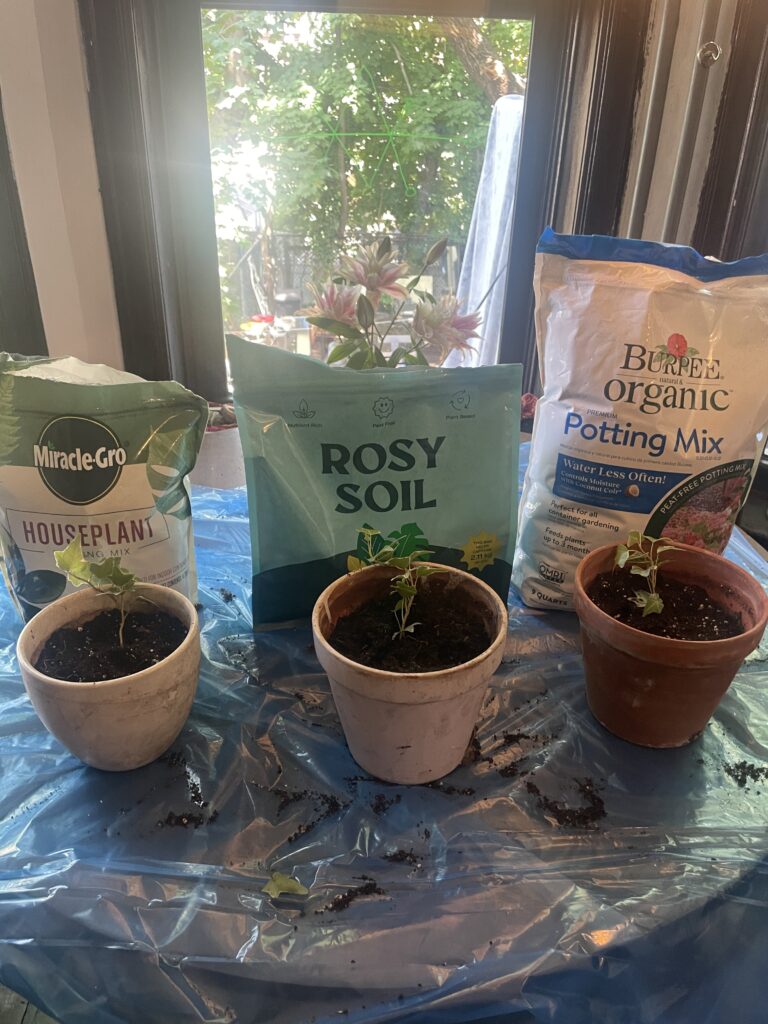
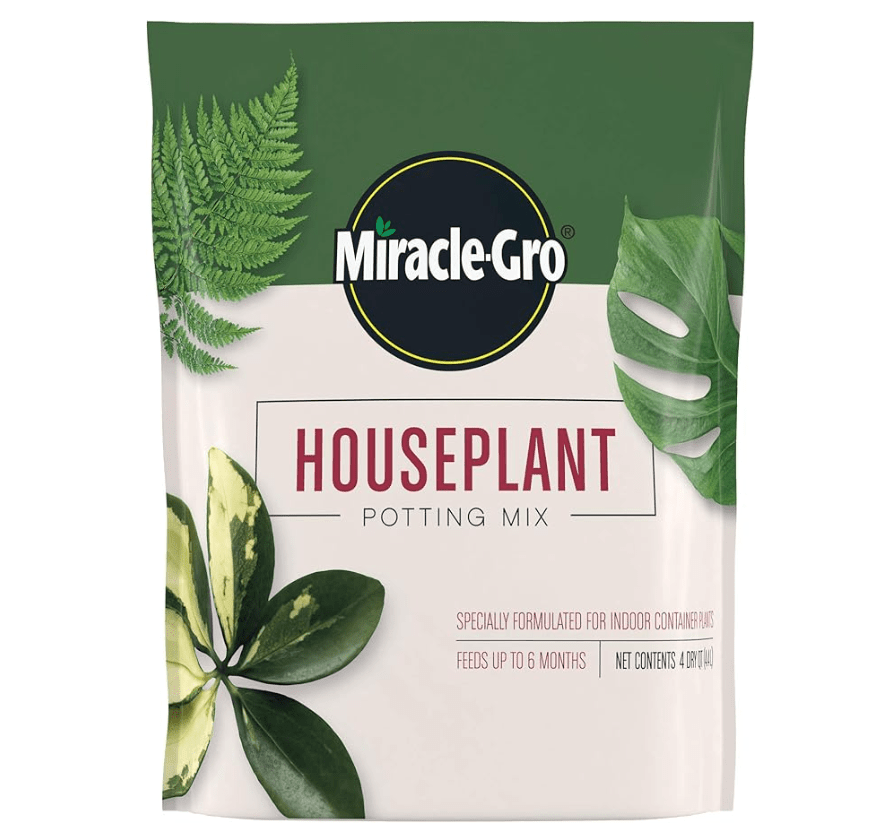
We’ve potted our Tradescantia Zebrina using Miracle-Gro Houseplant Potting Mix, and it’s become our go-to soil with most houseplants. Here are some helpful tweaks for this particular plant:
– Right after repotting, we noticed our inch plants perked up quickly—stems looked fuller and colors popped more vibrantly. It draws moisture nicely yet dries fast enough to keep things fresh.
That said, the mix held water a bit longer than we’d like, so we started adding perlite to boost drainage: that combo gives our Tradescantia consistent moisture without soggy roots.
Temperature and Humidity
What is the best temperature and humidity condition for Tradescantia?
Tradescantia zebrina is comfortable in normal warm indoor conditions and generally handles average household humidity well.
We do not routinely mist ours or use a pebble tray. If brown tips appear, we first check watering, heat exposure, fertilizer buildup and the root zone rather than assuming humidity is the cause.
Keep the plant away from freezing drafts and prolonged cold.


fertilizer
What is the best fertilizer composition to use for Tradescantia?

How and when to fertilize Tradescantia?
Tradescantia does not need heavy feeding.
We use a complete balanced houseplant fertilizer at reduced strength about once a month during active spring and summer growth.
The exact NPK number matters less than using a complete fertilizer consistently and not overapplying it. A balanced formula such as 10-10-10 or 20-20-20 can work when diluted according to the product directions.
We do not combine several fertilizers at the same time to try to intensify the purple color. Light has a much greater effect on the appearance of Tradescantia zebrina foliage than simply adding more fertilizer.
Slow growth, faded color or small leaves are not automatically nutrient deficiencies. We check light, moisture and root condition before feeding more heavily.
Read also: our guide to making trailing plants grow longer vines, and making them climb
Best fertilizer to use for Tradescantia?
We’ve been using Plant Magic Organic Fertilizer on our Tradescantia plants (commonly known as inch plants or Wandering Jew), and here’s how things have shaped up:
- We apply a diluted dose once a month during spring and summer. Within a couple of weeks, our Tradescantias perk up—colors become richer, and stems grow fuller.
- The formula is gentle but efficient. Even when we forget a feeding cycle, our inch plants stay resilient and bounce back quickly.
- For a boost—especially when we want more vibrant foliage—we’ll occasionally double down with a balanced liquid fertilizer. But for everyday upkeep, Plant Magic alone keeps them bushy, colorful, and easy.
Pots and planters
What are the best pots to use for Tradescantia?
A pot with a drainage hole matters more than the material.
Tradescantia has a relatively shallow, spreading root system, so we prefer a pot that is not dramatically deeper than the root ball. Wide pots and hanging baskets work especially well because several stems can be planted together to create a fuller crown.


Read also: Best hanging baskets, and best trellises for hanging plants. And our guide to styling trailing houseplants
Watering
How and When to water Tradescantia Zebrina?
We water when the upper inch or so of the potting mix has dried, then soak the pot thoroughly and allow the excess to drain.
We do not use a fixed every-four-days or every-ten-days schedule. A hanging pot beside a bright summer window can dry much faster than the same plant during winter.
Tradescantia zebrina prefers moisture while actively growing, but it should not remain waterlogged. We also avoid repeatedly allowing the entire root ball to become extremely dry, which can leave the lower foliage crisp and sparse.
what are the Signs of over or under watering Tradescantia?
Too wet: yellowing leaves, soft stems, persistently damp soil or deteriorating roots.
Too dry: very dry potting mix, limp foliage, crispy leaf edges and accelerated loss of older leaves.
Because wilting can occur with both dry soil and damaged roots, we check the potting mix before automatically watering.
pruning
how to prune Tradescantia?
Tradescantia zebrina tolerates pruning extremely well.
When stems become long or bare, we cut them back just above a healthy node. Pinching the growing tips can also encourage branching.
Our most effective way to make an older pot look full again is to replant healthy stem cuttings into the bare areas of the original pot. Pruning alone cannot fill a completely empty crown if all the healthy growth is hanging below it.
We prune when the plant needs it rather than pinching every week on a fixed schedule.
Read also: Guide to styling purple houseplants
propagating

how to Propagate Tradescantia?
Tradescantia zebrina is one of the easiest plants we propagate because the stems naturally form roots at their nodes.
Cut a healthy stem just below a node and remove the lowest leaves so at least one node can sit below the water or beneath the potting mix.
For water propagation, place the exposed node in water while keeping the leaves above the surface. Once a small root system has developed, move the cutting into potting mix.
You can also put fresh cuttings directly into lightly moist soil. We often plant several together because multiple stems make a much fuller pot.
There is no need to wait six to eight weeks after roots have already developed before potting a water-rooted cutting.
how to care after propagating Tradescantia?
- Water sparingly—cuttings rot easily if kept wet
- Wait 6–8 weeks for roots to form before potting fully
Troubleshooting common issues

Tradescantia Problem Quick Guide
With Tradescantia zebrina, look at the newest growth, the spacing between leaves and the soil moisture together. Several problems that look like nutrient deficiencies are actually caused by light or root conditions.
| Symptom | Likely cause | What to do |
|---|---|---|
| Long, sparse stems | Light too low and natural aging | Increase light, prune long stems and replant cuttings. |
| Bare soil line | Older stems losing lower leaves | Replant healthy cuttings into the top of the pot. |
| Fading silver or purple color | Often insufficient light; intense sun can also bleach foliage | Adjust light gradually and judge the newest leaves. |
| Yellow leaves or soft stems | Root zone staying too wet | Check soil moisture, drainage and roots before watering again. |
| Brown crispy tips or edges | Dry soil, heat, excess sun or fertilizer buildup | Check soil and placement before trying to raise humidity. |
| Wilting despite wet soil | Root or stem damage from excess moisture | Inspect the roots and healthy nodes rather than adding more water. |
← Swipe horizontally on mobile to see the full table →
Why Is My Tradescantia Leggy and Sparse?
Low light is one of the most common causes, especially when the spaces between new leaves become progressively longer.
Tradescantia zebrina naturally produces long trailing stems, so some thinning with age is also normal. Moving the plant toward stronger filtered light can keep new growth more compact, but it will not replace leaves already lost from an old bare stem.
We cut long stems back above healthy nodes and replant several of the best cuttings into the pot. That combination—better light, pruning and fresh cuttings—is much more effective than repeatedly trimming the ends alone.
Why Is My Tradescantia Bare at the Top?
Older Tradescantia baskets often remain full at the ends while losing leaves around the soil line.
Once an old stem is completely bare near the base, we do not wait for it to refill. We take healthy stem cuttings and plant several back into the empty areas at the top of the pot.
Keeping the refreshed plant in stronger filtered light helps the new stems grow with tighter spacing between their leaves.
Why Is My Tradescantia Losing Its Purple or Silver Color?
Check the light first.
When Tradescantia zebrina receives too little light, the foliage can become less colorful and the stems often stretch at the same time. Move it gradually toward stronger filtered light and judge the newest leaves.
More light is not always better. Intense direct sun can also wash out or scorch the foliage, so make changes gradually rather than moving a shade-grown plant immediately into strong afternoon sun.
Why Are My Tradescantia Leaves Turning Yellow?
One older yellow leaf may simply be aging.
Several leaves yellowing together—especially with soft stems or persistently wet soil—makes us check the roots and moisture first.
Allow the upper portion of the mix to dry before watering again and make sure water can drain freely. If the roots are brown, soft or deteriorating, remove damaged material and restart healthy stems if necessary.
Why Does My Tradescantia Have Brown or Crispy Tips?
Brown edges can come from the root ball becoming too dry, hot dry air, excessive direct sun or fertilizer-salt buildup.
We check the potting mix and placement before assuming the plant needs higher humidity. If the plant has been fertilized heavily, flush the pot thoroughly with water and reduce feeding.
Existing brown tissue will not turn green again, so judge improvement by the new leaves.
Why Is My Tradescantia Wilting Even Though the Soil Is Wet?
Do not add more water.
Persistent wilting in damp soil can mean the roots or lower stems have been damaged by staying wet too long.
Remove the plant from the pot if the problem continues and inspect the roots and stem bases. Healthy roots should be firm rather than soft or decomposing.
Tradescantia is easy to restart, so if much of the root system has rotted, we often save the healthiest stem tips and propagate those rather than trying to preserve badly damaged roots.
Why Is My Tradescantia Growing Slowly or Producing Small Leaves?
Small or slow new growth does not automatically mean the plant needs fertilizer.
First check the light, temperature, soil moisture and root condition. Growth naturally slows when days become shorter, while low light can also produce weaker growth.
If the plant is actively growing in good light and has not been fed for some time, a light application of complete houseplant fertilizer is reasonable. We would not increase fertilizer until the other conditions have been checked.
FAQ
What are the benefits of the Tradescantia?
It’s fast-growing, easy to propagate, and brings vivid colors indoors. It’s also air-purifying and beginner-friendly.
Is Tradescantia toxic to pets?
Yes, mildly. It can cause irritation if ingested or touched.
Can Tradescantia grow in water forever?
It can survive for a long time in water but grows best in soil long-term.
How fast does Tradescantia grow?
Very fast — expect noticeable growth, at least 2 feet, within a month during spring and summer.
Does Tradescantia need misting?
Not necessarily, but it appreciates occasional misting in dry indoor air.
Can I leave Tradescantia outside?
Only if temperatures stay above 60°F. It’s sensitive to cold.
Does Tradescantia attract pests?
Yes — especially spider mites and aphids in dry conditions. Inspect regularly.
What are the best Tradescantia varieties for indoors?
Tradescantia zebrina, fluminensis, and nanouk are all well-suited.
Why is my Tradescantia losing its stripes?
Lack of light causes variegation loss. Move it to a brighter location.
How do I make Tradescantia fuller?
Prune often, propagate and replant cuttings, and keep it near strong light.
Does Tradescantia like bottom watering?
Occasionally, but top watering helps flush out salts better.
How often should I repot Tradescantia?
Every 1–2 years or when it becomes root-bound.
Is Tradescantia good for bathrooms?
Yes, if there’s enough light. Humidity helps it thrive.
How do I revive a dying Tradescantia?
Cut back dead growth, improve lighting, repot if needed, and water properly.
Is Tradescantia same as Tradescantia zebrina?
No, Tradescantia is the family name for plants such as tradescantia bubblegum, Tradescantia Nanouk, and Tradescantia Pallida. Tradescantia is used interchangeably with Tradescantia zebrina because its the most popular specie in the tradescantia family