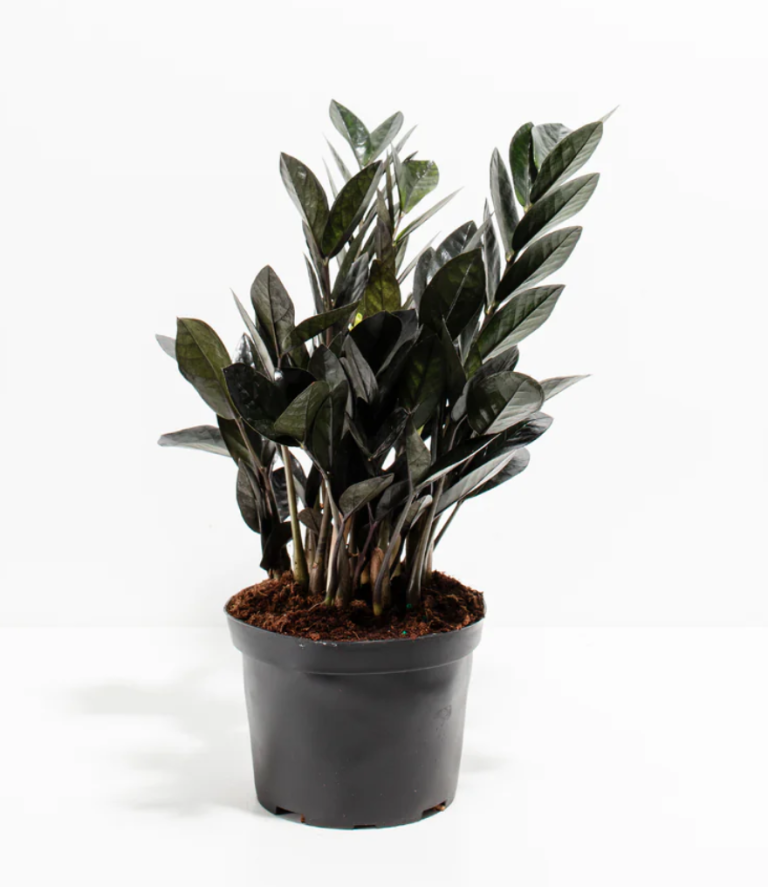
Tradescantia Bubblegum care guide
Discover watering, soil, fertilizing, pests, styling, and troubleshooting tips for Tradescantia Bubblegum from our experience growing and caring for it in our Brooklyn home!

We are an AD-FREE, community driven site. you purchase through links on our site, we earn an affiliate commission, which helps sustain our blog!
care at a glance
How to care for tradescantia bubblegum?

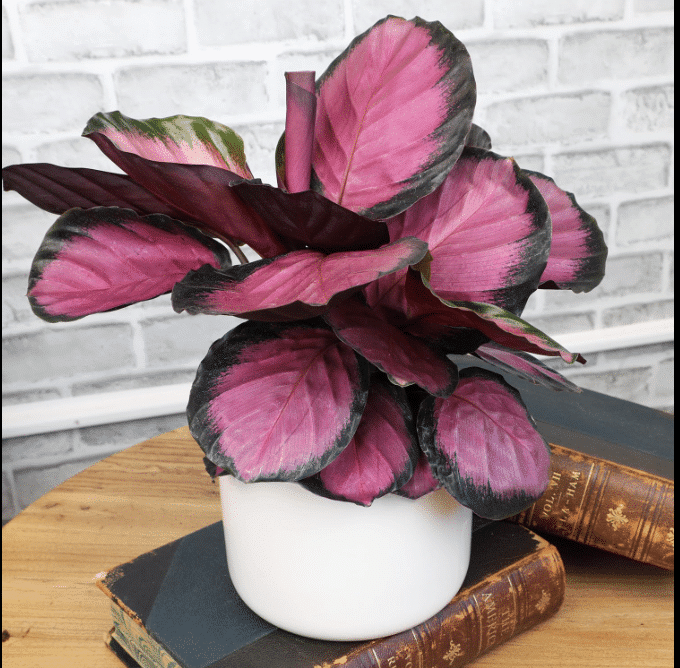
Tradescantia ‘Bubblegum’, also called as bubblegum plant, or Tradescantia Nanouk plant, is a vibrant trailing plant with pink, purple, and green striped leaves that thrives with bright light and regular moisture.
- Light: Give it strong indirect light. We get our best pink coloration near an east-facing window.
- Water: Water when roughly the top 30–40% of the potting mix has dried, then soak thoroughly and drain.
- Soil: Use an airy mix with plenty of drainage material such as perlite or bark.
- Temperature: Normal warm indoor temperatures are ideal; protect it from cold drafts and very hot direct sun.
- Fertilizer: Feed lightly about once a month during active spring and summer growth.
- Pruning: Pinch or cut long stems above a node to keep the plant full rather than leggy.
- Propagation: Stem cuttings root readily in water or moist potting mix.
- Biggest problems: Fading pink color, leggy growth, and soft stems from soil that stays wet too long.
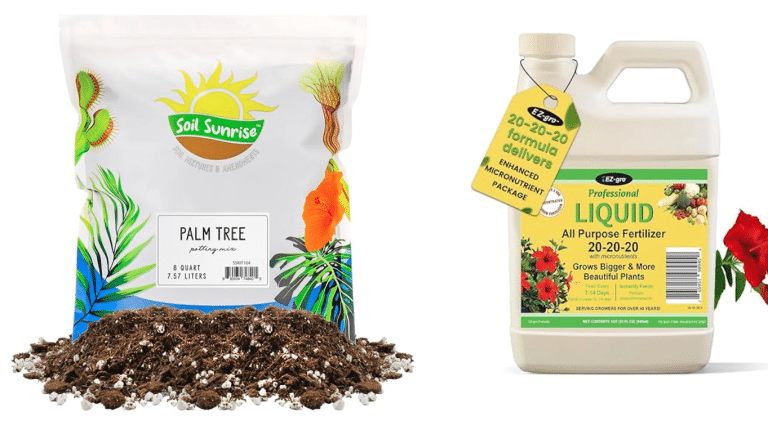
Our favorite soil and fertilizer for Tradescantia Bubblegum

Is Tradescantia Nanouk same as Tradescantia Bubblegum?
Yes, they are both one and the same. Bubblegum is a nickname for Tradescantia Nanouk. Nurseries usually associate plants with nicknames that are appealing and hence the usage of term ‘Bubblegum’ for this plant.
How to Keep Tradescantia Bubblegum Pink
When ours sat too far from the window, the newest leaves became paler first, then the stems stretched and the pink bands narrowed. Moving it back into stronger indirect light produced much better-colored new growth.
For us, an east-facing window has been the easiest position to manage. The plant gets strong morning light without the harsher afternoon exposure that can bleach or crisp the pink portions of the leaves. If your Bubblegum starts turning greener, fix the light first before reaching for fertilizer. Fully green growth usually will not recolor, so we prune reverted stems back to a node that still shows healthy variegation and let the plant regrow under better light
Read our full guide: How to keep Tradescantia Bubblegum pink and fix fading leaves
lineage and Symbolism
The Tradescantia Bubblegum Plant (aka Tradescantia Nanouk) from the Commelinaceae family is a colorful, and quirky plant, known for its playful green and pink leaves that spill over pots and hangers in a cascade of vibrancy.
Its small, oval-shaped leaves are a visual delight, perfect for brightening up the windowsills or shelves and stays relatively petite – typically growing up to 12 inches tall, but its trailing vines can stretch up to two feet long.
The Tradescantia Bubblegum Plant symbolizes resilience and adaptability – most apt for nurturing by resourceful and versatile Virgos!
Read also: Ultimate Tradescantia (Zebrina) care guide


what we wish we knew before buying tradescantia bubblegum
The pink color disappears shockingly fast unless the light is much stronger than what “regular” tradescantia need:
We assumed it would behave like our green and purple tradescantias, but the Bubblegum variety fades to pale beige within weeks if it’s even a little too far from the window. That shift happens quietly, starting at the newest nodes, and by the time you notice, half the plant has stretched. Once we understood that it needs to sit practically at the window to stay pink, we adjusted—and the next flush of growth finally held its color.
Tradescantia Bubblegum plant care infographic

Light and placement
What is the light requirement for Tradescantia Bubblegum plant?
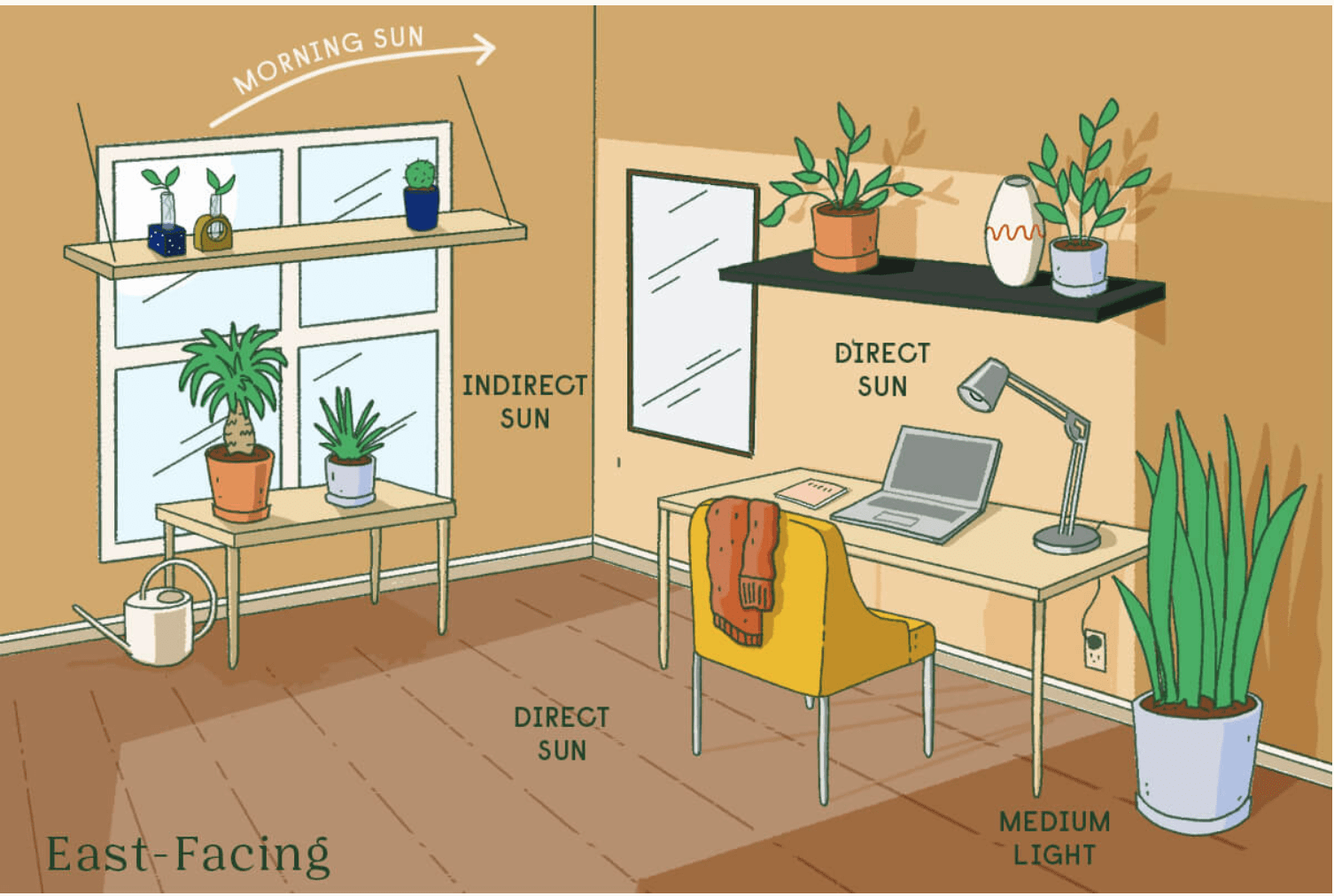
We recommend placing your Tradescantia Bubblegum Plant near a bright, east or west-facing window where it can soak in indirect light for about 4-6 hours a day. It loves bright conditions but doesn’t do well with direct sunlight. If you notice the vibrant colors fading, it might be time to adjust its light exposure.
How to know if Tradescantia Bubblegum is not getting right amount of light?
Too much direct sunlight will cause the leaves to bleach or scorch and turn brown/crispy at the edges. Too little light will cause the vibrant pink and green stripes to fade, and the plant may start to grow leggy, stretching out in search of more light.
Where to place Tradescantia Bubblegum and where to avoid?
We recommend placing your Tradescantia Bubblegum Plant near an east-facing window where it can enjoy soft indirect morning light. A west-facing window works well too but make sure to filter the afternoon sun with sheer curtains to avoid leaf burn. Shelves or hanging baskets near these windows are most ideal.
Avoid placing it in direct sunlight, like in front of south-facing windows, and steer clear of dimly lit rooms as the plant may lose its vibrant color and become leggy. In the summer, move it slightly away from windows and during winter you might want to place it closer to an east-facing window.
how does tradescantia bubblegum behave through seasons?
Spring: fast rebound and brightest pink growth
Growth surges once the days lengthen, and the pink tones come in strongest now. We water more often because the shallow roots finally start drinking again. We give a light fertilizer every 2–3 weeks to keep the new leaves plump. The only issue is sudden legginess if it isn’t close enough to the window, so we move it right up to the bright spot.
Summer: longest vines but quickest fading if heat is too high
The plant grows aggressively, often producing multiple nodes a week. We water more but with a very airy mix because heat makes the stems mushy if the soil stays wet. We shift it a few inches back from direct afternoon sun because the pink burns faster than the green parts. Spider mites show up easily in hot rooms, so we check the undersides weekly.
Fall: slowdown in leaf size and more muted color
Growth slows and the pink tones dull if the light drops suddenly. We reduce watering because cooler rooms hold moisture longer. We push it closer to our brightest window so the color doesn’t wash out. The biggest issue is thin new growth, so we prune lightly to keep the plant dense.
Winter: slowest growth and highest risk of overwatering
The plant barely grows, and new leaves are smaller and less pink. We water sparingly—when soil is 30%-40% dry—because the root ball drinks very slowly in cold rooms. We keep it at our brightest window to prevent fading, but far enough from radiators so the tips don’t crisp. Our main issue is rot from cold wet soil, so we go by pot weight, not the look of the vines.
Try our Best Indoor Plants tool for a personalized plant recommendation.
Soil
What soil composition to use for Tradescantia Bubblegum?

For your Tradescantia Bubblegum Plant, we recommend a well-draining potting mix that’s slightly acidic to neutral. A mix of 50% standard potting soil and 50% perlite or coarse sand, or coco coir works well to maintain proper drainage and prevent waterlogging. If you tend to overwater, adding a bit more perlite (up to 60%) helps. Definitely avoid using topsoil as it can compact and hold too much moisture. Loam-based soil with good drainage is also a solid option for balanced watering habits.
Best soil to use for Tradescantia Bubblegum?
This particular mix also has perlite in it and the one we have used for a long time!
Temperature and Humidity
What is the best temperature condition for Tradescantia Bubblegum?
Aim to keep temperatures between 60-75°F. If you’re in a warmer region – make sure it’s not exposed to heat above 85°F as the leaves might start wilting or curling. In colder areas, avoid temps below 50°F, which can cause leaf drop and darkened tips.
If you’re in a drier region, consider boosting humidity to keep it happy. Especially in winter when indoor heating can dry out the air. Signs of too much cold include slow growth and blackened leaves. Too much heat leads to crispy edges and droopy leaves
What is the best humidity condition for Tradescantia Bubblegum?
Our Bubblegum grows well in ordinary indoor humidity, but very dry winter air can contribute to crispy leaf edges. If your home becomes extremely dry, a humidifier is the most reliable way to raise humidity around the plant. Good airflow is equally important because constantly damp foliage and stagnant air can encourage spotting and rot.
We do not mist ours routinely; keeping the leaves dry has caused fewer problems for us than trying to raise humidity by spraying them.


fertilizer
What is the best fertilizer composition to use for Tradescantia Bubblegum?

Tradescantia Bubblegum grows quickly during spring and summer, but it does not need heavy feeding.
We use a balanced liquid houseplant fertilizer at about half strength once a month during active growth. A balanced formula such as 10-10-10 or 20-20-20 is fine; the exact ratio matters less than avoiding excessive feeding. Too much fertilizer can lead to salt buildup and damaged leaf tips, especially in a small pot. We reduce feeding substantially once growth slows in fall and winter.
For a simple DIY recipe, mix 1 tablespoon of fish emulsion or liquid seaweed into 1 gallon of water and apply during the growing season. Apply to the soil avoiding leaves though.
How and when to fertilize Tradescantia Bubblegum?
Fertilize your Tradescantia Bubblegum Plant once a month during the growing season (spring and summer) diluted to half strength. Apply directly to the soil avoiding the leaves to prevent burn. Stop fertilizing in fall and winter when the plant’s growth slows.
What are the signs Tradescantia Bubblegum needs food?
If your Tradescantia Bubblegum Plant needs fertilizing, you’ll notice slower growth, pale or yellowing leaves, and less vibrant color. The plant may also look leggy, stretching toward light without producing healthy new leaves.
Best fertilizer to use for Tradescantia Bubblegum?
Pots and planters
What are the best pots to use for Tradescantia Bubblegum?
We recommend using a medium-sized pot (6-8 inches) for your Tradescantia Bubblegum Plant. Choose terracotta or ceramic pots for breathability and moisture control with proper drainage holes to prevent root rot. A lightweight plastic pot works well if you prefer hanging or moving it around. Opt for a shallow and wide shape to accommodate its spreading roots and trailing vines


Watering
How and When to water Tradescantia Bubblegum?
Coming from the moist forest floors, your Tradescantia Bubblegum Plant prefers consistently moist but not waterlogged soil. We water when roughly the top 30–40% of the potting mix has dried, rather than following a fixed weekly schedule.
Water thoroughly, soaking the soil until water drains out the bottom. But avoid letting the plant sit in standing water which can lead to root rot. Morning is the best time to water, allowing the soil to dry during the day. Avoid misting the leaves as this can lead to fungal issues.
what are the Signs of over or under watering Tradescantia Bubblegum?
For overwatering, you’ll notice yellowing leaves, soft, mushy stems, and the plant might develop root rot which causes a foul smell. The leaves may also turn black or brown at the base, especially where they meet the stem
If underwatered, the leaves will turn brown and crispy at the tips, and the vibrant color will start to fade. The plant may also become leggy, as it conserves energy, and leaves will wilt.
Read also: How to water tradescantia bubblegum
pruning
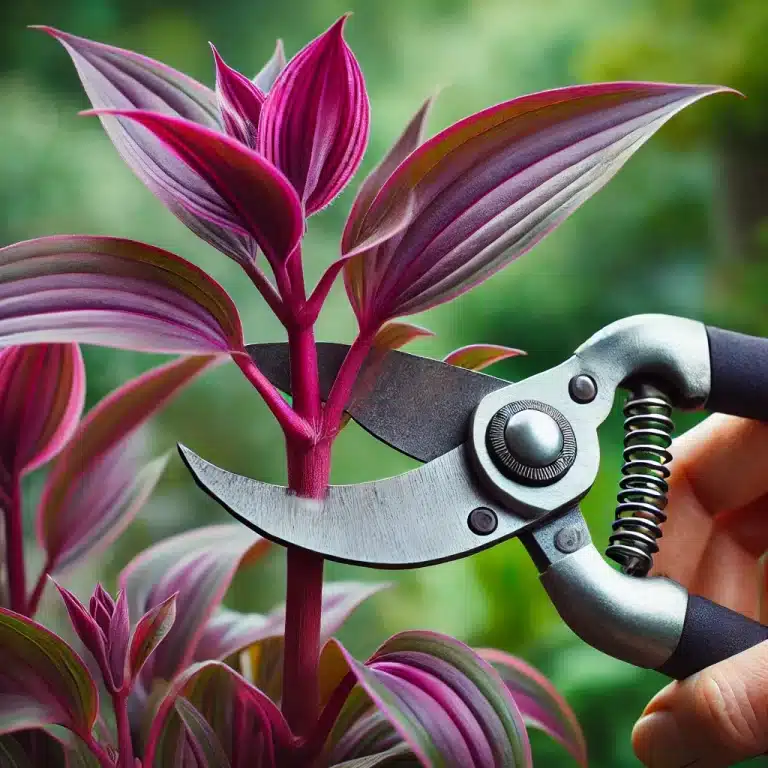
When to prune Tradescantia Bubblegum and why?
Pruning your Bubblegum Plant helps it stay bushy and prevents legginess – a common issue when the plant grows too long without enough light. It also encourages new growth and keeps the plant looking full. The best time to prune is in spring or summer when it’s actively growing. Signs you need to prune include long, leggy stems with fewer leaves and fading color.
how to prune Tradescantia Bubblegum?
how to care after pruning Tradescantia Bubblegum?
After pruning, water the plant lightly and place it in bright, indirect light to encourage new growth. You’ll soon see new shoots sprouting from the pruned nodes. Dry the nodes completely where its cut.
How to Keep Tradescantia Bubblegum Bushy Instead of Leggy
Bubblegum naturally develops longer trailing stems, but large gaps between leaves usually mean it needs more light or more frequent pinching.
When ours starts producing thin runners, we first move it closer to bright indirect light. We then cut stretched stems just above a healthy node. That encourages new shoots lower on the plant instead of letting one vine keep extending.
We usually root the healthiest pruned pieces and plant them back into the same pot. This is the fastest way we have found to turn a sparse Bubblegum into a fuller hanging plant. Read more about: leggy tradescantia bubblegum solutions here
propagating

When to Propagate Tradescantia Bubblegum?
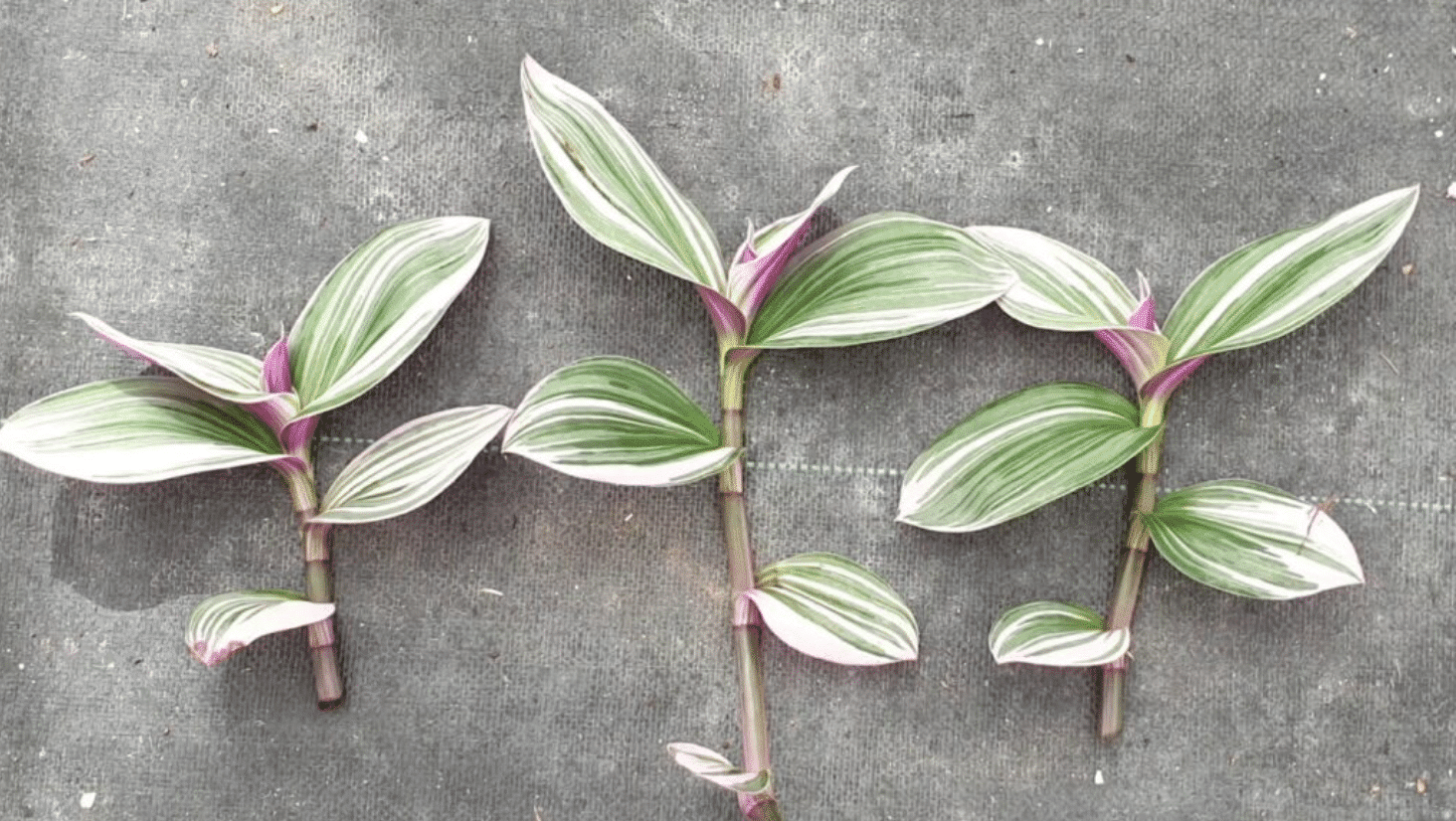
The easiest way to propagate your Bubblegum Plant is through stem cuttings, which root quickly in water or soil. The best time to propagate is during spring or summer when the plant is actively growing.
how to Propagate Tradescantia Bubblegum?
Choose a healthy stem: Look for a stem with 3-4 nodes (the bumps where leaves grow) and cut just below a node using clean scissors.
Prepare the cutting: Remove the lower leaves, leaving 2-3 leaves at the top. This helps focus energy on root growth.
Rooting in water: Place the cutting in a glass of water, ensuring the lower nodes are submerged. Change the water every few days and place it in bright, indirect light. Roots should form in 1-2 weeks.
Rooting in soil: Alternatively, plant the cutting in moist and well-draining soil. Bury the nodes and water gently. Keep it in indirect light and ensure the soil stays consistently moist.
Pro Tip: Bubblegum is one of the easiest plants we propagate because almost every healthy stem gives us several usable nodes. We normally root the cuttings we remove during pruning and plant several back into the mother pot to keep it dense.
how to care after propagating Tradescantia Bubblegum?
Avoid direct sunlight to prevent stress, and ensure the cutting doesn’t dry out or sit in soggy soil.
Once roots are about 1-2 inches long, transplant the cutting into a small pot with well-draining soil. Keep the soil moist for the first few weeks and then gradually reduce watering as the plant establishes itself.
Troubleshooting common issues

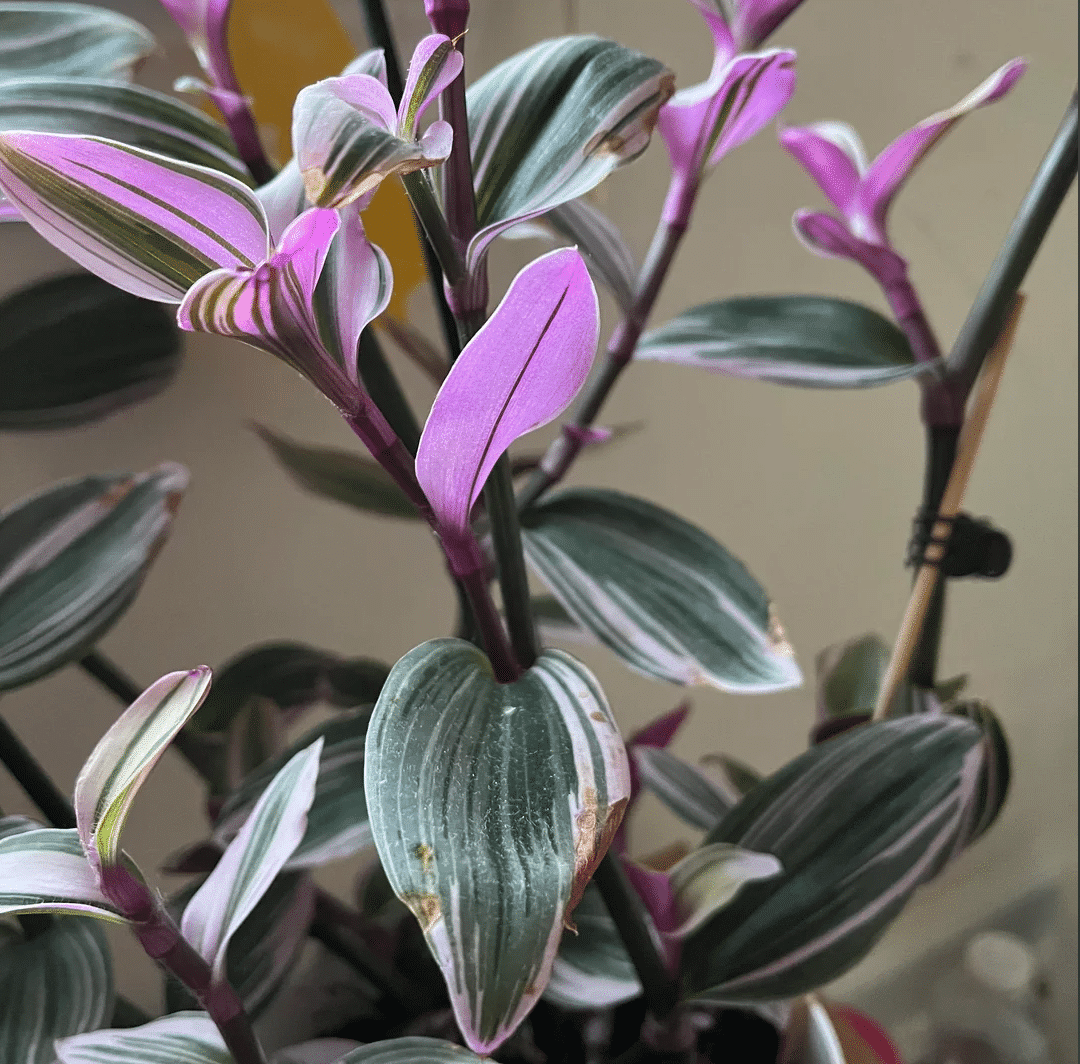
Tradescantia Bubblegum Problem Quick Guide
Use the symptoms below as a quick starting point, then check the detailed troubleshooting sections underneath.
| Symptom | Likely cause | What to do |
|---|---|---|
| Pink fades and leaves become greener | Light is too low | Move closer to bright indirect light and assess the color of new growth. |
| Long stems with wide gaps between leaves | Light is too low or the plant needs pruning | Increase indirect light and cut stretched stems above healthy nodes. |
| Soft stems with yellow or dull leaves | Soil is staying wet too long | Let the mix dry, inspect the roots, and improve soil aeration if needed. |
| Crispy brown leaf edges | Dry soil, dry air, fertilizer salts, or excess direct sun | Check soil moisture first, then review light exposure and recent fertilizing. |
← Swipe horizontally on mobile to see the full table →
Why is my Tradescantia Bubblegum losing its pink color?
Most likely cause: Not enough light.
Move the plant closer to strong indirect light and judge the color of the new growth rather than expecting old faded leaves to recolor. If an entire stem has reverted to green, prune it back to the last node that still shows healthy pink variegation.
Why is my Tradescantia Bubblegum leggy?
Most likely causes: Insufficient light or a lack of pruning.
Move it to brighter indirect light and cut long bare stems back just above a healthy node. Root the trimmed pieces and plant them back into the pot if you want a fuller plant.
Why are the stems soft or mushy?
Most likely cause: The root zone is staying wet too long.
Stop watering and check the mix deeper in the pot. If the soil remains saturated or the roots are brown and soft, remove damaged roots and stems and repot into fresh, airy mix.
Why are the leaf edges turning brown and crispy?
Possible causes: The mix is getting too dry, very dry indoor air, fertilizer-salt buildup, or too much direct sun.
Check the soil first. If watering is appropriate, consider whether the plant is receiving harsh direct light or sitting in very dry heated air.
Why does my Tradescantia Bubblegum have brown or black leaf spots?
Wet leaves, stagnant air, and overly wet soil can all contribute to spotting.
Remove badly damaged leaves, improve airflow, and keep the foliage dry when watering. Avoid automatically spraying oils or fungicides until you have identified whether the problem is fungal, bacterial, pest-related, or simply physical damage.
curated styling tips for tradescantia bubblegum
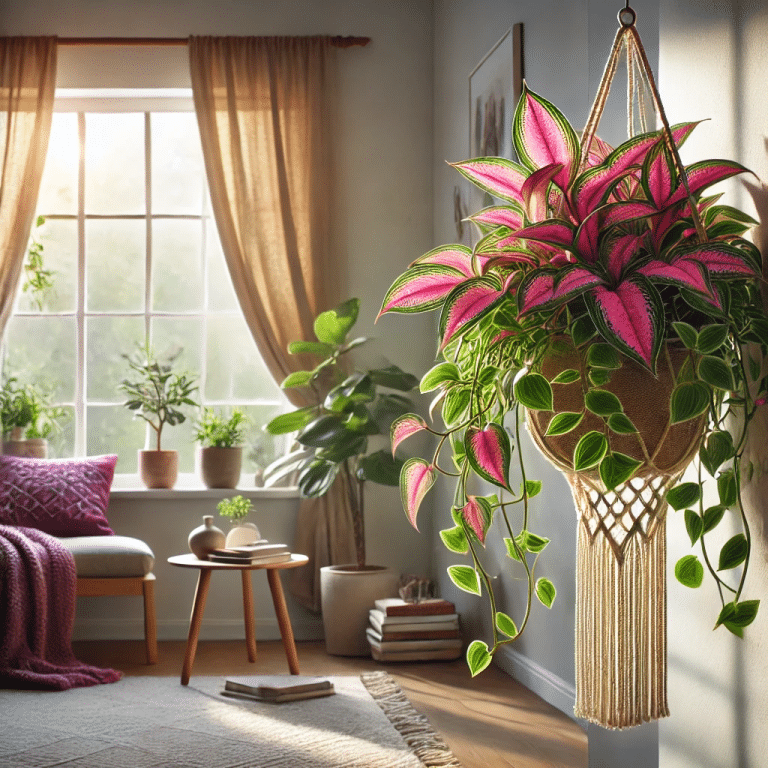
1. Hanging in a Macrame Holder Near an East Window: A macrame holder suspended near an east-facing window,gives it the right amount of indirect morning light. Its trailing vines can cascade beautifully and create a soft, flowing look. The natural light will enhance the leaf colors while the macrame adds a boho vibe
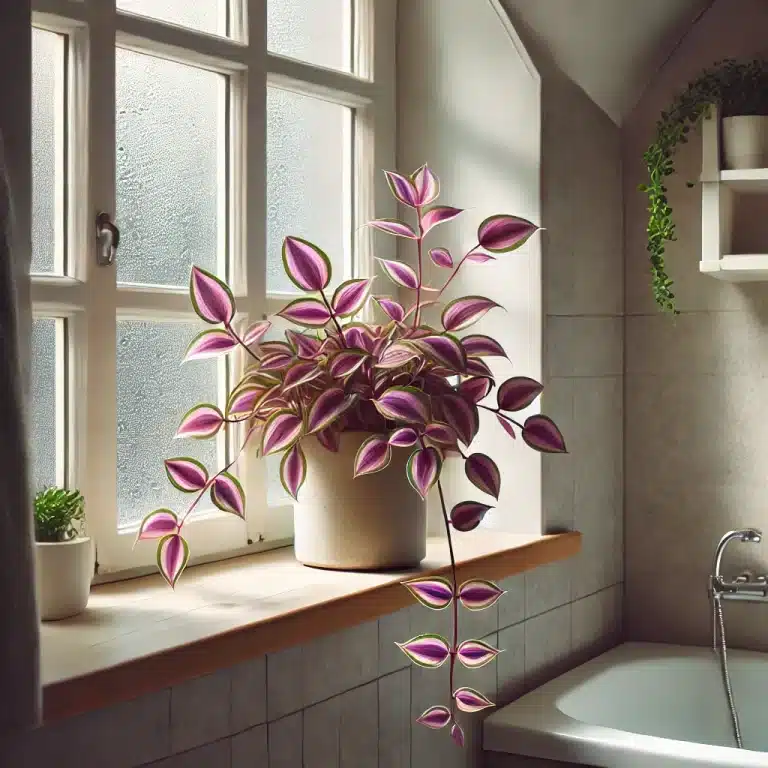
2. Trailing from a Bathroom Shelf or Windowsill: Bathrooms often have higher humidity, which the Bubblegum Plant loves. Place it on windowsill where it can trail down and soak in the moisture . A simple ceramic or terracotta pot complements the plant’s natural, soft texture.
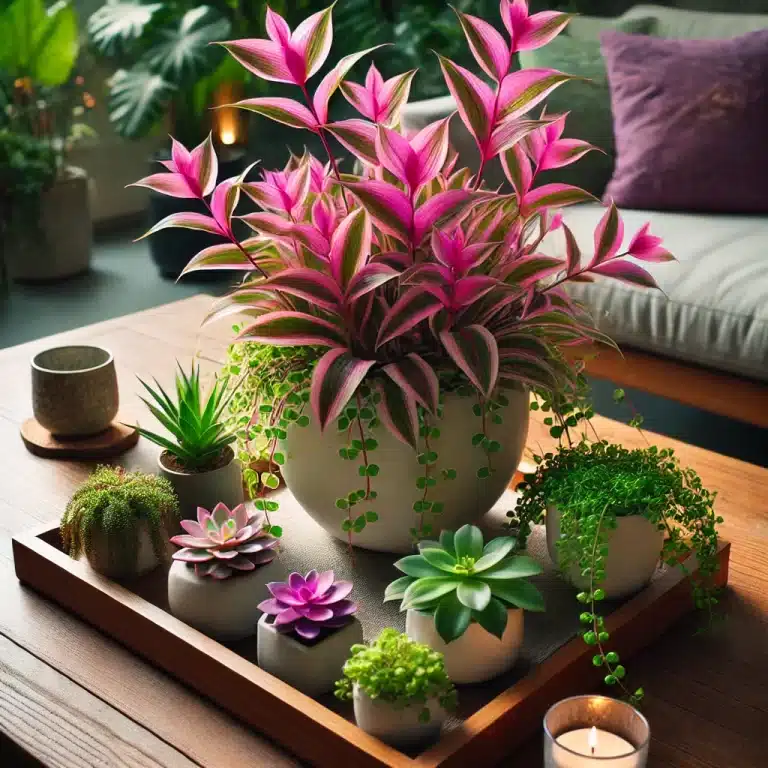
3. Grouped with Other Small Plants on a Coffee Table: Style the Bubblegum Plant alongside small, complementary houseplants like succulents or ferns. Its pink hues provide a colorful contrast when paired with greenery on a coffee table. Use a low, wide planter to allow its spreading vines to drape over the table’s edge, and pair it with plants that thrive in similar light and humidity
FAQ
Is Tradescantia bubblegum toxic to pets?
Yes it is toxic to pets. Tradescantia sap can irritate the skin and mouth of some pets, so we keep ours out of reach of cats and dogs. Because cultivar names such as “Bubblegum” are used inconsistently in the trade, check the botanical identity of your specific plant before relying on a toxicity label.
Does Tradescantia bubblegum like to be placed outside in summer?
Yes, we can move it outside in summer as long as it’s kept in a shaded spot. Just avoid direct sunlight which can scorch the leaves. And bring it indoors when temperatures drop below 50°F.
What are advantages and disadvantages of Tradescantia bubblegum?
We love its vibrant colors and fast growth, hence ideal for hanging baskets. However, it can become leggy without enough light and requires regular pruning to keep it bushy.
How to get Tradescantia bubblegum to bloom?
Tradescantia Bubblegum may produce small flowers when it is actively growing, but we would not change its care dramatically just to force blooms. Give it strong indirect light, keep watering consistent without leaving the soil soggy, and feed lightly during spring and summer. Healthy compact growth is a better sign that the plant’s conditions are right than flowering alone.
How to pot Tradescantia bubblegum plant?
Choose a pot with drainage holes, using a well-draining potting mix. We recommend a shallow, wide pot to accommodate its trailing vines, and repot every year or when the plant outgrows its container.