English Ivy care Guide
We grow English ivy in our Brooklyn home — here’s everything on watering, light, pruning, and keeping it healthy indoors without letting it take over.

We are an AD-FREE, community driven site. When you purchase through links, we may earn a commission, which helps sustain our blog!
English Ivy care guide
care at a glance
How to care for English Ivy?
English ivy has trailing or climbing stems with lobed green leaves that create a classic, cascading look perfect for shelves and hanging pots.
Light: Bright indirect light gives us the fullest growth. Plain-green English Ivy also tolerates low-to-medium light, while variegated cultivars need more light to maintain their pattern.
Water: Water thoroughly, then let roughly the upper half-inch to inch of potting mix begin drying before watering again.
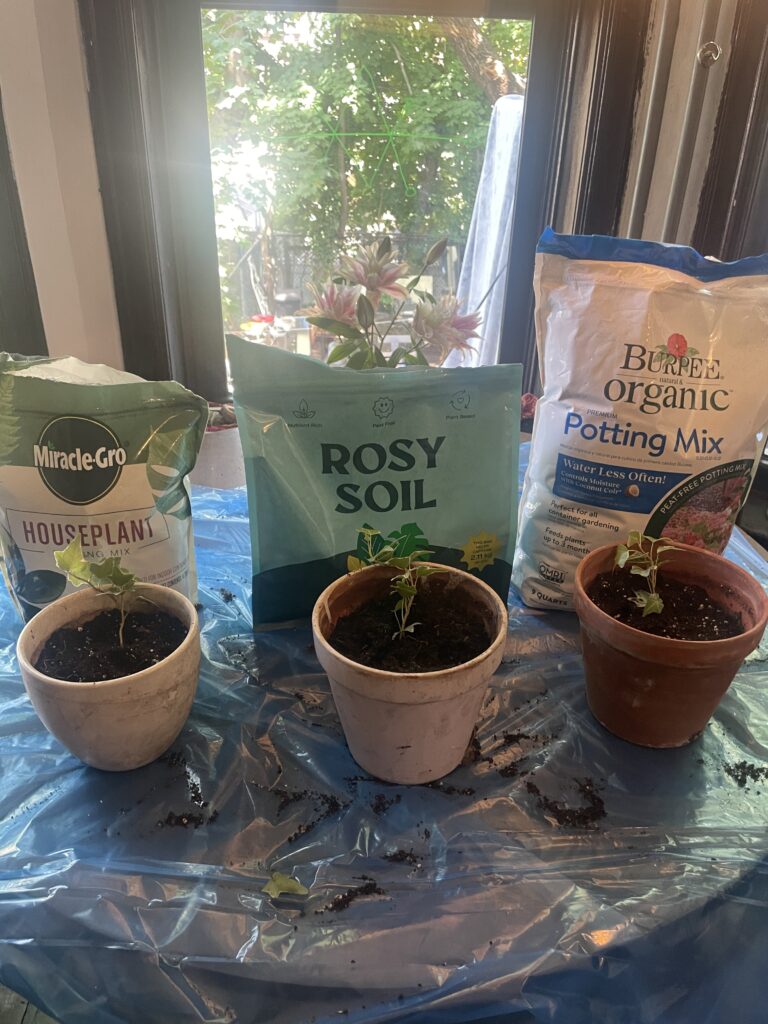
Soil: Use a peat-free, well-draining houseplant mix. Keep the detailed soil testing on our dedicated English Ivy soil guide.
Temperature: English Ivy prefers cool-to-moderate indoor temperatures rather than hot, stagnant rooms.
Humidity: Normal low-to-moderate household humidity is usually enough. Very dry heated air can still contribute to problems and encourage spider mites.
Fertilizer: Feed monthly during active growth with a complete foliage-houseplant fertilizer according to the label.
Pruning: Trim long shoots to control size and encourage branching. Remove reverted all-green shoots from variegated cultivars.
Propagation: Root healthy stem or tip cuttings containing several leaves and nodes.
Pet safety: ASPCA lists English Ivy as toxic to cats and dogs.
Common problems: Brown or dropping leaves, spider mites, yellowing from wet roots, leggy vines and loss of variegation.
Our favorite soil and fertilizer for English ivy

A real issue we have had with English Ivyplant in our home
Our English Ivy once began dropping apparently healthy leaves from the middle of its vines during winter.
At first we assumed it needed more water.
The potting mix did not support that explanation, and the plant was sitting close to one of our radiators where the air was both warm and very dry.
After we moved it farther from the heat into a cooler position, the leaf drop slowed dramatically.
That made heat and dry air our leading suspects in this case, but we would not diagnose every dropping Ivy the same way. Watering, mites, low light and root stress can create similar symptoms.
Why are my English ivy leaves turning brown?
The most common cause is low humidity combined with dry indoor air — English ivy is native to humid woodland environments and struggles in the dry heat of most apartments, especially in winter when radiators are running. Brown leaf tips and edges are the classic symptom, and in our Brooklyn apartment it’s what we see every January if we’re not paying attention. A pebble tray with water beneath the pot or moving it near a humidifier usually reverses it within a few weeks.
The second likely cause is inconsistent watering — letting the soil dry out completely stresses ivy fast and the leaves brown and crisp at the edges before yellowing. Spider mites are also worth checking for, as they thrive in dry conditions and are a frequent ivy pest; look for fine webbing on the undersides of leaves and treat with neem oil or insecticidal soap if you find them.
Why is my English ivy dying indoors?
English ivy is one of those plants that looks unfussy but actually has a specific set of requirements that most indoor environments don’t naturally provide. The two things that kill it fastest indoors are overwatering and insufficient light — it needs consistently moist but never waterlogged soil, and more light than most people give it. If the stems are going limp and the leaves are yellowing and dropping, pull it from the pot and check the roots; root rot from overwatering is the most common reason ivy declines indoors.
The other major factor is heat. English ivy prefers cooler temperatures and genuinely suffers in warm, stuffy rooms — it does better in a bright cool room than a warm dim one. If you’ve ruled out watering and light issues, consider whether the location is simply too warm and dry for it to thrive long-term.
Try our Best Indoor Plants tool for a personalized plant recommendation.
lineage and Symbolism
English Ivy (Hedera helix) is a trailing evergreen vine loved for its classic, pointed leaves and versatile growth habit. Whether you drape it from a shelf, hang it in a basket, or let it climb up a moss pole, it brings elegance to any room! At our Brooklyn community home, we’ve found it to be a patient but particular companion — slow to show problems, but very clear once they arise!
Its ability to purify the air and grow in diverse indoor conditions makes it popular, though it can be finicky if overwatered or left in low humidity for too long.
English Ivy symbolizes fidelity, attachment, and resilience, often seen climbing walls and sticking with whatever surface it finds. Its tenacity aligns with Capricorn energy — steady, enduring, and quietly powerful.


$58
“Great plant for beginners. It’s hardy and does well in indirect light”
What we wish we knew before buying
It behaves like an outdoor plant trying to survive indoor conditions: We didn’t realize how much ivy depends on cool air, steady airflow, and brighter light than most apartments naturally provide. Without those, it sheds leaves, attracts mites, and grows unevenly, no matter how well you water it. We wish someone had told us that ivy thrives indoors only if you can recreate a slightly cooler, fresher microclimate—and that not every room can offer that.
English Ivy plant care infographic

📋 Use this infographic on your site — copy the code below:
Light and placement and seasons
How Much Light Does English Ivy Need Indoors?
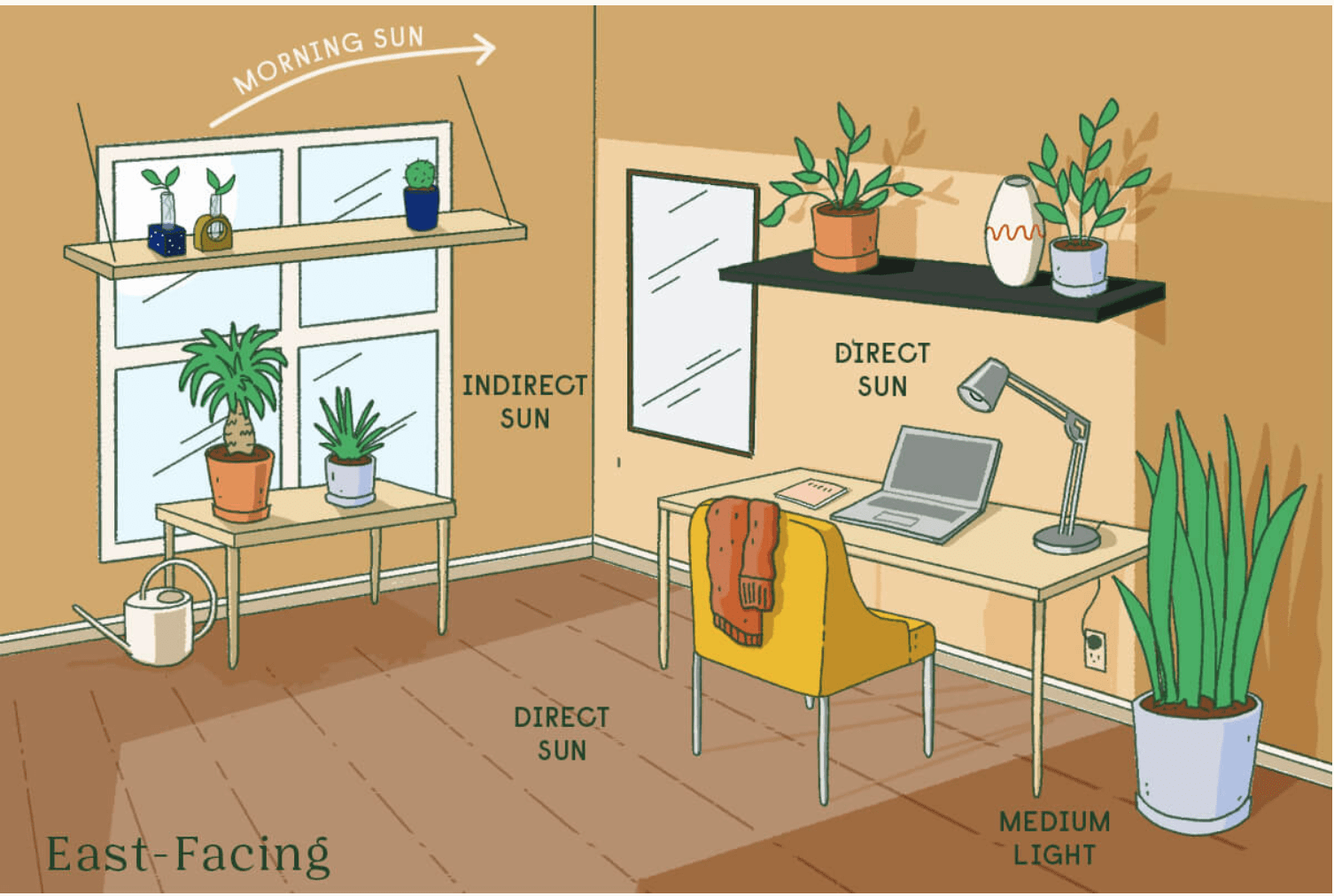
English Ivy grows best for us in bright indirect light, but plain-green cultivars genuinely tolerate low-to-medium light better than many trailing houseplants.
Variegated cultivars need more useful light if we want them to maintain their cream, yellow or white patterning.
We avoid intense direct sun through hot glass, which can scorch the foliage.
Can English Ivy Grow in Low Light?
Yes.
English Ivy is one of the more shade-tolerant trailing houseplants.
The tradeoff is slower growth, longer gaps between leaves and weaker variegation on patterned cultivars.
For a plain-green Ivy, a lower-light position can still be perfectly usable as long as the plant remains healthy.
Does English Ivy Need Sunlight?
It needs light, but not necessarily direct sun.
Bright filtered daylight is enough for strong indoor growth.
We judge the actual light reaching the plant rather than assigning one particular window direction to every home.
How Can You Tell if English Ivy Needs More Light?
Watch the newest growth.
Long bare internodes, increasingly small leaves and weak growth can indicate inadequate light.
On variegated cultivars, new leaves becoming progressively greener can also indicate insufficient brightness.
If only one shoot becomes completely green while the rest stays strongly variegated, however, check for true reversion rather than assuming the whole plant needs more light.
How Does English Ivy Change Through the Seasons?
Spring: Growth accelerates and the plant begins using water more quickly.
Summer: Growth can be strong, but very hot indoor rooms are not ideal. Spider mites also deserve closer attention during warm, dry periods.
Fall: Growth slows as daylight decreases, so the pot remains moist longer.
Winter: Our Ivy grows much more slowly. We keep it away from hot radiators and adjust watering according to how slowly the potting mix dries rather than using a fixed winter schedule.
Soil
For a detailed comparison read our full guide on: Best soil and fertilizer for English Ivy
What soil composition to use for English Ivy?
Use a well-aerated, moisture-retentive, peat-free mix. The ideal soil includes:
- 1 part coconut coir
- 1 part perlite or pumice
- 1 part compost or worm castings
- A handful of pine bark for texture
This combo keeps the soil light and draining well while supporting root health.
Best soil to use for English Ivy?
Read also: Best soil and fertilizer for english ivy
Temperature and Humidity
What Temperature Does English Ivy Prefer Indoors?
English Ivy prefers cooler conditions than many tropical houseplants.
We aim for roughly 50–70°F when practical.
It can tolerate ordinary room temperatures, but consistently hot, stagnant air is not where ours performs best.
Does English Ivy Like Humidity?
It appreciates moderate humidity but is not a high-humidity houseplant.
Illinois Extension recommends low-to-medium humidity, and Clemson notes that Ivy tolerates normal low household humidity.
If our home becomes extremely dry in winter, we focus on keeping the plant away from radiator heat and watching for spider mites rather than automatically running a humidifier specifically for the Ivy.
Do Brown Ivy Leaves Always Mean Low Humidity?
No.
Dry air can contribute, but underwatering, hot conditions, root problems, fertilizer salts, sun damage and mites can create similar browning.
We use humidity as one clue rather than the diagnosis.


fertilizer
For a detailed comparison read our full guide on: Best soil and fertilizer for English Ivy
What fertilizer should I use for English ivy?
Use a balanced liquid fertilizer with a mild nitrogen boost, such as a 10-5-5 or 20-10-10 blend, diluted to half strength. Organic options with seaweed or fish emulsion also work well if you’re feeding monthly.
How and when to fertilize English Ivy?
Feed once a month from early spring through early fall. Stop in winter. Always water before fertilizing to avoid root burn. We’ve made it part of our spring reset — a diluted feeding after pruning gives a noticeable boost.
What are the signs English Ivy needs food?
Pale or slow-growing leaves, smaller than usual, often point to nutrient deficiency. If the plant looks tired despite good watering and light, it’s likely hungry for nitrogen or iron.
Best fertilizer to use for English Ivy?
We’ve been feeding our English Ivy with Plant Magic Organic Fertilizer, and here’s how it performs in real-world use:
- We apply a diluted dose once a month during spring and summer. Within a week, our Ivy vines look noticeably fuller and leaves deepen in color.
- It’s strong enough to revive tired foliage, yet gentle enough to avoid burning—even when used in smaller pots or shaded spots.
- For a bump in growth or after a trimming session, we occasionally follow up with a balanced liquid fertilizer. But for regular maintenance, Plant Magic keeps our Ivy lush, green, and resilient.
Pots and planters
What are the best pots to use for English Ivy?
Choose shallow pots with ample drainage holes. Terra cotta works well if you’re prone to overwatering. We also like using hanging baskets or ceramic planters with coco liners to let the roots breathe.
Just make sure it’s not in a pot that stays soggy — root rot sneaks up fast with English Ivy.


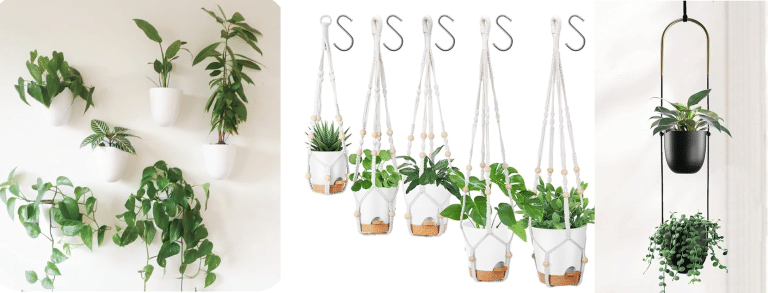
Read also: Best hanging baskets, and best trellises for hanging plants. And our guide to styling trailing houseplants
Watering
How Often Should You Water English Ivy?
We water thoroughly when roughly the upper half-inch to inch of potting mix has dried.
Then we allow excess water to drain completely.
We do not water every five days, seven days or two weeks automatically.
The interval changes with light, temperature, root mass, pot material and season.
Does English Ivy Like Moist Soil?
Yes.
English Ivy prefers more consistent moisture than drought-adapted plants, but it does not tolerate stagnant water around its roots.
We therefore do not deliberately let the entire root ball become bone dry, and we also do not keep the pot continually saturated.
What Does Overwatered English Ivy Look Like?
Several yellow leaves, wilting despite wet soil and soft or dark roots make us investigate excess moisture.
English Ivy does not have rhizomes, so we inspect the roots and stem base rather than looking for “blackened rhizomes.”
What Does Underwatered English Ivy Look Like?
The foliage may wilt, curl and become dry or crisp as the root ball becomes too dry.
If the soil is genuinely dry, we water thoroughly rather than giving several small sips.
Why Is My English Ivy Dropping Leaves?
Check several conditions.
A very dry root ball can cause leaf drop, but so can wet damaged roots.
Heat, spider mites, a sudden location change or inadequate light can also contribute.
In our home, moving one Ivy away from radiator heat reduced its winter leaf drop substantially.
pruning
How Do You Prune English Ivy?
English Ivy tolerates pruning very well.
We shorten overly long or sparse vines just above a leaf node using clean scissors or pruners.
New side shoots can develop below the cut, which helps a trailing plant become fuller rather than continuing as one long vine.
How Do You Make English Ivy Bushier?
Pinching or shortening the growing tips encourages branching.
Illinois Extension specifically recommends pinching shoot tips frequently when a bushier plant is the goal.
We combine pruning with adequate light so the new shoots do not simply become long and sparse again.
Should You Remove Green Leaves From Variegated English Ivy?
Do not remove individual green leaves simply because they lack variegation.
Instead, identify whether an entire shoot has reverted.
If one stem repeatedly produces vigorous all-green foliage while the rest of the plant remains variegated, prune that reverted shoot out at its base.
Can You Cut English Ivy Back Hard?
Yes.
Ivy tolerates significant pruning and outdoor plants can regenerate from old wood.
Indoors, we prefer to reshape progressively rather than stripping a stressed plant all at once.
Does English Ivy Need Special Care After Pruning?
No special misting or reduced-watering routine is necessary.
Return it to its normal light and water according to the potting mix.
Wear gloves if Ivy sap irritates your skin.
propagating
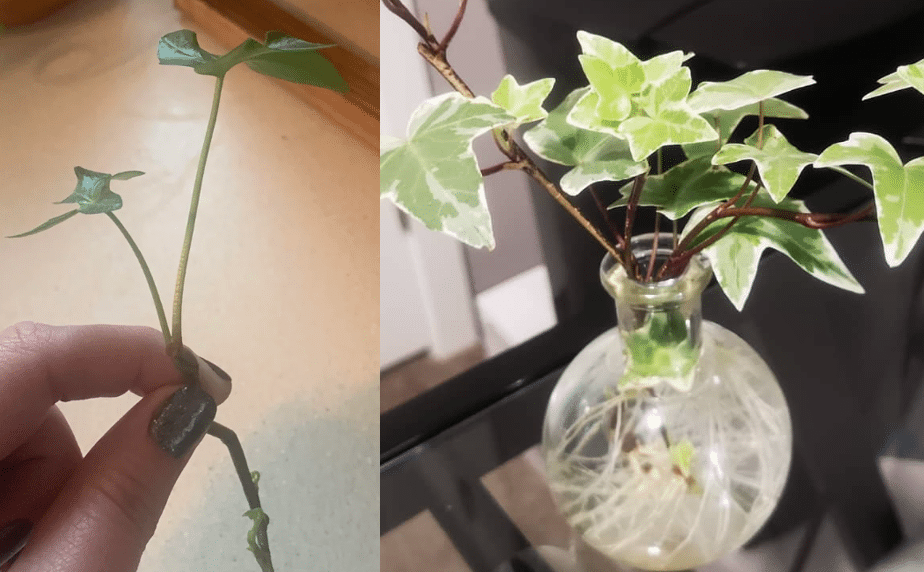
What Is the Best Way to Propagate English Ivy?
Stem or tip cuttings are easy to root.
Take a healthy section of young climbing growth with several leaves and nodes.
Remove the lowest leaves and root the cutting either in water or in an airy, well-draining propagation medium.
Keep it in bright indirect light while roots develop.
Can You Propagate English Ivy From One Leaf?
A detached leaf by itself is not the method we use.
The cutting needs stem tissue containing a viable node from which new shoots and roots can develop.
How Long Does English Ivy Take to Root?
There is no one reliable number of days.
Warmth, cutting maturity, season and propagation method all affect rooting speed.
We pot the cutting once it has developed a healthy young root system rather than waiting for one exact root length.
Why Did My Propagated English Ivy Stop Climbing?
The maturity of the cutting can matter.
English Ivy has distinct juvenile climbing and mature flowering growth.
RHS notes that cuttings taken from mature adult growth can produce a bushier, non-climbing plant.
If our goal is another climbing Ivy, we propagate from healthy juvenile climbing shoots rather than adult flowering growth.
Troubleshooting common issues
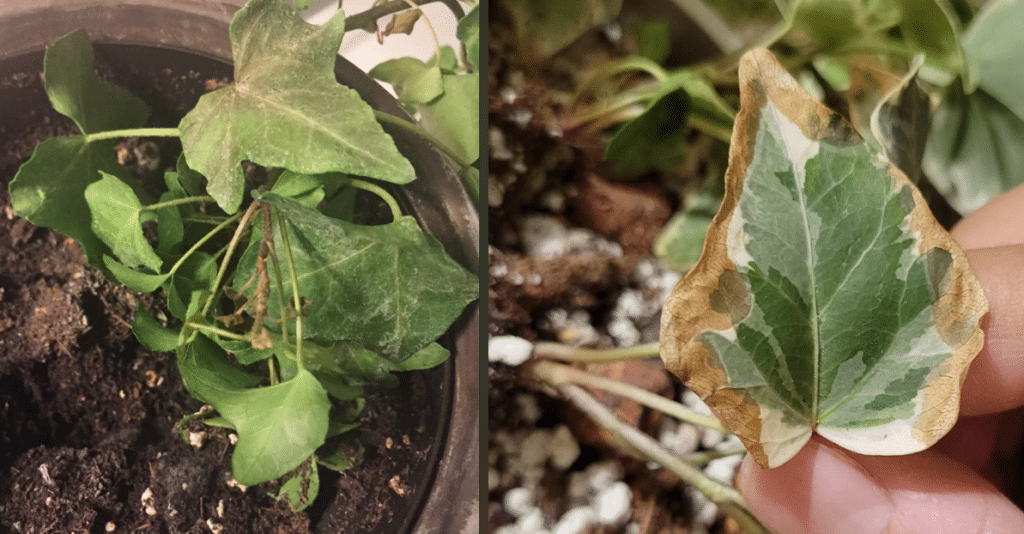
English Ivy Problem Quick Guide
| Symptom | Likely cause | What to do |
|---|---|---|
| Brown or crispy leaves | Dry soil, hot/dry air, mites, salts or sun damage | Check soil, temperature and leaf undersides before changing humidity. |
| Several yellow leaves | Wet roots, low light or other stress | Check soil and roots before fertilizing. |
| Leaves dropping from vines | Heat, watering stress, mites or environmental change | Check roots, radiator/vent exposure and pests. |
| Long sparse vines | Low light, aging growth or lack of pruning | Improve light if needed and prune above nodes. |
| Variegation disappearing | Low light or reverted green shoot | Improve light or remove a genuinely reverted shoot at its base. |
| Fine stippling or webbing | Spider mites | Isolate and inspect leaf undersides closely. |
| Brown or black spots | Physical damage or possible bacterial/fungal leaf spot | Keep foliage dry and watch whether lesions spread. |
← Swipe horizontally on mobile to see the full table →
Why Are My English Ivy Leaves Turning Brown?
Brown leaves have several possible causes.
If the potting mix has become very dry, the foliage can crisp and brown.
Hot, very dry indoor air can contribute too, which is something we have seen when our Ivy sits too close to a winter radiator.
Spider mites are another important possibility, especially when brown or dull foliage is accompanied by tiny pale speckles or fine webbing.
We check the soil, heat exposure and leaf undersides before assuming low humidity alone is responsible.
Why Are My English Ivy Leaves Turning Yellow?
Check the root zone first.
Several yellow leaves appearing while the potting mix remains wet can indicate excess moisture or damaged roots.
Low light and other environmental stresses can create similar yellowing, so we do not automatically add fertilizer.
One occasional older yellow leaf is much less concerning.
Why Is My English Ivy Dropping Leaves?
Think about what changed.
Leaf drop can follow an excessively dry root ball, prolonged wet roots, sudden relocation, radiator heat or pest pressure.
In our home, moving one plant farther from the radiator dramatically reduced its winter leaf drop.
If the plant is shedding leaves from the middle of otherwise healthy vines, also inspect carefully for spider mites.
Why Is My English Ivy Getting Leggy?
Weak light is one common cause.
However, English Ivy naturally produces long climbing stems, so a mature unpruned plant will not remain a dense compact mound indefinitely.
If the new growth is increasingly sparse, improve the light if necessary and shorten selected stems just above nodes to encourage branching.
Why Is My Variegated English Ivy Turning Green?
First look at whether the entire plant is becoming greener or only one shoot.
If most new growth is losing color, increase the available filtered light.
If one vigorous stem repeatedly produces completely green leaves while the rest of the plant stays variegated, that shoot has probably reverted.
Remove the reverted shoot at its base so it does not outgrow the slower variegated portions.
Why Does My Ivy Have Fine Webbing or Dusty-Looking Leaves?
Inspect for spider mites.
Ivy is particularly prone to mites indoors, especially in warm, dry conditions.
Look at the undersides of leaves for tiny moving mites, pale stippling and fine webbing.
Isolate the plant before treating it and choose a control specifically appropriate for the pest you actually identify.
Why Does My English Ivy Have Brown or Black Spots?
Do not automatically assume every spot is fungal.
Physical injury and environmental damage can look similar.
Ivy can also develop bacterial or fungal leaf spots.
Remove badly affected foliage, avoid routinely wetting the leaves and watch whether new lesions continue appearing or spread into healthy tissue.
Why Isn’t My English Ivy Growing?
First consider light and temperature.
Growth naturally slows during cooler, darker periods.
Root problems and prolonged wet soil can also stop new growth.
We would not increase fertilizer until the plant has adequate light and healthy roots.
Why Is My English Ivy Dying Indoors?
Start with the roots rather than trying several fixes at once.
If the pot is remaining wet and roots are soft or dark, correct the watering and drainage problem.
If the roots are healthy, check light, temperature and pests.
English Ivy tolerates lower light surprisingly well, so we would not assume every struggling indoor Ivy simply needs a brighter window.
Warm, dry rooms and spider mites can be just as important.
FAQ
Is English Ivy Toxic to Cats and Dogs?
Yes.
ASPCA lists English Ivy (Hedera helix) as toxic to cats and dogs.
Reported signs include vomiting, abdominal pain, excessive salivation and diarrhea.
The foliage is considered more toxic than the berries.
Is English Ivy a Low-Light Houseplant?
Yes—with an important distinction.
Plain-green English Ivy tolerates low-to-medium indoor light well.
It generally grows more strongly in brighter indirect light, and variegated cultivars need more light to maintain their color.
So we would describe English Ivy as low-light tolerant rather than a plant that necessarily grows best in the darkest location.
Is English Ivy Good for a Bathroom?
It can be, provided the bathroom has useful natural or artificial plant light.
Humidity is not a reason to put Ivy into a windowless room.
Does English Ivy Need Misting?
No.
We do not consider misting necessary for healthy English Ivy.
Normal household humidity is usually workable, and routinely wet foliage can contribute to leaf-spot problems.
If the room is extremely dry, address the room conditions rather than relying on occasional misting.
Can English Ivy Climb Indoors?
Yes.
English Ivy naturally climbs using aerial rootlets.
We give it a trellis, wire frame or other dedicated support rather than encouraging the stems to attach directly to interior walls.
Can English Ivy Damage a Wall?
The aerial rootlets are designed to cling to surfaces.
RHS notes that outdoor Ivy can penetrate existing cracks and joints in damaged masonry.
Indoors, we avoid allowing it to root directly onto painted, wallpapered or porous surfaces because attachment can mark or damage the finish.
A removable trellis is easier to manage.
Can You Grow English Ivy Outdoors?
Yes, but check your local invasive-plant guidance first.
English Ivy is non-native in North America and is invasive in a number of regions, particularly parts of the Pacific Northwest and other areas where it escapes cultivation.
If local guidance discourages or restricts outdoor planting, keep it contained as a houseplant instead.
How Fast Does English Ivy Grow Indoors?
Growth rate varies enormously with cultivar, light, temperature, season and root conditions.
We would not promise a particular number of inches per month.
Growth is fastest during active spring and summer conditions and much slower in cool, dark winter conditions.
How Often Should You Repot English Ivy?
Repot when the roots have filled the existing container or the potting mix has broken down rather than automatically every one or two years.
Move up only modestly in pot size and maintain good drainage.