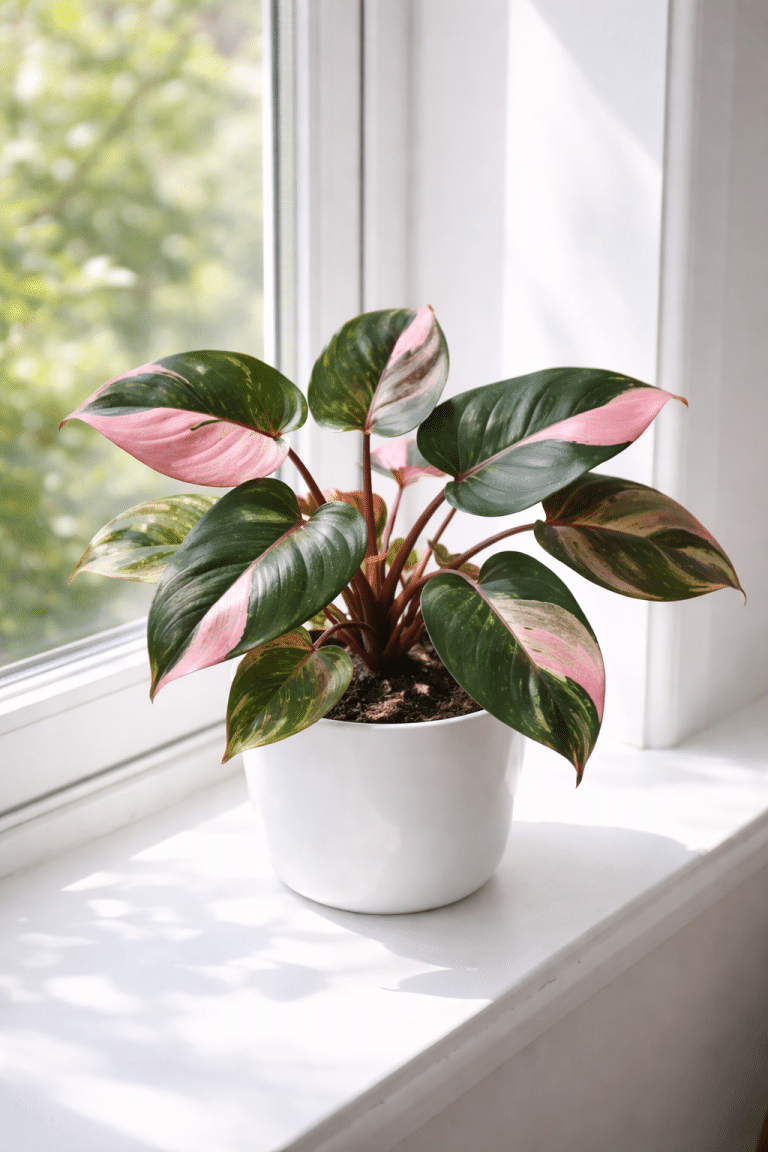
Alocasia Pink Dragon One Leaf In, One Leaf Out: Why It Happens (and How to Stop It)
Wondering why your Alocasia Pink Dragon grows one leaf while losing another? Learn the real causes, plant biology, and fixes that actually work!

We are an Ad-free community driven site. When you purchase through links here, we may earn an affiliate commission, which helps sustain our blog!
“One leaf in, one leaf out.”
Here’s the truth: this behavior isn’t random: it’s not always a sign of failure either. In fact, it’s deeply tied to how Alocasia pink dragons grow, store energy, and survive indoors. But—and this matters—sometimes it is fixable. Sometimes it’s not. Knowing the difference changes everything! Let’s break this down in this article.
Summary
What “One Leaf In, One Leaf Out” Actually Means
Alocasia Pink Dragon naturally replaces older leaves as it produces new ones instead of stacking many leaves at once. This is an energy-management strategy, not automatic leaf loss. The plant prioritizes quality over quantity.
Why Pink Dragon Shows This Pattern More Than Others
Pink Dragon has large, heavy leaves and thick stems that demand a lot of energy relative to its root system. To support a new leaf, it often drops an older one. This makes the cycle more visible than in smaller Alocasia varieties.
How to Tell Normal Leaf Cycling From a Problem
Normal cycling happens slowly and overlaps with new growth already emerging. Problematic leaf loss is fast, often affects multiple leaves, and happens without a new leaf forming. Speed and overlap are the key indicators.
Environmental Factors That Make Leaf Loss Worse
Low light, cold temperatures, overwatering, compacted soil, and winter conditions reduce the plant’s ability to sustain multiple leaves. When roots struggle, the plant sheds leaves to survive. Sudden changes in placement make the pattern more extreme.
How to Reduce Leaf Loss Without Fighting the Plant
You can’t eliminate leaf cycling, but you can slow it by improving light, keeping soil airy, and maintaining consistent watering. When conditions improve, Pink Dragon often holds more leaves at once. The goal is steady new growth, not zero leaf drop.
What “One Leaf In, One Leaf Out” Means in Alocasia Pink Dragon?
Explanation of the growth pattern in Alocasia species
Alocasia species often grow with a capped number of leaves rather than continuous stacking growth. Each leaf requires a lot of energy, water, and root support, so the plant manages resources carefully. Instead of holding on to every leaf forever, it cycles them! This pattern is especially noticeable during active growth phases.
Difference between leaf replacement vs leaf loss
Leaf replacement happens when a new leaf emerges while the oldest leaf slowly yellows and fades. The plant’s overall size and strength stay the same, just redistributed. Leaf loss, on the other hand, reduces the total leaf count over time. That usually signals stress rather than normal growth behavior.
Why this pattern is especially common in Pink Dragon
Alocasia Pink Dragon produces thick stems and heavy leaves that demand more energy than lighter varieties. In our experience, it tends to max out at three to four mature leaves at a time. When a new leaf forms, the plant often can’t support an extra one. So it lets the oldest leaf go to fund the new growth.
How to tell normal cycling from stress-related shedding
Normal cycling is slow and predictable, with one leaf fading as another firms up. The leaf yellows from the tip inward and stays upright for a while. Stress-related shedding happens faster, sometimes affecting multiple leaves. When leaf drop occurs without new growth following, that’s when we start troubleshooting.
Read also: Why don’t the leaves of my alocasia pink dragon unfurl


The Biology Behind It (Rhizomes, Energy & Leaf Limits)

How Alocasia rhizomes allocate stored energy
Alocasia plants grow from rhizomes, which act like underground batteries storing water, carbohydrates, and nutrients. That stored energy gets rationed carefully, especially indoors where inputs are limited. When a new leaf starts forming, the rhizome redirects resources toward it. If reserves are tight, an older leaf becomes expendable.
Why leaf production is capped indoors
Indoor conditions quietly limit how much energy the plant can generate. Light is weaker, air movement is lower, and temperatures are more stable but not always optimal. Because of that, the rhizome sets a ceiling on how many leaves it can support at once. The plant isn’t failing indoors, it’s adapting.
The cost of maintaining large, thick leaves
Pink Dragon leaves are not lightweight structures. Thick petioles, dense veins, and large surface area mean constant water movement and nutrient demand. Each mature leaf becomes a long-term energy expense. When the plant adds a new one, something has to offset that cost.
Why Alocasias prioritize “quality over quantity”
Alocasias evolved to survive with fewer, stronger leaves rather than many weak ones. A smaller number of healthy leaves photosynthesize more efficiently than a crowded canopy under low light. Indoors, this strategy keeps the plant stable instead of stretched thin. It’s a survival choice, not a flaw.


The Most Common Reasons Your Pink Dragon Can’t Hold More Leaves
Insufficient light for sustained photosynthesis
Pink Dragon needs consistent bright, indirect light to support multiple mature leaves. When light is marginal, the plant can start new growth but can’t sustain the old leaves long-term. We’ve seen this happen near north-facing windows where growth looks active but leaf count never increases. The plant is photosynthesizing, just not enough to expand capacity!
Root system size limiting leaf capacity
Leaf count is directly tied to root mass and rhizome health. A smaller or recently disturbed root system simply can’t support extra foliage, even if the plant looks healthy on top. After repotting, Pink Dragon often pauses leaf accumulation while rebuilding roots. During that phase, leaf cycling is extremely common.
Inconsistent watering stressing the rhizome
Irregular watering stresses the rhizome more than people realize. Alternating between too wet and too dry interrupts steady energy flow to the leaves. We’ve noticed that even brief periods of soggy soil can trigger a leaf drop weeks later. The plant responds by reducing leaf load to protect itself.
Low humidity increasing transpiration loss
Pink Dragon loses water quickly through its large leaves, especially in dry indoor air. Low humidity increases transpiration, forcing the plant to work harder just to stay hydrated. When that balance tips, older leaves are sacrificed first. This is why leaf count often improves noticeably once humidity is stabilized.
Nutrient imbalance rather than true deficiency
Most leaf loss isn’t caused by a lack of fertilizer, but by uneven nutrient uptake. Overfertilizing, salt buildup, or poor watering habits can block absorption even when nutrients are present. The plant may look fed but still behave underpowered. In those cases, leaf cycling is a symptom, not the root problem.
REad also: spider mites on alocasia pink dragon fixes and causes
How to Encourage More Than One Leaf at a Time (Realistic Fixes)
Improving light without burning leaves
Pink Dragon needs brighter light than most people think, but it has to be indirect and steady. We’ve had the best results placing it a few feet back from a bright east or south window, where light is strong but filtered. Sudden jumps in light usually cause stress before improvement, so changes need to be slow. If the leaves stay firm and glossy, the light level is working.
Adjusting watering for energy stability
Consistent watering matters more than frequency. The rhizome responds best when moisture levels stay predictable, not swinging between soggy and bone dry. We let the top layer dry slightly, then water thoroughly so roots stay active without drowning. That steady rhythm helps the plant maintain multiple leaves at once.
Optimizing humidity in apartments
Apartment air dries plants out faster than we expect, especially in winter or with HVAC running. Pink Dragon loses a lot of moisture through its large leaves, which raises its energy cost. We’ve found that even modest humidity increases can improve leaf retention. Grouping plants or using a humidifier nearby often makes a visible difference.
Supporting roots before chasing foliage
More leaves require more roots, full stop. If the root system is tight, damaged, or recently repotted, the plant will cap leaf growth no matter what you do above soil. We focus on root health first by avoiding oversized pots and keeping soil airy. Once roots expand, leaf count usually follows on its own.
Setting realistic expectations for indoor growth
Indoors, Pink Dragon has limits that outdoor plants don’t. Holding three to four healthy leaves at a time is often a sign of success, not failure. Chasing five or six leaves can push the plant into constant cycling. When we adjusted expectations, the plant actually looked better overall.
Read also: Alocasia pink dragon one leaf in one leaf out syndrome.
Conclusion:
The one leaf in, one leaf out pattern in Alocasia Pink Dragon isn’t a failure—it’s a message. Your plant is telling you how much energy it can safely manage in your space.
Sometimes the fix is better light or steadier watering. Sometimes the fix is accepting that this plant values survival over showiness. Once you understand why it behaves this way, the frustration fades—and your care becomes calmer, smarter, and far more effective.
If you want your Pink Dragon to thrive, don’t chase leaves. Support the system that grows them!!