String Of Pearls care guide
Discover watering, soil, fertilizing, pests, styling, and troubleshooting tips for String Of Pearlst from our experience growing and caring for it in our Brooklyn home!

We are an AD-FREE, community driven site. When you purchase through links, we may earn a commission, which helps sustain our blog!
String Of Pearls care guide
Care at glance
How to care for String Of Pearls
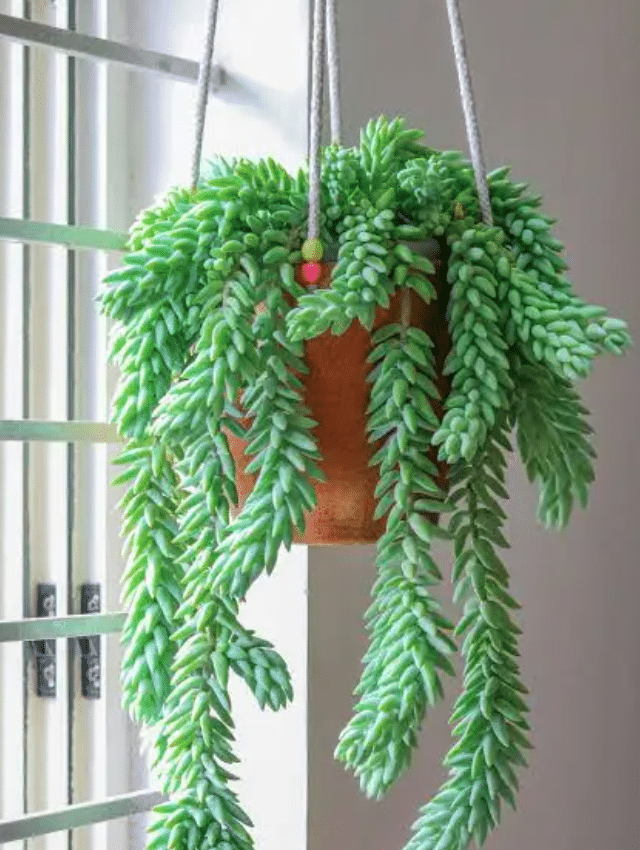
String of pearls has trailing stems lined with round, bead-like green leaves that spill over pot edges in long, elegant strands.
- Watering: Let soil dry completely between waterings; water deeply but infrequently.
- Light and temperature: Needs bright, indirect light or morning sun; prefers 70–85°F and good airflow.
- Toxicity: Mildly toxic; can cause vomiting or diarrhea if ingested (ASPCA).
- Soil and fertilizer: Use gritty, well-draining, peat-free cactus mix with sand and pumice; feed monthly in spring/summer.
- One common issue: Mushy or translucent pearls come from overwatering—reduce frequency and ensure fast drainage.
- Propagation method: Lay cuttings on soil with nodes touching; roots form along the stem.
Our favorite soil and fertilizer for string of pearls


2. Care mistakes we have learnt to avoid with String of pearls plant
- Watering before the soil dries fully: The pearls store water, and wet soil causes sudden, silent rot at the base long before the leaves look affected. We let the mix dry completely and use a gritty, fast-draining blend with sand and perlite so moisture never lingers.
- Keeping it in medium light thinking it’s “a trailing plant”: String of pearls needs strong, direct window light or it stretches, deflates, and loses its shape. We keep ours pressed right against a south or west window so it gets several hours of sun every day.
- Using a deep pot that traps moisture where the roots can’t reach: The roots are shallow and sit close to the soil surface, so deep pots hold wet pockets that cause rot. We use shallow dishes or squat pots and only repot when the plant is spilling over the edge.
- Watering normally in winter when the plant is almost dormant: In our Brooklyn winters, the plant stops drinking and cooler soil stays wet for days. We water tiny amounts only on bright, warm days so the soil can dry out again before temperatures drop..
3. A real issue we have had with string of pearls plant in our home
The plant kept collapsing from the top even though the pearls looked full and green. The real cause turned out to be rot at the crown—water was sitting in the top layer of soil because the pot was too deep and the mix wasn’t gritty enough. We switched to a shallow dish with a sandy, fast-draining mix, and the plant stopped collapsing almost immediately.
lineage and Symbolism
The String of Pearls (Senecio rowleyanus), a member of the Asteraceae family, is a trailing succulent known for its round, bead-like leaves that resemble a green necklace cascading from a pot. Delicate bead like leaves, if we may add 🙂
We hang ours in a bright window in our Brooklyn community home, where it draws more questions than any other plant. It’s quirky, dramatic, and surprisingly easy — if you don’t overwater it. Like most succulents, it prefers being ignored a little. (They don’t like being touched either, they wither!)
This plant symbolizes prosperity, uniqueness, and resilience. It resonates most with Aquarius — creative, independent, and a bit eccentric.


$33
“Like pearls they drape over my window and i have tied it up so that it goes up and covers the whole rectangle of my window frame!”
What we wish we knew before buying
It looks full in the store, but it never stays that way without intense window light: We didn’t realize those perfect, dense baskets you see at nurseries are grown under powerful greenhouse lights. At home, the plant thinned out quickly until we moved it right against a south-facing window where it could get hours of real sun. Once we did that, the strands finally stayed round and full instead of slowly balding from the top.
String of Pearls plant care infographic

📋 Use this infographic on your site — copy the code below:
Plant that pairs well with similar care needs
Light and placement

What is the light requirement for String Of Pearls?
Bright indirect light is best, with a few hours of morning or filtered sun. Too little light will cause the pearls to shrink and lose their plump shape.
We’ve found a west-facing windowsill to be just about perfect. Grow lights also work well in winter.
How to know if String Of Pearls is not getting right amount of light?
Pearls start to flatten or turn translucent, and stems grow leggy with gaps between beads. We have never had problem with this one not getting enough light, tbh. We just always love to decorate it hanging by the windows.
Where to place String Of Pearls and where to avoid?
Place it near a sunny window with sheer curtains — ideally south or west-facing. Avoid direct hot sun, especially in summer.
We’ve hung ours in macrame planters right by the window and rotate them weekly for even light.
Read also: our guide to making trailing plants grow longer vines, and making them climb
How string of pearls plant behaves through the seasons?
String of pearls changes more through the seasons than most trailing plants, and we see it clearly in our Brooklyn home. Here’s how it actually behaves month to month.
- Spring: Growth wakes up fast, and new pearls appear at the tips. We water a bit more frequently because the plant starts drinking again, and we keep it right against a bright window for strong light. The only issue is overwatering during this “wake-up” phase, so we still wait for the soil to dry fully.
- Summer: This is the plant’s strongest season with plump pearls and steady trailing. The gritty soil dries quickly in the heat, so we water more deeply but still infrequently, and we leave it in direct sun for a few hours daily. Heat can shrivel exposed strands, so we rotate the pot to balance the light.
- Fall: Growth slows sharply, and the pearls hold water longer. We cut back watering and stop fertilizing because cooler rooms make the soil stay wet for days. The biggest issue is light loss—if we don’t move it closer to the window, the strands start stretching.
- Winter: Growth almost stops and the plant becomes sensitive to cold soil. We water very sparingly and only on bright, warm days so the mix dries again before temperatures drop. Drafts from old windows cause pearls to wrinkle, so we press the plant right against the sunniest glass but away from cold air leaks.
Soil
What soil composition to use for String Of Pearls?
Use a fast-draining mix like:
- 2 parts pumice or coarse perlite
- 1 part coco coir
- 1 part compost or worm castings
Skip anything with peat — it holds too much moisture and risks root rot.
Best soil to use for String Of Pearls?

Here’s our experience with Miracle‑Gro Succulent Potting Mix:
Fast perk-up and blooms: Right after repotting, we saw healthier beads and even the beginnings of bloom—the mix supports moisture without waterlogging, and flowering followed.
Balanced moisture, sometimes too much: It retains hydration well, but in humid conditions, we found it can stay damp longer than ideal. A mix with added perlite or grit helped our pearls stay plump without rot.
A budget-friendly, reliable base: Many of our friends use this mix—it’s convenient, widely available, and paired with tweaks, it supports cascading growth beautiful
Temperature and Humidity
What is the best temperature condition for String Of Pearls?
Keep temps between 70–80°F during the day and no lower than 50°F at night.
We move ours away from drafty windows in winter. Cold shock causes sudden shriveling.
What is the best humidity condition for String Of Pearls?
Low to moderate humidity (30–50%) is ideal. High humidity increases rot risk.
We don’t mist it. In fact, we keep it away from high-humidity rooms like bathrooms.


fertilizer
What is the best fertilizer composition to use for String Of Pearls?
Use a diluted cactus or succulent fertilizer — low in nitrogen, like 2-7-7 or 4-7-8.
We use one with added calcium and magnesium, since the plant stores a lot in its leaves.
How and when to fertilize String Of Pearls?
Fertilize monthly in spring and summer at half strength. Don’t fertilize in fall and winter.
Always water before feeding. Overfertilizing can cause leaf drop or burned roots.
DIY tip: We use a weak banana peel tea once in early spring — rich in potassium and phosphorus.
What are the signs String Of Pearls needs food?
Slowed growth and smaller, shriveled pearls often signal nutrient deficiency.
If you’ve ruled out lighting and watering issues, a light feed usually helps it bounce back.
Best fertilizer to use for String Of Pearls?
We recently started feeding our String of Pearls with Grow Co Succulent & Cactus Plant Food, and here’s how it’s performing in our care routine:
- Visible growth in just weeks: After switching to this food, our pearls quickly became plumper and showed renewed vibrancy. It seemed like the entire strand brightened up and looked healthier within days.
- Simplified care with minimal risk: We apply it with every other watering—about twice a month—and it’s clean and easy to use. Despite some concerns about lighting and feeding, our pearls thrived without getting leggy or stressed.
- Balanced results without heavy buildup: The food gave a steady boost but never led to overfeeding. Our pearls stayed firm, well-rooted, and continued trailing gracefully—no yellowing or mushy beads.
Pots and planters
What are the best pots to use for String Of Pearls?
Use a shallow, wide pot with good drainage holes. Terracotta works best to wick excess moisture.
We use wall-mounted planters with built-in drainage trays for visual drama and safety.


Read also: Best hanging baskets, and best trellises for hanging plants. And our guide to styling trailing houseplants
Watering
How and When to water String Of Pearls?
Water only when the soil is bone dry — typically every 2–3 weeks indoors.
We bottom-water ours by placing the pot in a tray for 15 minutes, then letting it fully drain. It prevents rot and keeps the roots strong.
what are the Signs of over or under watering String Of Pearls?
Overwatering causes mushy, translucent pearls and stem rot. Underwatering leads to shriveled, flattened pearls.
If in doubt, wait a few more days — this plant would rather go dry than sit wet.

pruning
how to prune String Of Pearls?
Prune to maintain shape, remove dead strands, or encourage fullness at the top.
Best time to prune is spring or early summer.
- Use sterilized scissors to cut just above a node
- Trim leggy or bald strands to stimulate side shoots
- Never remove more than 1/3 of the plant at once
Post-pruning care:
Keep in bright light and avoid watering for 3–5 days. You’ll usually see new shoots from nodes within a couple of weeks.
Read also: How to grow longer vines for trailing plants
propagating
How to propagate String Of Pearls
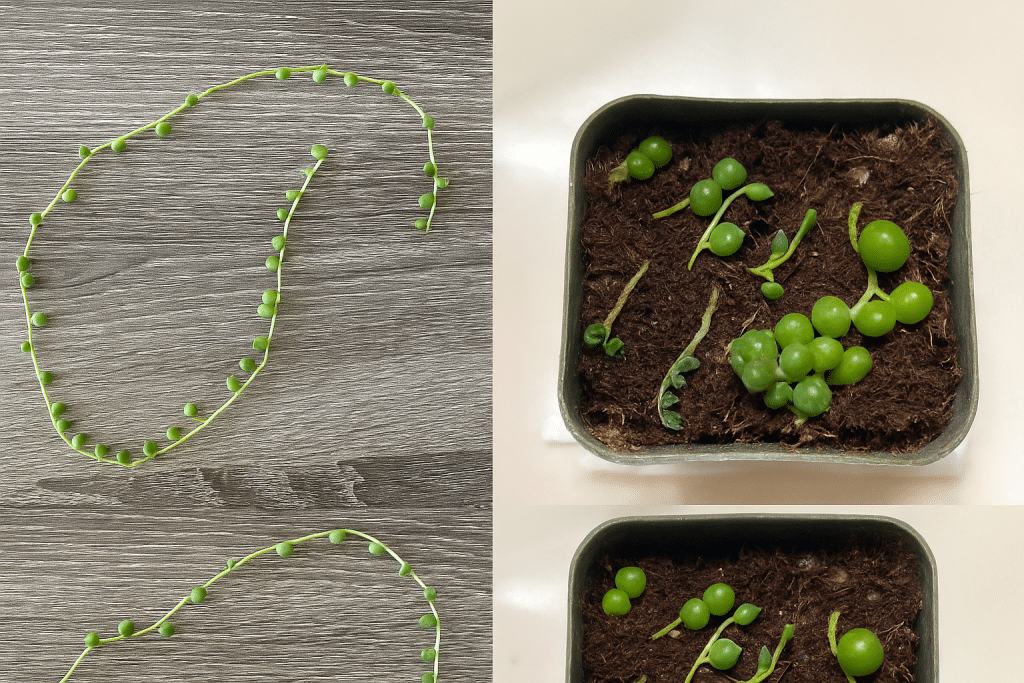
Method: Stem cuttings
- Snip a 4–6 inch healthy strand just below a leaf node
- Let it callus over for 1–2 days
- Lay it on dry soil, pressing pearls gently into the surface
- Mist lightly to encourage root growth
how to care after propagating String Of Pearls?
- Post-propagation care: Keep in bright indirect light. Mist lightly every 2–3 days until rooted. Once established (3–4 weeks), water deeply and cut back on misting.
Troubleshooting common issues
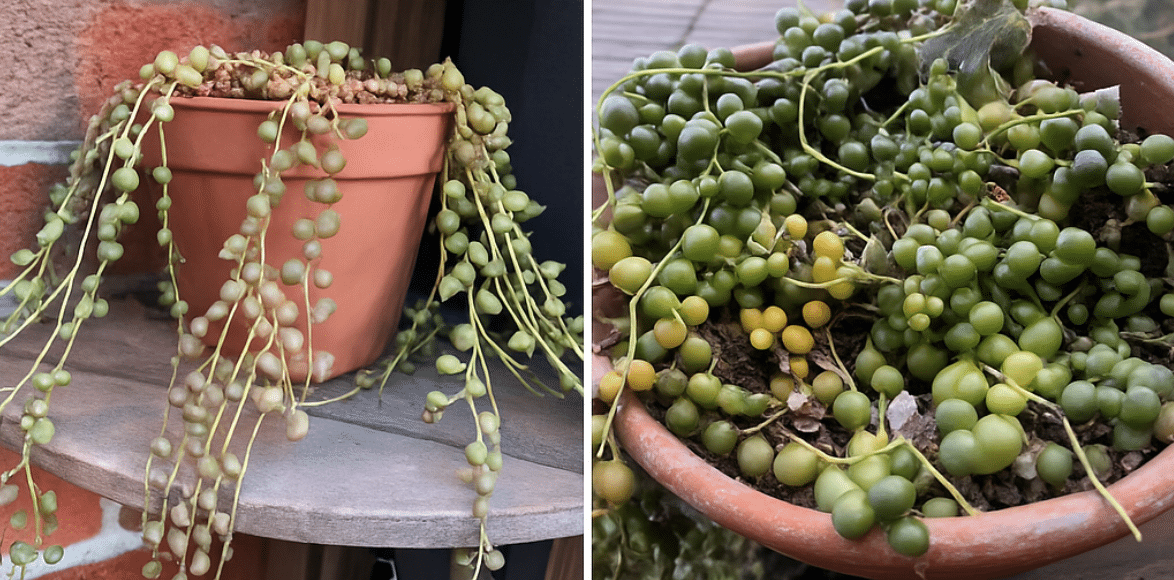
Why are my String of Pearls shriveling?
Underwatering or too much direct sun. Move to indirect light and water deeply once soil is dry.
Why are the pearls turning mushy and translucent?
Overwatering or poor drainage. Let soil dry out fully and check the roots for rot.
Why are stems growing leggy and sparse?
Lack of light. Move closer to a bright window or use a grow light.
Why is my String of Pearls not growing?
Dormant period or nutrient deficiency. Wait for spring and fertilize monthly.
Why are the leaves wrinkled but soil is damp?
Root rot has likely begun. Unpot, trim rotted parts, and repot in fresh soil.
Why are the pearls dull and faded?
Excessive light or fertilizer can cause this. Move to filtered light and flush the soil.
Why are strands falling off suddenly?
Physical stress from moving or watering can cause this. Handle gently and avoid overhandling.
FAQ
What are the benefits of the String of Pearls?
It’s a space-saving, eye-catching trailing plant perfect for vertical styling and propagation.
Is String of Pearls toxic to pets?
Yes, it’s considered mildly toxic to cats, dogs, and humans if ingested.
How fast does String of Pearls grow?
It grows fast in warm months with bright light — up to several inches per month.
Can I keep jade plant in the bedroom?
Yes, as long as the room gets bright light—it does fine in bedrooms.
Can I grow String of Pearls from seed?
Yes, but it’s slow and unreliable. Stem cuttings are much easier.
How much sun can it handle?
Morning sun is fine, but avoid strong afternoon rays. It scorches easily.
Should I mist String of Pearls?
No. Misting can lead to rot and isn’t necessary in average home humidity.
Does String of Pearls flower?
Yes — small white flowers with a cinnamon scent may appear in spring.
When should I repot it?
Every 2–3 years, or when rootbound. Use a shallow pot.
Can I hang String of Pearls outside?
Yes, but only in warm, dry climates. Bring indoors if temps drop below 50°F.
What pests affect String of Pearls?
Watch for mealybugs, spider mites, and root aphids. Neem oil works well.
Can I water it from the top?
Yes, but only if you’re careful to avoid soaking the crown. Bottom watering is safer.
Is String of Pearls drought-tolerant?
Very much so — it’s built for neglect, not pampering.
Why are my pearls spaced out far?
Insufficient light. Move to a sunnier location or add a grow light.
How long do cuttings take to root?
Usually 3–4 weeks with light misting and good light.
Can I grow it in a kokedama or moss ball?
Technically yes, but it dries out quickly. Needs frequent monitoring.
Tips from trusted blogs online
- “I usually cut off a few of the pearls and stick about an inch to an inch and half of the stem into the soil and it’ll root most of the time.” Source: Reddit
- “I usually cut off a few of the pearls and stick about an inch to an inch and half of the stem into the soil and it’ll root most of the time.” Source: Reddit
- “Similar to common pits I learned to repot by tipping the pearls upside-down, adding extra potting mix to the bottom, then carefully tipping them back in higher so the crown sits near the edge. That stopped the bottom stems rotting from poor airflow.” Source: Love That Leaf
- “When growing String of Pearls in terracotta pots, watering weekly allowed the pot to dry enough between soaks — giving it good growth balance.” Source: Reddit
- “Your pearls go bald at the base if the crown sits lower than the pot edge. Keeping the pearls above the rim helps prevent that and keeps airflow moving.” Source: Reddit