Peace Lily care guide
We grow peace lilies in our Brooklyn home and have figured out the watering and fertilizing mistakes that make them droop — here’s everything we’ve learned.

We are an AD-FREE, community driven site. When you purchase through links, we may earn a commission, which helps sustain our blog!
Peace Lily care guide
care at a glance
How to care for Peace Lily?
Peace Lily (Spathiphyllum spp.) is a tropical aroid grown for its glossy foliage and white flower-like spathes.
- Light: Bright indirect light gives the strongest growth and flowering, but Peace Lilies genuinely tolerate lower light and shade.
- Water: Keep the mix moderately moist, allowing the surface to begin drying before watering thoroughly again.
- Soil: Use a peat-free, organic-rich mix that holds moisture but drains freely.
- Temperature: Warm indoor conditions suit it best; protect it from cold drafts.
- Humidity: Moderate household humidity is usually enough, although extremely dry air can contribute to brown edges.
- Fertilizer: Feed lightly with a complete general houseplant fertilizer during active growth.
- Pruning: Remove spent flower stalks and fully yellow or damaged leaves at the base.
- Propagation: Divide established clumps with their own roots and growing point.
- Pet safety: ASPCA lists Peace Lily as toxic to cats and dogs because it contains insoluble calcium oxalate crystals.
- Common problems: Dramatic drooping, yellow leaves, brown tips, root rot, lack of flowers and aging green or brown spathes.
Care Mistakes We Have Learned to Avoid
Watering automatically whenever the leaves droop: Peace Lilies can collapse dramatically when dry, but drooping can also happen when roots are stressed in wet soil. We check the potting mix before adding water.
Keeping it in deep shade because it “likes low light”: Peace Lily tolerates lower light, but flowering and growth are much stronger in useful indirect light. We now distinguish between surviving shade and growing well enough to bloom.
Using a dense mix that stays wet for too long: Peace Lilies like moisture, but roots still need oxygen. We want a mix that stays moderately moist without remaining saturated.
A Real Issue We Have Had With Our Peace Lily
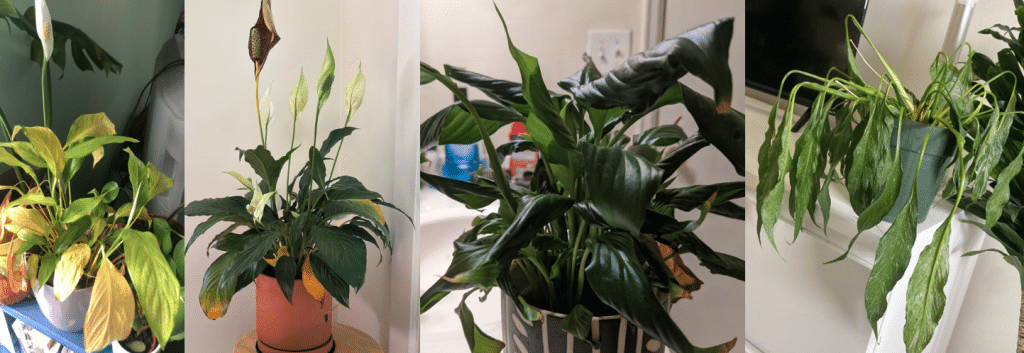
Our Peace Lily kept producing brown tips even though we were being careful with watering.
The problem improved after we switched from our usual tap water to filtered water.
That made mineral or chemical sensitivity our leading explanation in this case, especially because Peace Lilies are known to develop tip damage from poor water quality and fertilizer salts.
We still would not diagnose every brown tip the same way. Dry air, underwatering, excess fertilizer and direct sun can create similar damage.
lineage and Symbolism

What Makes Peace Lily Different?
Peace Lilies are not true lilies.
They belong to the Araceae family, alongside plants such as Philodendrons and Anthuriums.
The white structure we call the “flower” is actually a spathe, a modified leaf surrounding a central spadix that carries the tiny true flowers.
Why Do Peace Lily Flowers Turn Green?
Often because the spathe is aging.
Peace Lily spathes commonly emerge white and gradually become pale green as they mature.
A green older bloom is therefore usually part of the normal flower cycle rather than a sign that something is wrong.
Does Peace Lily Really Grow in Low Light?
Yes, but there is a tradeoff.
Peace Lily tolerates relatively deep shade and low indoor light better than many flowering houseplants.
However, plants kept in brighter filtered light usually grow more strongly and flower more reliably.
We therefore describe Peace Lily as low-light tolerant, not a plant that necessarily flowers best in low light.
Read also: Variegated peace lily care


$43
“Love the white blooms. It’s been doing great in my living room”
What we wish we knew before buying
Its dramatic droop makes you think it’s thirstier than it actually is: Peace lilies collapse so convincingly that you feel guilty and immediately water them, but most apartments—especially ours—don’t dry the soil fast enough for that to be safe. The plant bounces back in an hour, yet the soil stays wet for days, quietly stressing the roots. We wish someone had told us that the droop is a performance, and the real care is learning the pot’s weight, not the leaves’ emotions.
Peace Lily plant care infographic

Infographic by Houseplants Nook
Light and placement and seasons
How Much Light Does a Peace Lily Need?
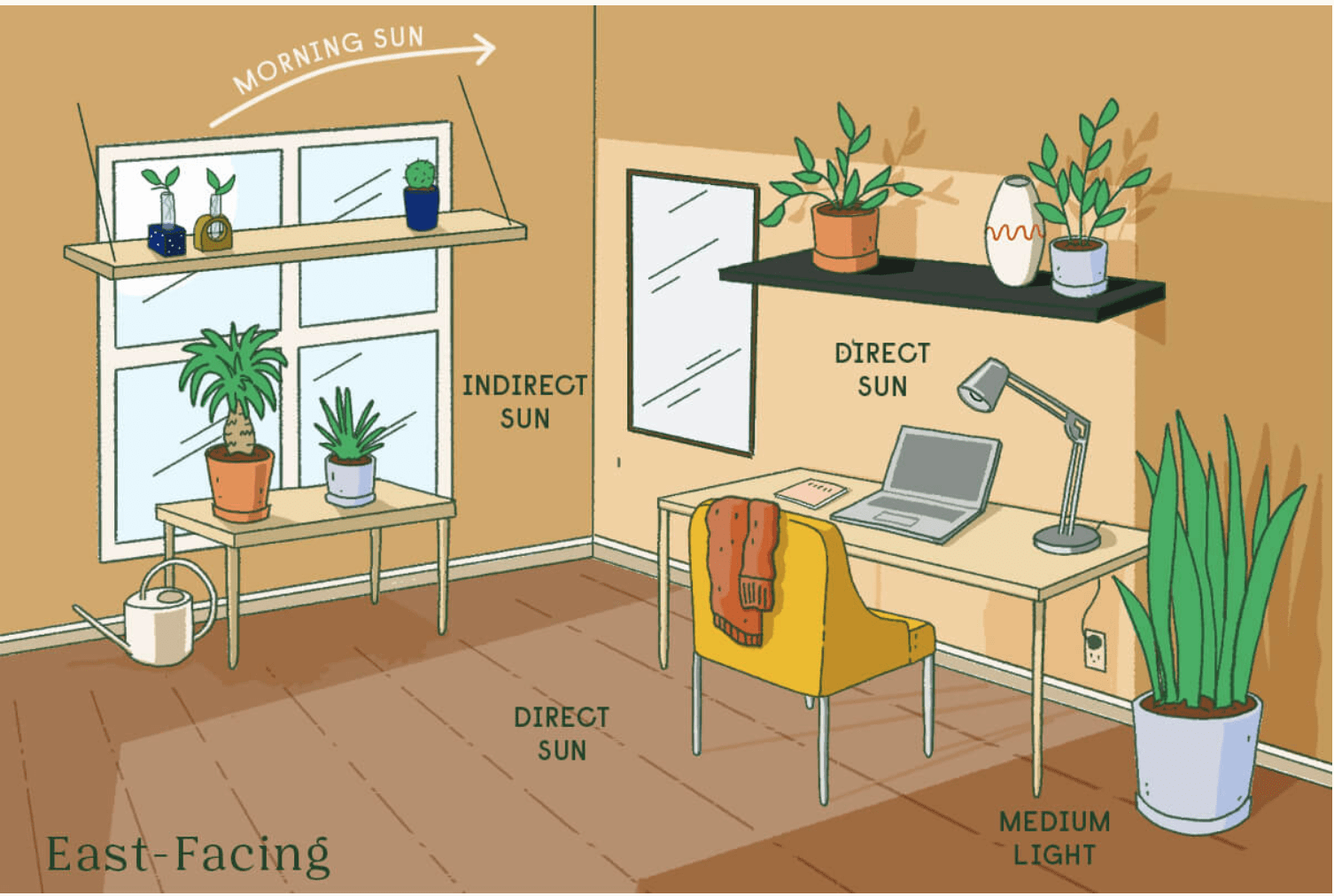
Peace Lily performs best in bright filtered or indirect light.
It genuinely tolerates lower light and shade, which is why it works in offices and rooms that are too dim for many flowering plants.
The tradeoff is flowering.
A Peace Lily in lower light may remain healthy and green but produce few or no spathes.
Can Peace Lily Grow in Low Light?
Yes.
We consider Peace Lily one of the better low-light flowering houseplants.
But we distinguish:
Low light = tolerated.
Bright indirect light = stronger growth and more reliable flowering.
How Can You Tell if a Peace Lily Needs More Light?
The clearest clue is persistent lack of flowers combined with very slow growth.
If the plant is otherwise healthy but never blooms, gradually move it into stronger filtered light.
Too much direct sun can cause bleached or scorched patches on the leaves.
Where Should You Put a Peace Lily?
Use the brightest spot available that avoids prolonged hot direct sun.
We focus on the actual light reaching the leaves rather than one particular window direction or a fixed number of feet from the glass.
Keep it away from cold drafts, hot radiators and furnace vents.
How Does Peace Lily Change Through the Seasons?
Spring: Growth and flowering usually increase as daylight strengthens.
Summer: The plant often uses water more quickly and may flower repeatedly.
Fall: Growth begins slowing and the pot stays moist longer.
Winter: Growth may become very slow, so we water less frequently but still water thoroughly when the surface begins drying. We do not switch to small partial drinks or a fixed 10–14-day schedule.
Soil
What soil composition to use for Peace Lily?

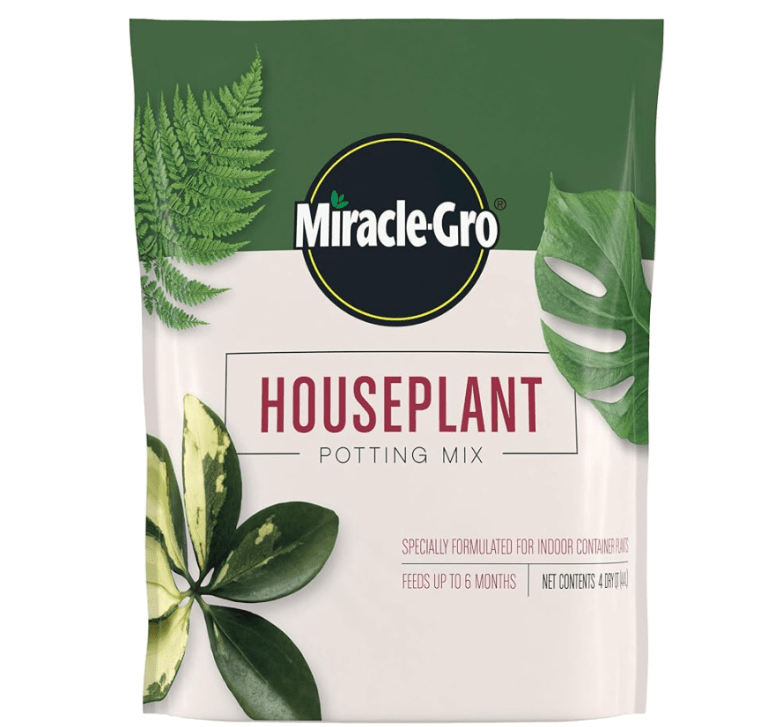
Peace Lilies like moist, well-draining, nutrient-rich soil. We have in the past used 50% potting mix, 25% coco coir, 15% compost, and 10% perlite. This holds moisture without waterlogging and keeps roots happy.
Skip peat and dense soils—soggy roots lead to fungus and root rot
Best soil to use forPeace Lily?
Temperature and Humidity
What Temperature Does Peace Lily Prefer?
We keep ours around 65–80°F.
Warm, stable conditions encourage growth.
Cold drafts and prolonged temperatures below the mid-50s can slow growth or damage the foliage.
How Much Humidity Does Peace Lily Need?
Peace Lily prefers moderate humidity but does not require rainforest conditions.
Around 40–60% RH works well in many homes.
Extremely dry heated air can contribute to brown edges, but brown tips can also come from water chemistry, fertilizer salts, dry soil or direct sun.
Should You Mist a Peace Lily?
We do not rely on misting.
If the room is genuinely dry, a humidifier changes the actual room humidity much more consistently.
Otherwise, stable watering and keeping the plant away from radiator heat matter more.


fertilizer
What Is the Best Fertilizer for Peace Lily?
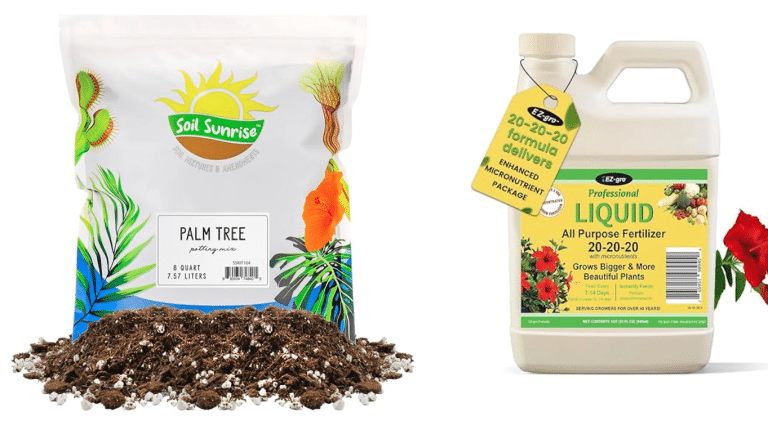
We use a complete general-purpose liquid houseplant fertilizer during active growth.
A specific 10-10-10 formula is not required, and a high-phosphorus “bloom booster” is usually unnecessary.
Peace Lilies are not heavy feeders.
We prefer light, regular feeding to concentrated doses because fertilizer salts can burn the leaf tips and roots.
How Often Should You Fertilize Peace Lily?
A light feeding about once a month during active growth is a sensible starting point.
If the plant is growing slowly in weak winter light, we reduce or stop feeding until growth resumes.
Follow the label rather than assuming more fertilizer will produce more flowers.
What Should You Feed a Peace Lily to Make It Bloom?
Start with light, not fertilizer.
Insufficient light is one of the most common reasons an otherwise healthy Peace Lily fails to flower.
If the plant already receives good filtered light and is actively growing, a complete fertilizer supports normal flowering.
We would not switch to a high-phosphorus formula simply because the plant has no blooms.
Does Peace Lily Need Bloom Booster?
No.
A healthy Peace Lily does not require a special bloom-booster formula.
A complete fertilizer supplies nitrogen, phosphorus, potassium and micronutrients without deliberately overemphasizing phosphorus.
Should You Use Banana-Peel Tea or Epsom Salt?
We don’t.
Banana-peel tea has an unpredictable nutrient concentration, while Epsom salt supplies magnesium and sulfur rather than complete nutrition.
Neither is a reliable way to make a Peace Lily flower.
How Can You Tell if a Peace Lily Is Overfertilized?
Watch for recurring brown leaf tips or margins, visible salt crust on the soil or pot, and root damage despite otherwise reasonable watering.
If we suspect salt buildup, we pause fertilizer and flush the pot thoroughly with water.
Does a Yellow Peace Lily Need Fertilizer?
Not automatically.
Yellow leaves are more often useful as a signal to check watering, root health, light and normal leaf age first.
We only increase feeding when the plant is actively growing and there is a real reason to suspect inadequate nutrition.

Read also: Why won’t my flowering houseplants bloom, and why are the buds losing
Best fertilizer to use for Peace Lily?

Pots and planters
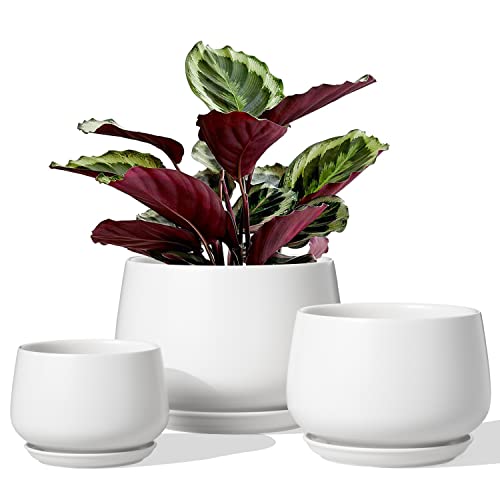
What Kind of Pot Is Best for Peace Lily?
Use a container with drainage that is only modestly larger than the current root ball.
Plastic and glazed ceramic retain moisture longer.
Terracotta dries faster but can still work if you monitor the soil more frequently.
Does Peace Lily Like to Be Rootbound?
Peace Lilies can tolerate being somewhat snug in their pots.
We do not rush to repot a healthy plant simply because roots are visible.
Repot when the root system has substantially filled the container, the mix dries unusually fast, or water has difficulty penetrating the root ball.
How Much Bigger Should the New Pot Be?
Usually only 1–2 inches wider than the current container.
Moving straight into a dramatically larger pot leaves a large mass of unused wet mix around the roots and increases the risk of prolonged saturation.
Read also: How to style flowering houseplants
Watering
How Often Should You Water a Peace Lily?
We water when the surface to roughly the top inch of potting mix begins to dry, then soak the entire root ball and let the excess drain.
We do not use a fixed weekly schedule.
Light, temperature, root mass and season all change how quickly the pot dries.
Should Peace Lily Soil Stay Moist?
Yes, but not soggy.
Peace Lily prefers more consistent moisture than drought-adapted houseplants.
The goal is a root zone that stays moderately moist while still receiving enough air.
Why Does My Peace Lily Droop So Dramatically?
A dry Peace Lily can lose turgor and collapse quickly.
If the soil is actually dry, a thorough watering often restores the plant.
But drooping is not proof of thirst.
If the soil is already wet, investigate the roots rather than adding more water.
What Water Is Best for Peace Lily?
If your tap water works and the new leaves remain clean, keep using it.
If new leaves repeatedly develop brown tips despite appropriate watering and humidity, try rainwater or filtered water.
Peace Lilies can be sensitive to dissolved salts and some components of tap water.
What Does an Overwatered Peace Lily Look Like?
Warning signs include several yellow leaves, persistent wilting while the soil is wet, a sour or musty smell and soft or dark roots.
The important combination is declining foliage + persistently wet root zone, not one yellow leaf by itself.

pruning
Does Peace Lily Need Pruning?
Very little.
We remove spent flower stalks, fully yellow leaves and badly damaged foliage.
Routine pruning does not make a Peace Lily bushier.
How Do You Remove a Finished Peace Lily Flower?
Follow the flower stalk down toward its base and cut it cleanly near the crown.
There is no need to wait for the stalk to become completely dry if the spathe has already browned and collapsed.
Should You Cut Yellow Leaves Off a Peace Lily?
Yes, once the leaf is mostly yellow and no longer contributing much to the plant.
Cut the petiole near the base without damaging neighboring new growth.
Does Peace Lily Need Special Care After Pruning?
No.
Return it to normal care and water according to the potting mix.
There is no need to water lightly or stop fertilizer for a fixed number of days simply because one leaf or flower stalk was removed.
propagating
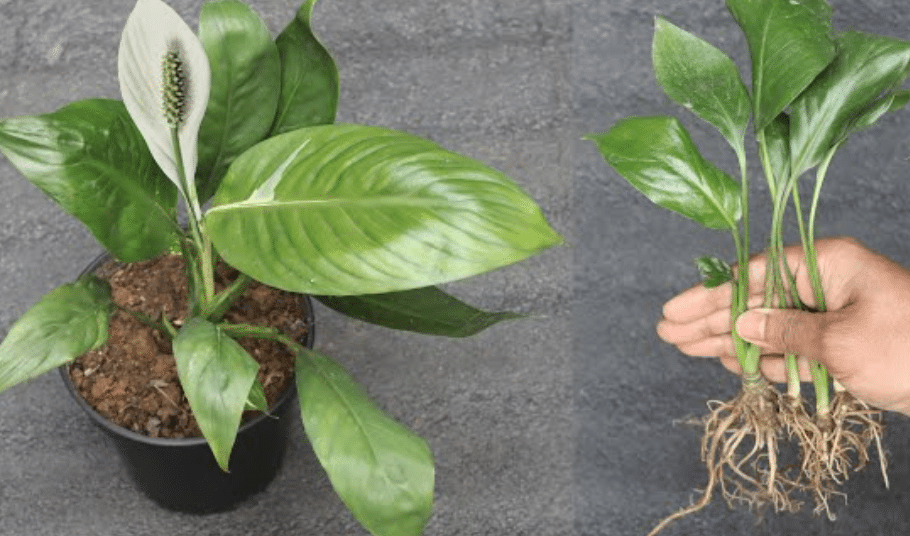
What Is the Best Way to Propagate Peace Lily?
Division is the simplest and most reliable method.
Remove the plant from the pot and look for natural clumps with their own leaves, roots and growing point.
Gently separate one section from the main root mass and pot it at approximately the same depth in fresh mix.
What Is a Peace Lily Crown?
The crown is the basal growing area where leaves and roots emerge.
A successful division needs a viable growing point associated with healthy roots.
Peace Lily is not propagated by rooting an ordinary detached leaf or flower stalk.
When Should You Divide Peace Lily?
Spring or early summer is easiest because the plant is entering active growth.
We also divide when a mature pot has several well-established crowns and is due for repotting anyway.
How Do You Care for a Peace Lily After Division?
Keep the mix evenly moist but not saturated and place the division in stable filtered light.
Some temporary drooping after root disturbance is normal.
We wait until the division has settled into active growth before returning to a full fertilizer routine.
Troubleshooting common issues
Peace Lily Problem Quick Guide
| Symptom | Likely cause | What to do |
|---|---|---|
| Drooping + dry soil | Underwatering | Water thoroughly and let excess drain. |
| Drooping + wet soil | Root stress, rot or cold conditions | Do not water again; inspect roots if decline continues. |
| Several yellow leaves | Wet roots, low light, stress or normal aging | Check soil and roots before adding fertilizer. |
| Brown tips | Water chemistry, salts, dry soil, dry air or sun | Review water source, fertilizer, soil moisture and exposure. |
| No flowers | Usually insufficient light, slow growth or immature plant | Increase filtered light before changing fertilizer. |
| White flower turns green | Normal spathe aging | Leave it until unattractive, then remove the stalk at the base. |
| Musty soil + soft roots | Root rot | Unpot, remove clearly rotten tissue and correct drainage. |
| Cottony or sticky residue | Possible mealybugs or other sap-feeding pests | Identify the pest before treating. |
← Swipe horizontally on mobile to see the full table →
Peace Lily Problems
Why Is My Peace Lily Drooping?
Check the soil before doing anything else.
If the root ball is genuinely dry, dramatic drooping is a classic Peace Lily response and the plant often recovers after a thorough watering.
If the soil is already wet, do not water again.
Drooping in wet soil can indicate stressed or damaged roots, cold conditions or prolonged saturation.
Why Is My Peace Lily Drooping Even Though the Soil Is Moist?
This is the situation where watering again can make things worse.
Check whether the pot has remained wet for a long time and whether the roots smell sour or feel soft and dark.
Also consider recent repotting or cold exposure.
The leaves cannot tell us whether the roots are dry or damaged; the soil and roots can.
Why Are My Peace Lily Leaves Turning Yellow?
One older yellow leaf can simply be aging.
Several yellow leaves appearing while the soil remains wet make us investigate the roots and watering first.
Low light, environmental stress and fertilizer problems can also contribute.
We do not add fertilizer simply because the foliage becomes yellow.
Why Does My Peace Lily Have Brown Tips?
Brown tips have several possible causes.
Peace Lilies can react to dissolved salts and some components of tap water.
Repeated dry-downs, low humidity, overfertilizing and direct sun can also contribute.
If the newest leaves keep developing brown tips, we review the water source, fertilizer use, room conditions and soil moisture together rather than blaming humidity alone.
Why Won’t My Peace Lily Bloom?
Start with light.
Peace Lilies tolerate low light, but flowering is much more reliable in bright filtered conditions.
A plant that is healthy and green but produces no spathes may simply need more usable light.
We would not respond first with a high-phosphorus bloom booster.
Why Are My Peace Lily Flowers Turning Green?
Usually because the spathe is aging.
The white spathe commonly fades toward pale green as the flower matures.
Once the stalk begins browning or becomes unattractive, cut it near the base.
Why Are My Peace Lily Flowers Turning Brown?
An older spathe eventually browns as the bloom finishes.
If newly opened spathes brown quickly, investigate direct sun, very dry conditions or root stress.
One naturally aging flower does not indicate a care problem.
Why Are My Peace Lily Leaves Curling?
Curling can come from several types of stress.
Check whether the soil is very dry, whether the plant has been exposed to cold drafts, or whether the roots are staying too wet.
Do not diagnose low humidity from curling alone.
Why Does My Peace Lily Smell Musty?
A sour or musty smell from the root zone is a reason to check for prolonged saturation and root rot.
Remove the plant from its pot and inspect the roots.
Healthy roots should feel firm rather than slimy or collapsing.
Why Does My Peace Lily Have White Spots on the Leaves?
First try wiping the leaf with a damp cloth.
Mineral residue from water can leave pale marks on the surface.
Cottony white material clustered around veins or petioles may indicate mealybugs.
We would not diagnose powdery mildew from a white mark alone.
What Pests Affect Peace Lily?
Mealybugs are one of the more common indoor Peace Lily pests.
Spider mites and scale can also occur.
We identify the pest before choosing treatment instead of automatically spraying neem oil whenever the plant looks stressed.
FAQ
Is Peace Lily Toxic to Cats and Dogs?
Yes.
ASPCA lists Spathiphyllum as toxic to cats and dogs because the plant contains insoluble calcium oxalate crystals.
Chewing it can cause intense oral irritation, drooling, vomiting and difficulty swallowing.
Is Peace Lily as Dangerous to Cats as a True Lily?
No—but it is still toxic.
Peace Lily is not a true Lilium or Hemerocallis lily.
True lilies can cause severe kidney injury in cats, while Peace Lily primarily causes painful irritation from calcium oxalate crystals.
We still keep Peace Lilies out of reach of pets.
Can Peace Lily Survive in Low Light?
Yes.
It is genuinely shade-tolerant.
However, flowering becomes much less reliable in low light, so we give ours brighter indirect light when blooms are the goal.
What Are the Benefits of Peace Lily Indoors?
Its strongest benefits are practical: it tolerates lower light, stays relatively compact, produces long-lasting decorative spathes and is easy to divide.
We would not buy it specifically to purify indoor air.
EPA says there is no evidence that a reasonable number of houseplants removes significant quantities of indoor pollutants in real homes or offices.
Can Peace Lily Grow in a Bathroom?
Yes, if the bathroom has enough useful light.
Humidity alone does not compensate for a dark room.
Should You Mist a Peace Lily?
It is not necessary.
Occasional misting does little to change room humidity for long.
Stable watering and moderate ambient humidity matter more.
How Long Do Peace Lily Flowers Last?
Individual spathes often remain attractive for several weeks and can persist longer as they gradually fade from white toward green.
The exact lifespan depends on cultivar and growing conditions.
Why Is My Peace Lily Flower Green Instead of White?
If an older white spathe is becoming green, that is usually normal aging.
If newly emerging spathes repeatedly open green, look at overall light, plant health and cultivar rather than assuming the plant needs fertilizer.
Can You Grow Peace Lily From Seed?
Yes, but seed propagation is uncommon for home growers.
Division is much simpler and preserves the characteristics of the parent plant.
Can Peace Lily Go Outside in Summer?
Yes, once temperatures are reliably warm.
Keep it in shade or filtered light and acclimate it gradually.
Bring it back inside before nights become cold.
Can You Cut All the Leaves Off a Peace Lily?
We would not remove healthy foliage unnecessarily.
Peace Lilies grow from basal crowns and can regrow after severe damage if the root system remains healthy, but stripping all leaves greatly reduces the plant’s ability to photosynthesize.
Remove only dead, diseased or severely damaged leaves whenever possible.