Hoya Kerrii plant care guide
Discover watering, soil, fertilizing, pests, styling, and troubleshooting tips for Hoya Kerrii plant from our experience growing and caring for it in our Brooklyn home!

We are an AD-FREE, community driven site. When you purchase through links, we may earn a commission, which helps sustain our blog!
Hoya Kerrii plant care guide
care at a glance
How to care for Hoya Kerrii plant?
Hoya Kerrii plants have thick, waxy leaves and long vining stems that can trail or climb, often producing clusters of fragrant star-shaped flowers.
- Watering: Let the top half of the soil dry before watering; avoid letting it stay soggy.
- Light and temperature: Thrives in bright indirect light; tolerates morning sun; prefers 65–85°F.
- Toxicity: Mildly toxic; may cause vomiting or drooling in pets (ASPCA).
- Soil and fertilizer: Use a chunky, well-draining, peat-free mix with bark and perlite; feed monthly in spring/summer.
- One common issue: Wrinkled leaves indicate underwatering—soak thoroughly and adjust frequency.
- Propagation method: Root a stem cutting with nodes in water or moist soil.
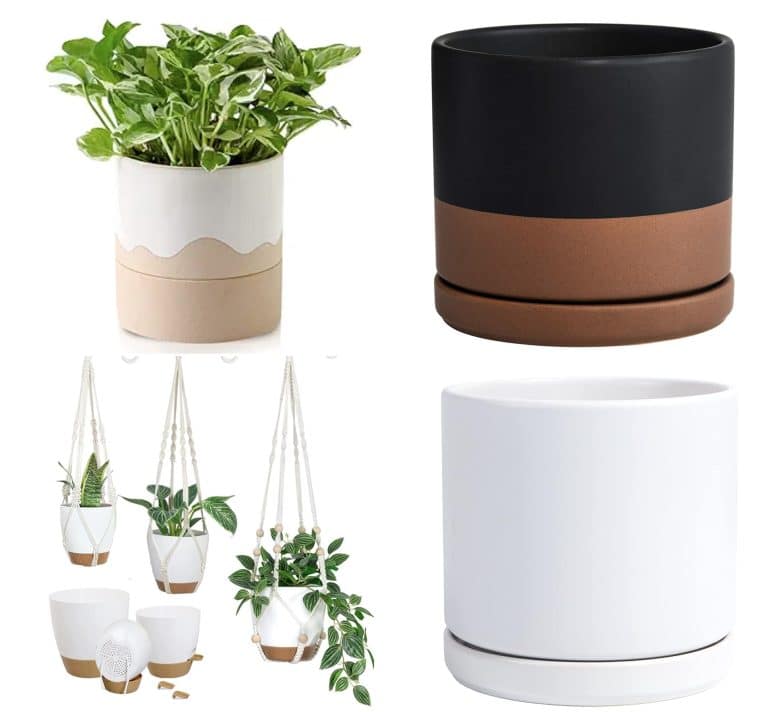
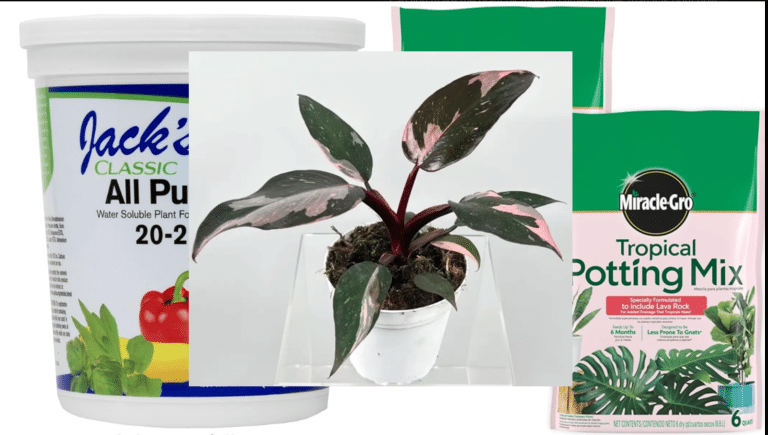
Our favorite soil and fertilizer for Hoya Kerrii


2. Care mistakes we have learnt to avoid with Hoya Kerrii plant
- Watering it like a normal succulent: Hoya kerrii has thick leaves but surprisingly slow roots, so water lingers in the soil far longer than you expect. This causes root rot before the leaves show any wrinkling. We water sparingly and only when the pot feels extremely light, using a chunky mix that dries fast.
- Keeping it too far from a window because “it barely grows anyway”: Yes, it grows slowly, but in dim light it won’t grow at all. It becomes a single-leaf ornament for years. We keep ours right beside an east or south-facing window so it has a chance to produce real vines.
- Using a pot that’s too big for its tiny root system: The roots are small compared to those thick leaves, and oversized pots trap moisture around them. This stalls growth and leads to sudden leaf yellowing. We use the smallest pot that still drains well and only size up when roots circle the bottom.
- Watering the same way in winter and summer: In Brooklyn winters, Hoya kerrii drinks almost nothing, and any extra moisture sits cold around the roots. This makes it extremely prone to winter rot. We cut watering to once every 4–6 weeks in winter and resume a slightly more generous rhythm when summer heat and long light return.
3. A real issue we have had with Hoya kerrii plant in our home
Our Hoya kerrii sat as a single heart-shaped leaf for almost two years, and we thought it was just “slow.” What surprised us was learning that ours barely rooted because it wasn’t getting enough direct-adjacent light to push new growth. It wasn’t dormant—it was starving for brightness. Moving it right up to our south-facing window finally triggered a tiny new vine a few months later.
lineage and Symbolism
The Sweetheart Hoya Kerrii (aka Hoya Kerrii kerrii), from the Apocynaceae family, is known for its heart-shaped succulent leaves. Often sold as a single-leaf cutting around Valentine’s Day, it’s not just a novelty—it’s a slow-growing but long-living vining plant when mature!
In our Brooklyn home, we’ve let ours climb a bamboo trellis in bright indirect light, and it rewards us with thick green leaves and—we have heard this, though not experienced first hand—clusters of fragrant star-shaped flowers.
This Hoya Kerrii stays compact early on but can reach several feet in length over time. Its glossy, thick leaves store water like a succulent, making it ideal for forgetful plant parents. One odd but fun fact: A single-leaf cutting with no node will stay alive for years… and never grow! (Perhaps true of a lot of resilient succulents :))
Sweetheart Hoya Kerrii symbolizes enduring love, patience, and emotional steadiness. It’s a perfect match for Taurus—slow to bloom but loyal to the core.
Read also: Hoya rope care guide
($19)

(~$23)
What we wish we knew before buying
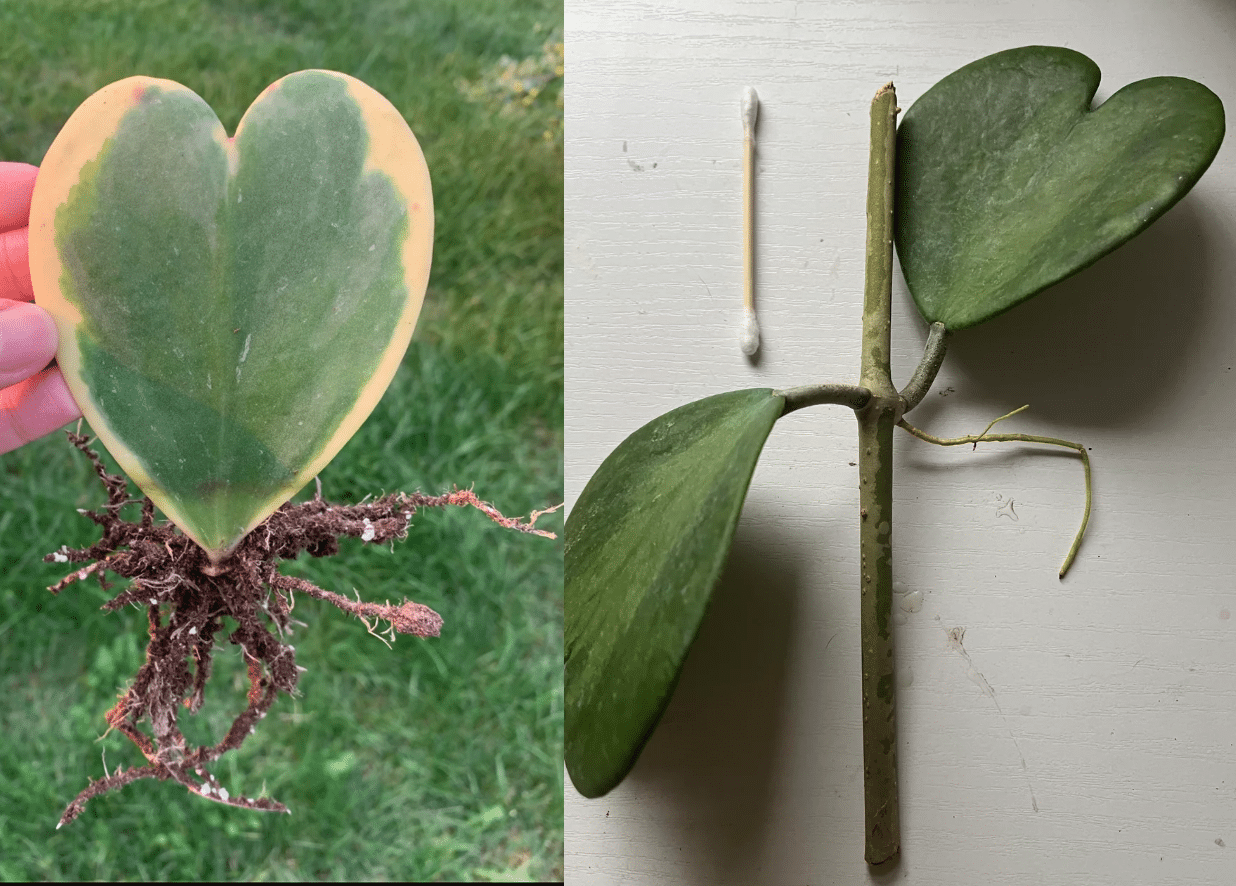
Most single-leaf Hoya kerrii plants will never grow vines unless they were propagated with a piece of stem: We didn’t realize that many heart-shaped plants sold around holidays are just rooted leaves, not full nodes capable of new growth. They stay adorable—but frozen—no matter how well you care for them. We wish someone had told us to look for a plant with an actual stem attached if we wanted a real climbing Hoya, not just a decorative heart that sits still forever.
Hoya Kerrii plant care infographic
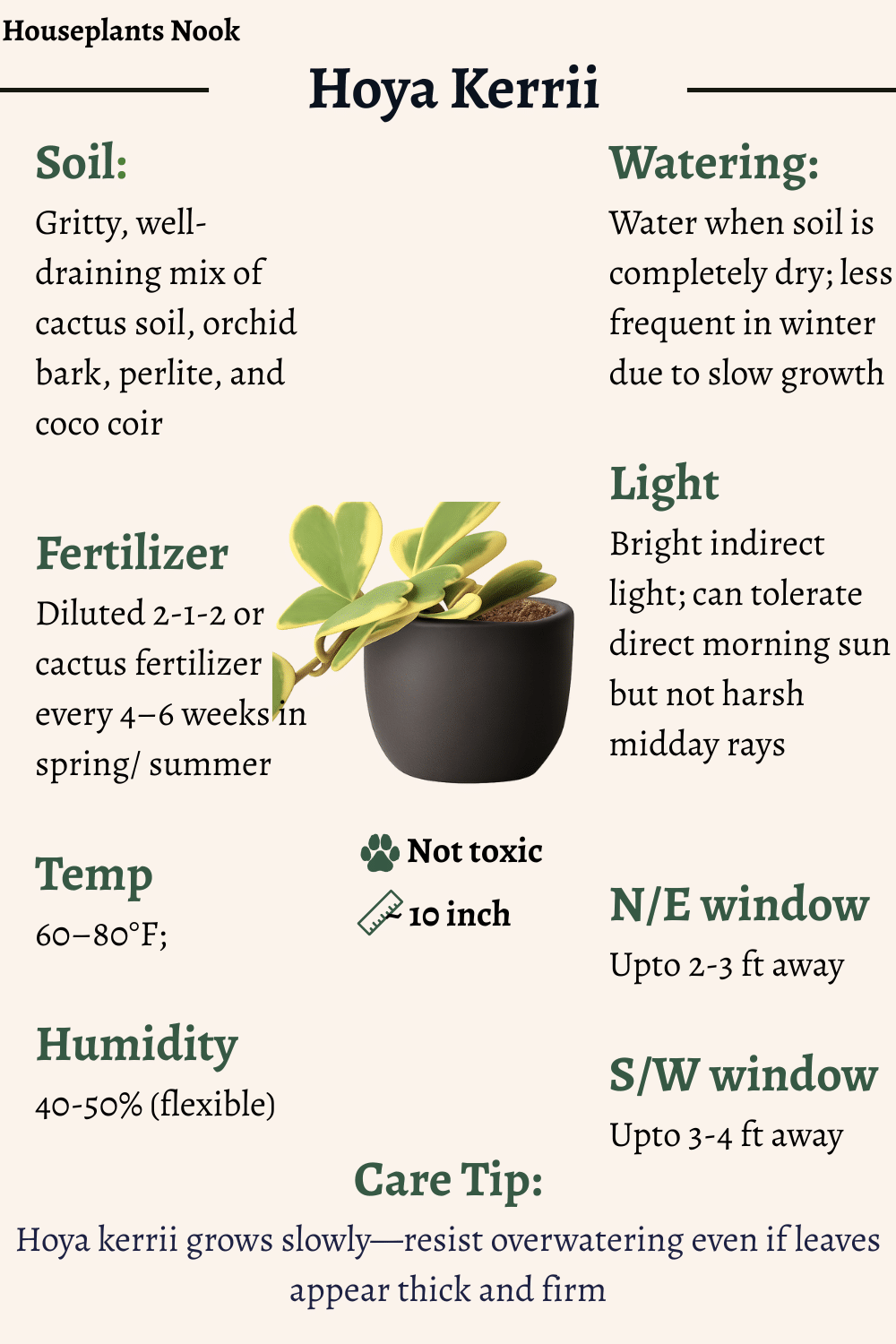
📋 Use this infographic on your site — copy the code below:
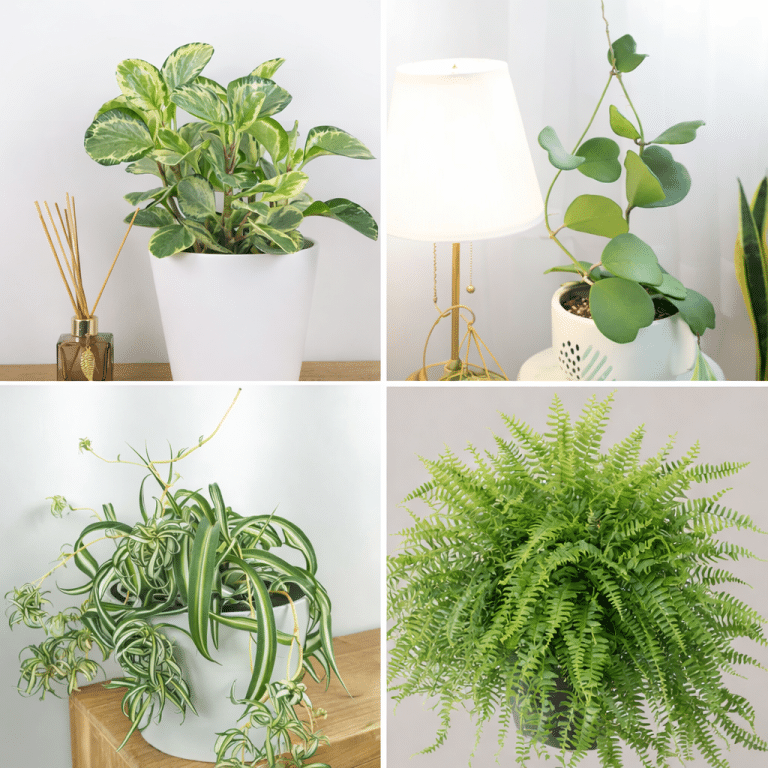
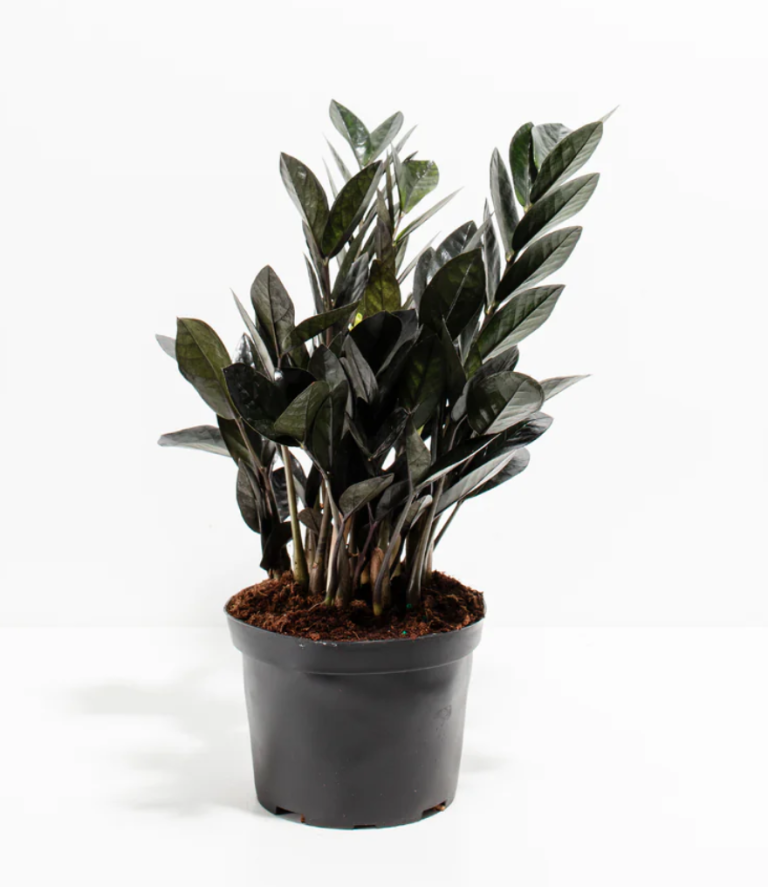
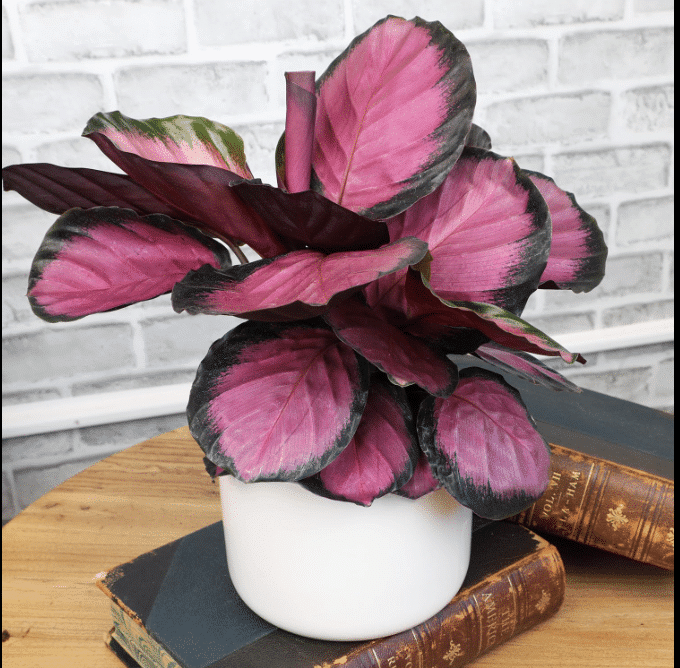
Plant that pairs well with similar care needs

Light and placement and seasons
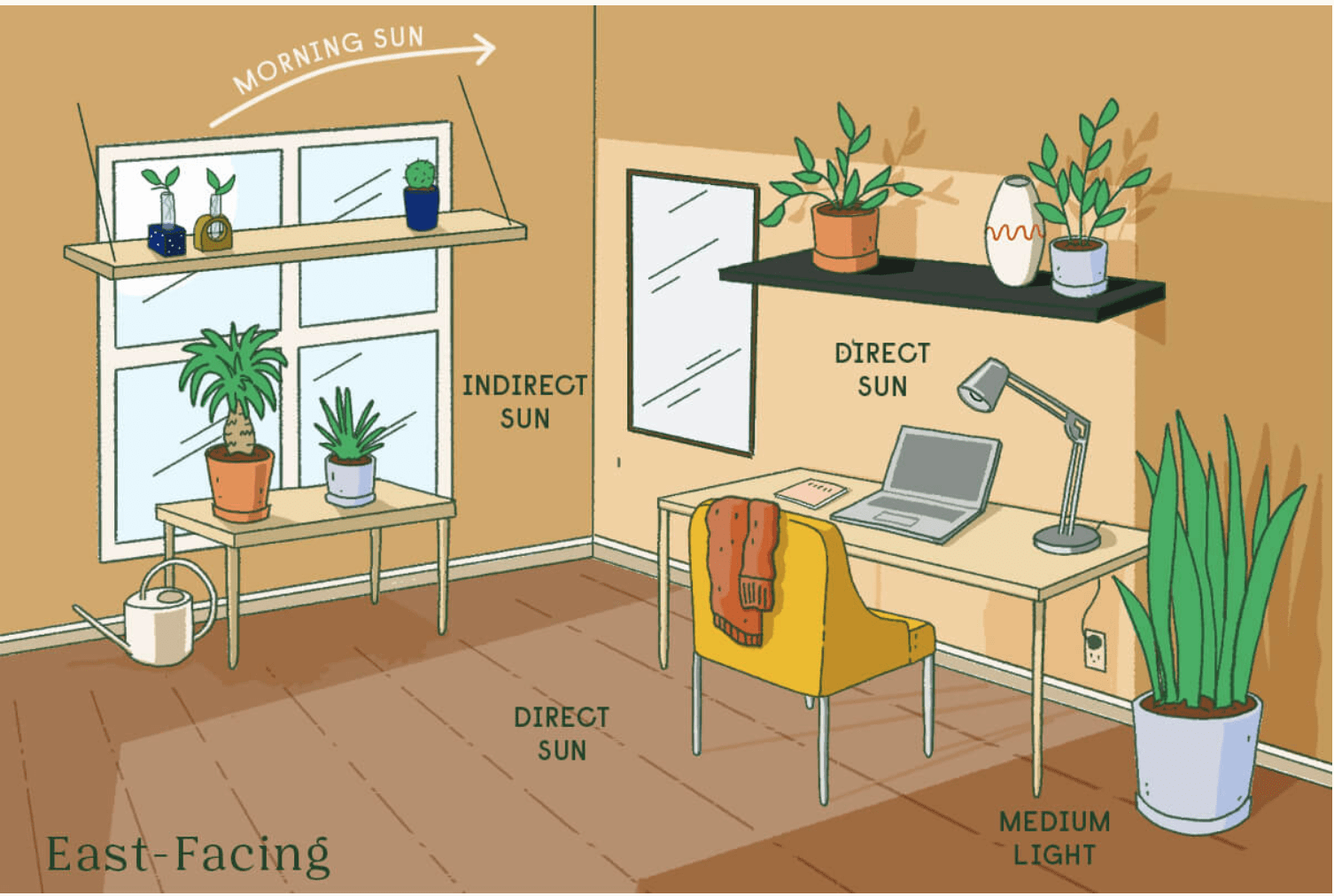
What is the light requirement for Hoya Kerrii plant?
Sweetheart Hoyas prefer bright, indirect light for steady growth and flowering potential. We keep ours near an east-facing window—too much direct sun can scorch the leaves, while too little light will stunt growth.
According to the Thesill “Hoyas thrive in bright, indirect light and can tolerate some direct morning sunlight.”
How to know if Hoya Kerrii plant is not getting right amount of light?
Insufficient light results in stalled growth, faded green coloration, or leaf drop. If the leaves bleach or wrinkle, too much direct sun may be the culprit. Adjust gradually to prevent shock.
Where to place Hoya Kerrii plant and where to avoid?
We place our Hoya Kerrii kerrii within 3 feet of an east-facing window or behind a sheer curtain in a south-facing room. Bright kitchens and bedrooms work great, but avoid placing it in dim hallways or windowless corners.
Also avoid drafty windows and radiators. This plant likes stability—and bright filtered light over extremes.
Read also: our guide to making trailing plants grow longer vines, and making them climb
How hoya kerrii behaves through the seasons?
Spring: Growth finally stirs, and if the plant has a stem, this is when new leaves or tiny vines appear. We water a bit more often because the soil dries faster and begin light fertilizing once a month. We keep it right beside an east or south window for bright, gentle light. The only issue is wrinkling if we underwater during its first growth push.
Summer: This is its strongest season, but still slow compared to other Hoyas. We water deeply but let the soil dry fully between waterings, sometimes for 10–14 days. Strong light from a south window helps it build thick, healthy leaves without scorching. Heat can accelerate rot if soil stays wet, so we use a very chunky mix.
Fall: Growth slows sharply and may pause altogether. We reduce watering because cooler nights keep soil moist longer. Light drops fast in Brooklyn, so we pull it even closer to the window. Old leaves may toughen or stop expanding, which is normal for this plant.
Winter: Growth essentially stops, and the plant becomes extremely sensitive to overwatering. We water sparingly—sometimes every 4–6 weeks—judging by pot weight and dryness. We keep it in the brightest window we have without exposing it to cold drafts. The main winter issue is root rot from “just in case” watering, so we mostly leave it alone.
Soil
What soil composition to use for Hoya Kerrii plant?
Hoya Kerrii kerrii needs fast-draining, airy soil that mimics its epiphytic jungle roots. We have in the past used 40% cactus mix, 30% orchid bark, 20% perlite, and 10% compost for nutrients without holding excess water.
The chunky mix prevents root rot while giving roots something to grip.
Best soil to use for Hoya Kerrii plant?
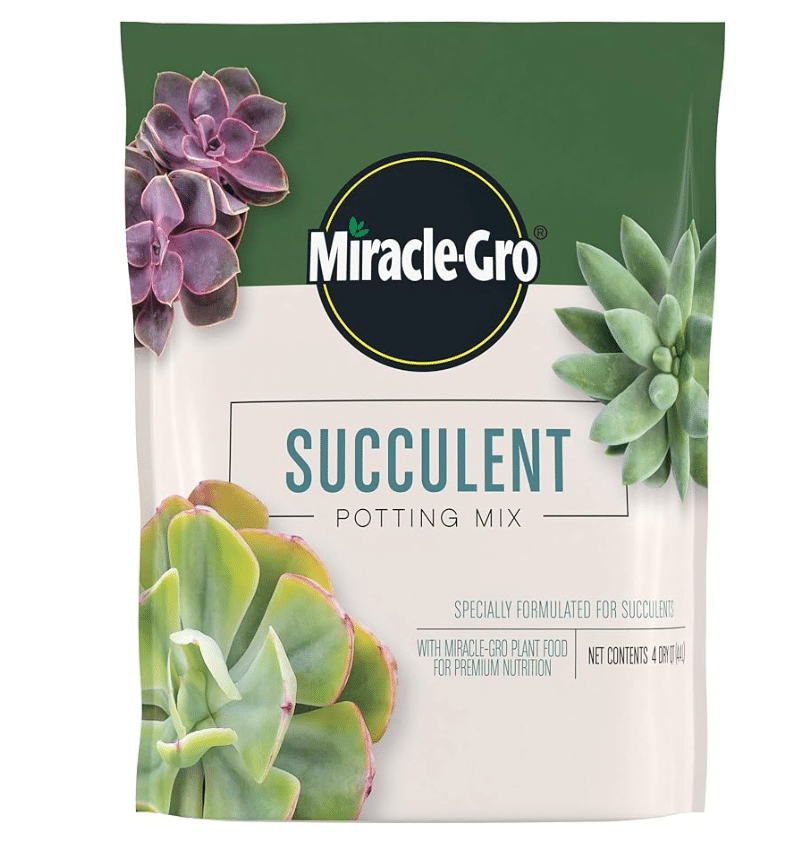
This is our go-to succulent soil that we use for ALL succulents. We recommend this for money, for its quality, and how it has served us through years for all succulents we have at our home.
Temperature and Humidity
What is the best temperature condition for Hoya Kerrii plant?
Ideal temperature is 65–85°F. Temperatures below 50°F can cause leaf drop or slow growth dramatically. We keep our Hoyas away from winter windows and never let them sit in rooms colder than 60°F overnight.
Consistent warmth supports flowering in mature plants.
What is the best humidity condition for Hoya Kerrii plant?
Sweetheart Hoyas prefer 50–60% humidity. Ours does fine in average indoor humidity, but it really perks up when grouped with other plants or placed in the bathroom.
Low humidity can delay growth or wrinkle the leaves slightly. A pebble tray or room humidifier helps during dry winters.


fertilizer
What is the best fertilizer composition to use for Hoya Kerrii plant?
Use a balanced 10-10-10 liquid fertilizer or a bloom booster (low nitrogen, higher phosphorus) if you’re encouraging flowers.
DIY Fertilizer Recipe: Mix 1 tablespoon fish emulsion with a teaspoon of molasses in 1 liter of water. Use once a month in spring and summer to promote flowering and foliage health. This blend supports both phosphorus needs and beneficial soil microbes.
How and when to fertilize Hoya Kerrii plant?
Fertilize monthly during the active season (spring to early fall) using a diluted orchid or bloom-boosting fertilizer. Apply after watering, directly to the soil. Avoid feeding in winter or on dry roots, and never spray on leaves.
What are the signs Hoya Kerrii plant needs food?
New growth slows or stops, older leaves fade in color, and the plant may refuse to flower. We usually see this after 3–4 months without feeding—one dose of diluted bloom fertilizer often revives it.
A healthy plant will regularly push out new leaves during warm seasons if nutrients are available.
Best fertilizer to use for Hoya Kerrii plant?

We started feeding our Hoyas with Grow Queen’s organic succulent food once a month during spring and summer, and it gave us exactly what we needed—slower, steady growth with richer green leaves and no burn or stress. It’s clear the plants were responding; they weren’t just surviving, they were thriving.
When we wanted to encourage blooming or longer vines, we’d introduce a balanced liquid fertilizer with a moderate phosphorus boost—something like a 2‑1‑2 or 3‑1‑2 mix. That extra punch helped our Hoyas put out more flowers and fuller shoots, especially during brighter times of the year.
So here’s our routine: diluted Grow Queen on the regular, plus a bloom‑boost swap if we’re aiming for flower power. Come fall and winter, we give everything a rest.
Pots and planters
What are the best pots to use for Hoya Kerrii plant?
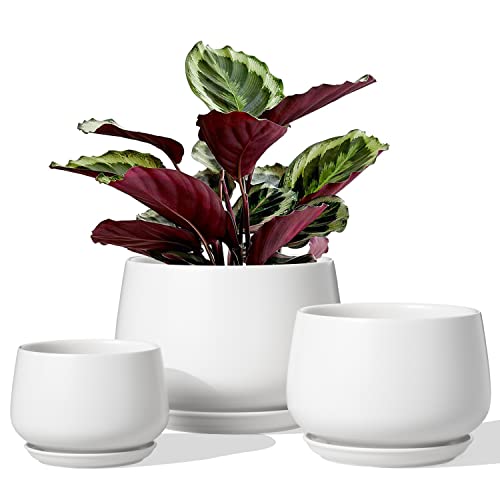
Use a terracotta or ceramic pot with good drainage. Hoyas like slightly snug pots and don’t need frequent repotting (We have actually not repotted this one in 4 years, oops!). We use 4–6 inch shallow pots to keep roots slightly rootbound.
Avoid plastic unless highly breathable. Shallow pots with orchid bark mix work best for aeration.

Read also: Best hanging baskets, and best trellises for hanging plants. And our guide to styling trailing houseplants
Watering
How and When to water Hoya Kerrii plant?
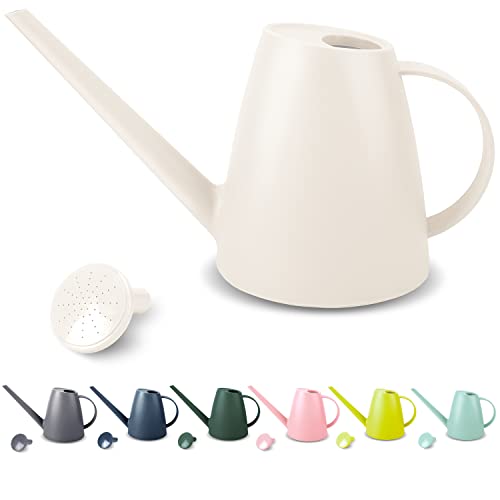
Water only when the top 2–3 inches of soil are dry—usually every 10–14 days in warm months, less in winter. We lift the pot and check weight—it feels light when dry. Water thoroughly and let excess drain out.
Hoya Kerrii roots hate soggy soil. It’s better to underwater than overwater. Like almost once in three weeks of a month during winter.
what are the Signs of over or under watering Hoya Kerrii plant?
Overwatering: Yellow leaves, mushy stems, and leaf drop.
Underwatering: Wrinkled, soft, or limp leaves that bounce back after watering.
We’ve lost a leaf or two to both mistakes—monitoring weight and sticking to a 2-week rhythm helps prevent this.

pruning
When to prune Hoya Kerrii plant and why?
Pruning helps shape the plant and encourage fuller growth from the base.
When to prune:
Spring or early summer
After flowering (if mature)
To remove leggy or damaged stems
how to prune Hoya Kerrii plant?
Use clean scissors to cut just above a node
Never cut the flower spurs—they rebloom
Trim vines back to desired length to promote branching
how to care after pruning Hoya Kerrii plant?
Let cuts dry naturally
Avoid watering for 2 days afterward
New vines often emerge near the cut site in a few weeks
propagating
When to Propagate Hoya Kerrii plant?
The simplest and most effective method is stem cuttings in water.
When to propagate:
Late spring to summer
After pruning a healthy, mature stem with visible nodes
how to Propagate Hoya Kerrii plant?
How to propagate:
Cut 4–5 inch stem with at least one node and leaf
Let it callous for 1 day
Place node in clean water, away from direct sun
Change water every 5–7 days
Once roots reach 2 inches, transfer to airy soil mix
how to care after propagating Hoya Kerrii plant?
- Keep in bright, indirect light
- Water sparingly until roots fully anchor
Troubleshooting common issues

Why are the leaves of my Sweetheart Hoya Kerrii yellowing?
Yellowing often means overwatering.
Let soil dry completely and repot if roots are soft or mushy.
Why won’t my Sweetheart Hoya Kerrii grow?
Lack of light or warmth slows growth.
Move it closer to bright indirect light and raise temps if needed.
Why are the leaves wrinkled or soft?
Dehydration is the most common cause.
Water thoroughly and check for long dry spells between waterings.
Why is my Hoya Kerrii not blooming?
Insufficient light or immaturity.
Give it more bright light and patience—it may take years to flower indoors.
Why are the leaves falling off?
Stress from overwatering, cold drafts, or low humidity.
Stabilize conditions and avoid sudden environmental shifts.
Why is my cutting not rooting?
Low temps or stagnant water can delay rooting.
Refresh water more often and keep the cutting warm.
Why is my Sweetheart Hoya Kerrii stuck as one leaf?
If sold as a leaf without a node, it won’t grow further.
Only cuttings with nodes can produce vines.
FAQ
Is Sweetheart Hoya toxic to pets?
Mildly toxic. It contains saponins that can irritate if ingested by cats or dogs. Keep out of reach.
What are the benefits of the Sweetheart Hoya?
Low maintenance, beautiful shape, air-purifying qualities, and its symbolic heart leaf make it perfect for gifts and small spaces.
Can I put my Hoya outside?
Yes, if temperatures stay above 60°F and the spot is shaded. Gradually acclimate it before moving it out in late spring.
Does it grow from a single leaf?
Only if it includes a node. A node-less leaf will live but not grow.
How fast does it grow?
Very slowly—especially indoors. With proper light, warmth, and feeding, growth improves after the first year.
Does it bloom indoors?
It can, but it needs bright light and maturity (3+ years). Flowers are fragrant and waxy.
How often should I repot?
Every 2–3 years or when roots circle the pot. Keep slightly rootbound for best performance.
What’s the best support structure For hoya plant?
A bamboo trellis, hoop, or stake works well as the plant starts to vine. Mature plants benefit from vertical structure.
How long does hoya plant live?
With proper care, a Hoya kerrii can live for decades. Ours has been going strong for over five years now.
Personal Quotes & Tips from Houseplants Nook (and Beyond!)
- “I use a lot of perlite but the most effective substrate I discovered is tree fern fiber. It’s like crack for my Hoya Kerrii. I decided to try it because lot of mine were just zombies or dying. Even if they were in leca, pon or chunky mix, they wouldn’t grow. After I added tree fern fiber, they woke up and started growing.” Source: Reddit
- “Best care tip I have is that if you can bend the leaves in on themselves too much, it’s time for watering (it’s called the taco test!). I prefer to bottom water my Hoya Kerrii, so I’ll fill a container with water and let them sit in it for about an hour or until the water level in the container stops dropping.” Source: Reddit
- “When a Hoya Kerrii dries out, I don’t let it go dry for days. This will most likely result in stunted growth and baby leaves lost. When my hoyas are dry, I water them. Sometimes this is indeed every few days, but certainly not over one week. I am always shocked when I hear someone is watering their hoyas every two months. Something is not right there.” Source: Hoya Kerrii Lover
- “Once a location is found that better provides the conditions they want, they will usually shift their focus back to growing leaves again. Some Hoya Kerrii start off with lovely big leaves, one after the other, dense and bushy, then suddenly shoot out long, leafless vines. A sign they are starting to mature to the point they want to climb. Totally normal.” Source: Love That Leaf
- “I used to let mine get pretty dry and after I read an article that said Hoyas need more water than so-called ‘authorities’ claim, I started watering mine more and started seeing good growth and blooms.” Source: Houzz