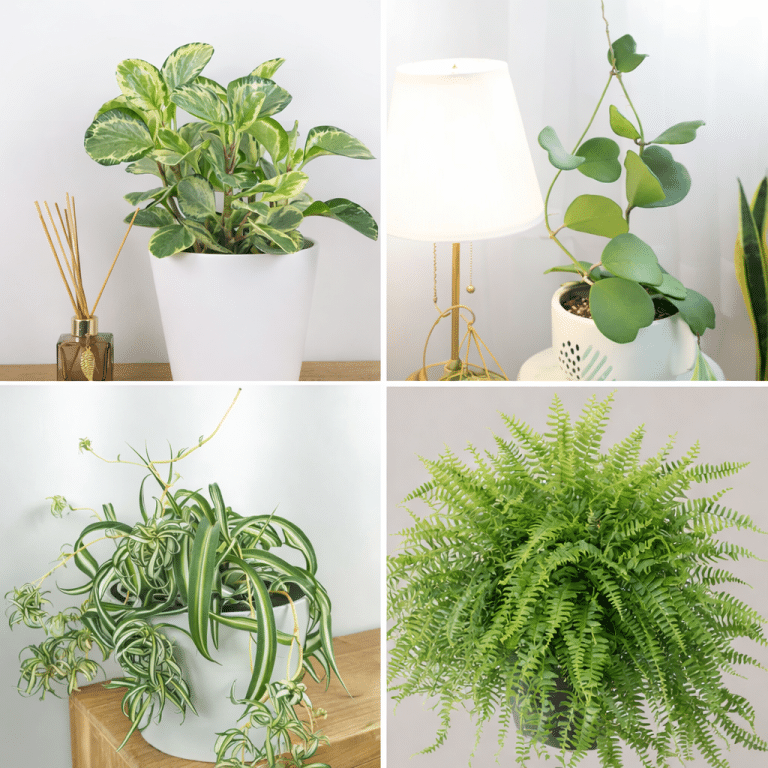
8 Best Low-Light Indoor Trees for Dim Rooms
These low light indoor trees tolerate dim rooms and north-facing windows. See which tall plants grow well indoors without strong sunlight. Discover how we keep them safe with your furry animals!

We are an AD-FREE community drive site. When you purchase through links on our site, we may earn an affiliate commission, which helps sustain our blog!
Imagine the subtle rustling of leaves, the soothing green hues of your indoor trees that are thriving even in dimmest, low light corners of your living room, or your office. This is not just an aesthetic choice – it’s also a lifestyle upgrade supported by studies like the one from the University of Illinois Urbana-Champaign which highlights the benefits of indoor plants in restoring attention and reducing stress in offices and living rooms.
Over the years of living in our Brooklyn community home, we have brought in a variety of low-light indoor trees: from the tall corners of our living room to the shaded windows of our kitchen, and also in some rooms on our top floor where we don’t allow our furry animals to roam around, and we can’t wait to share what we have learnt!
Try our Best Indoor Plants tool for a personalized plant recommendation.
Summary:
What Are the Best Low-Light Indoor Trees?
Our strongest choices for genuinely dimmer rooms are Lady Palm, Parlor Palm and Kentia Palm.
Corn Plant and Dragon Tree are excellent choices when you want a taller upright plant, while Rubber Tree and Money Tree can tolerate somewhat lower light but perform better when the room is not extremely dim.
If you do not specifically need a true tree or palm, Cast Iron Plant, ZZ Plant and Snake Plant tolerate even lower light and make excellent tall floor plants.
What Does “Low Light” Mean for an Indoor Tree?
We use roughly 50–250 foot-candles as a practical low-light range indoors. That can mean a north-facing room, a position several feet from a brighter window, or a dimmer corner that still receives usable daylight.
Low light does not mean complete darkness. A windowless room eventually needs a grow light if you want a living tree to remain healthy.
Growth is also slower in low light. That means the plant uses water more slowly, so one of the biggest mistakes is watering a dim-room tree as often as the same plant growing beside a bright window.
Best Low-Light Indoor Trees Compared
We rank these by how well they tolerate genuinely lower indoor light, not simply whether they can survive away from a sunny window.
| Indoor tree | Low-light tolerance | Typical indoor height | Maintenance | Best for |
|---|---|---|---|---|
| Lady Palm | Excellent | 4–8+ ft | Low–moderate | Dimmest rooms |
| Parlor Palm | Excellent | 2–6 ft | Low | Easy low-light palm |
| Kentia Palm | Excellent | 6–10+ ft | Moderate | Tall statement tree |
| Corn Plant | Very good | 4–8+ ft | Low | Easy upright tree |
| Dragon Tree | Very good | 6–10 ft | Low | Narrow floor spaces |
| Rubber Tree | Moderate | 6–10 ft | Low–moderate | Large broad foliage |
| Money Tree | Moderate | 6–8 ft | Moderate | Medium-low light rooms |
← Swipe horizontally on mobile to see the full table →
Infographic of low light indoor trees

Indoor trees and floor plants that truly thrive in low light
These trees actually grow lush leaves even in low light conditions as seen in our dimmest of the rooms in our Brooklyn community home.
1. Cast iron plant

Pet safe
Low light
Grows to 4-6 feet
East/west/north
Pet safe
low light
grows to 2 feet
East/west/north
The Cast Iron Plant (aka Aspidistra elatior): This low light indoor tree, from the Asparagaceae family has long, glossy, dark green leaves. We’ve placed ours in the dining room on the first floor where it handles the low light beautifully. Styled in a classic terracotta pot, it brings a warm and rustic feel to our eating nook.
When it grows, it can reach up to 6 feet tall and wide — a perfect hardy and attractive plant that creates a sense of sanctuary with little to no effort.
Read also: Cast Iron Plant care guide
Care tip:
- Thrives in low to medium light and needs watering only when the top inch of soil is dry — about every 2-3 weeks.
- Watch for yellowing leaves that can indicate overwatering. This is a hardy plant 🙂
Propagation tip:
- Divide the root clump with at least 2-3 leaves and healthy roots, and then plant divisions in well-draining potting soil.
- Keep in low to medium light.
- Watering only when the top inch of soil is dry. New growth will appear in a few weeks.
Symbolism and zodiac signs:
- The Cast Iron Plant symbolizes endurance and resilience — it ideal for Capricorns who value perseverance and stability
Pros and cons


$78
“The Cast Iron Plant is perfect for anyone who wants a hardy, low-maintenance plant. Mine arrived in perfect condition and looks great” – thesill.com customer
2. Snake plant

Toxic
Low light
Grows to 4 feet
East/west/north
Toxic
low light
grows to 4 feet
East/west/north
The The snake plant (aka Sansevieria trifasciata): This low light indoor plant, from the Asparagaceae family, is a stunning and sturdy addition to any home. It has long, upright leaves with yellow edges and green banding. We have placed ours in one of the east-facing bedrooms on the top floor where it enjoys bright, indirect light.
We have styled this plant in a sleek, white ceramic pot that has lines and is matte finish and is positioned near the window. When fully grown, it can reach up to four feet tall, and though it rarely flowers, when it does, it produces small but fragrant greenish-white blooms that are a an absolute treasure to watch.
Read also: Cylindrical Snake Plant and Whale fin snake plant care
Care tip:
- Water every 2-3 weeks, and allow the soil to dry out completely between waterings.
- It thrives in bright, indirect light but can also tolerate low light conditions.
- Watch for drooping or yellowing leaves, which can indicate overwatering.
Propagation tip:
- Cut a leaf into sections about 3-4 inches long, making sure each piece has at least one horizontal stripe – the node.
- Place the cut ends into a container filled with about an inch of water.
- No leaves should be submerged. Change the water weekly and roots will appear in about 3-4 weeks. When they are a few inches long plant in well-draining potting soil.
Symbolism and zodiac signs:
- Symbolizes good luck, purity, and positivity. It’s often associated with the zodiac sign Taurus, reflecting their steadfast and resilient nature.
Pros and cons


$58
“This plant is almost indestructible! Perfect for beginners and looks great”
3. ZZ plant

mildly Toxic
Low light
Grows to 4 feet
East/west/north
Mildly Toxic
low light
grows to 4 feet
East/west/north
The ZZ Plant (aka Zamioculcas zamiifolia) from the Araceae family, is a low light indoor plant known for its resilience. We’ve placed ours in a gray ceramic planter in the north-facing bedroom. Its glossy, emerald green leaves can thrive even in low light to medium light conditions.
It rarely needs watering—just a sip every couple of weeks, and it can grow up to 3 feet tall. Simply close your eyes and buy this plan – you will never regret it.
Read also: Ultimate ZZ plant care guide
Care tip:
- Water it every 2-3 weeks. Allow the soil to dry out completely between waterings.
- Watch for yellowing leaves that indicate overwatering.
Propagation tip:
- Cut a healthy leaf with an inch of stem . Place it in a glass of water with only the stem submerged, not the leaf.
- Place the glass in bright, indirect light and change the water every week.
- Roots will develop in 3-4 weeks, then plant the cutting in well-draining potting soil
Symbolism and zodiac signs:
- Often seen as a symbol of prosperity and endurance, this plant is best suited for taurus and capricorn!
Pros and cons


$41
“ZZ is a favorite in your house.. it sits in our bedroom next to lamp. We haven’t killed it in 3 years!”
Indoor trees that tolerate low light conditions
These plants can adapt to low light but grow best with some indirect light. They’ll survive in dim spaces but may not be as lush or fast-growing. Still worth considering, if you ask us. Especially if you already buy a tall corn plant, or a Tall burgundy tree.
1. Corn plant

Toxic
Low light
Grows upto 6 feet
North/west/east facing windows
Toxic
low light
grows to 6 feet
North/west/east facing windows
Corn Plant (Dracaena fragrans) is one of our favorite choices when we want the shape of a small indoor tree without needing an especially bright room.
It can tolerate lower light surprisingly well, although the foliage becomes narrower and growth slows when conditions become very dim.
We particularly like the cane-like trunk because it gives the plant much more of a tree silhouette than low-light plants such as ZZ or Snake Plant.
Care tip: Keep the soil lightly moist during active growth, then allow more drying as growth slows in winter.
Best for: Easy-care height in a dimmer living room or office.
Care tip:
- It prefers the soil to be slightly dry between waterings—usually every 1-2 weeks, depending on your home’s humidity.
- Keep an eye out for brown leaf tips, which could indicate overwatering or too much fluoride in the water.
- Use distilled or non-fluoridated water to avoid this common issue or when this issue shows.
Propagation tip:
- Cut a 4-6 inch section from a healthy, mature stem just below the leaf node.
- Remove the lower leaves and place the cutting in a glass or jar filled with water – no leaves are to be submerged.
- Place it in a spot with bright, indirect light and change the water weekly to prevent bacterial growth. Roots typically begin to form in 4-6 weeks
Symbolism and zodiac signs:
- Symbolizes endurance and perseverance due to its hardy nature. Virgos, for their meticulous and nurturing qualities, are well-suited to care for this one.
Pros and cons


$43
“For over five years, this plant has been such a resilient and forgiving addition to my living room”
2. Money tree

pet safe
Low light
Grows upto 8 feet
North/west/east facing windows
Pet safe
low light
grows to 8 feet
North/west/east facing windows
Low-light tolerance: Moderate
Money Tree (Pachira aquatica) tolerates somewhat lower indoor light, but we would not choose it for the darkest room.
Ours performs better when it still receives useful indirect daylight, even if that light is softer than what we give more demanding trees.
A mature indoor Money Tree can reach roughly 6–8 feet, giving it a genuine tree-like presence without an enormous footprint.
Care tip: Keep the soil moist but well drained and never allow the pot to sit in standing water.
Best for: Medium-low indirect light where you want a true trunk-and-canopy shape.
Care tip:
- Aim to water it every 1-2 weeks, allowing the soil to dry out slightly between waterings.
- Keep an eye out for yellowing leaves, which might indicate overwatering.
- A standout feature of this plant is its braided trunk that helps the tree store moisture, so occasional neglect in watering is often forgiven 🙂
Propagation tip:
- Select a healthy stem and cut a 6-inch piece just below a leaf node.
- Remove the leaves near the cut to prevent rotting.
- Place the stem in a glass of water, ensuring no leaves are submerged.
- Refresh the water weekly and keep the glass in a spot with indirect sunlight. Roots typically appear in about 4 weeks
Symbolism and zodiac signs:
- Symbolizes prosperity, good fortune, and financial success. Capricorns, known for their practicality, patience, and ambition, are particularly well-suited to nurture this plant.
Pros and cons


$43
“For over five years, this plant has been such a resilient and forgiving addition to my living room”
3. Parlor palm

Pet safe
Low light
Grows to 6 -10 feet
East/west/north
Pet safe
low light
grows to 6 feet
East/west/north
The Parlor Palm (aka Chamaedorea elegans) is a low light tree from the Arecaceae family. It is a classic favorite for indoor plant enthusiasts, known for its lush, green fronds that arch from delicate stems. We have styled ours in a terracotta pot. The Parlor Palm can reach up to 6 feet in height. While it doesn’t typically flower indoors, we have heard it might surprise you with small, inconspicuous flowers!
Read also: Ultimate Parlor palm care guide
Care tip:
- Water it moderately—allow the topsoil to dry out between waterings.
- It’s important to avoid overwatering to prevent root rot
- Keep an eye out for drooping or yellowing leaves which can indicate that the plant is either too dry or too wet
Propagation tip:
- Sow the seeds in a well-draining potting mix, barely covering them with soil.
- Keep the soil consistently moist and in a warm environment: germination can take several months.
Symbolism and zodiac signs:
- Symbolizes peace and tranquility, making it an excellent plant for creating a serene environment. Taurus, a zodiac sign known for its love of stability and natural beauty
Pros and cons
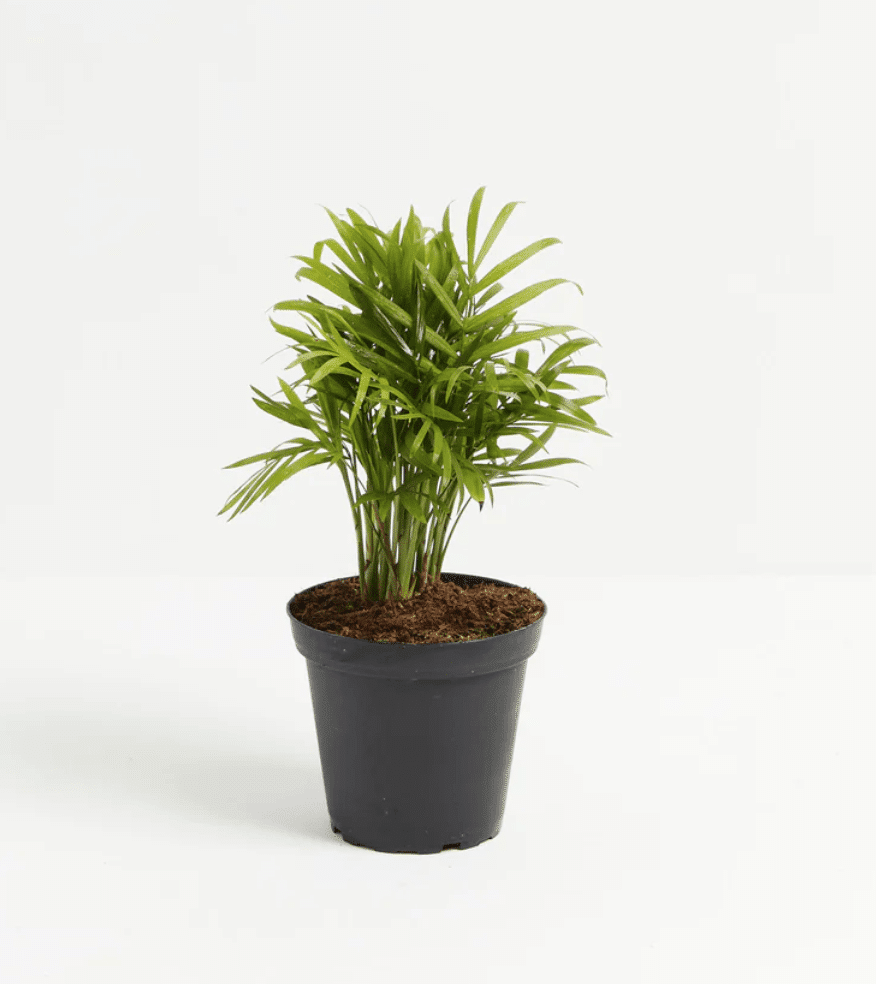
($~19)
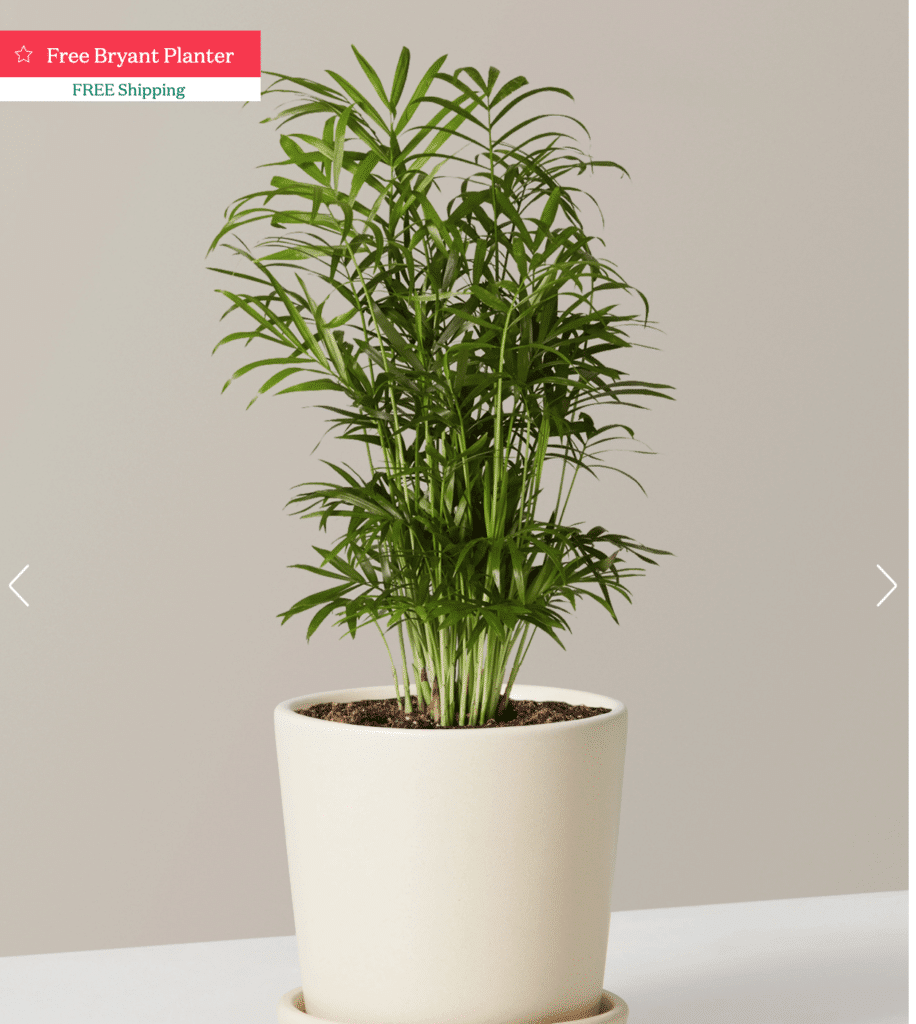
($38)
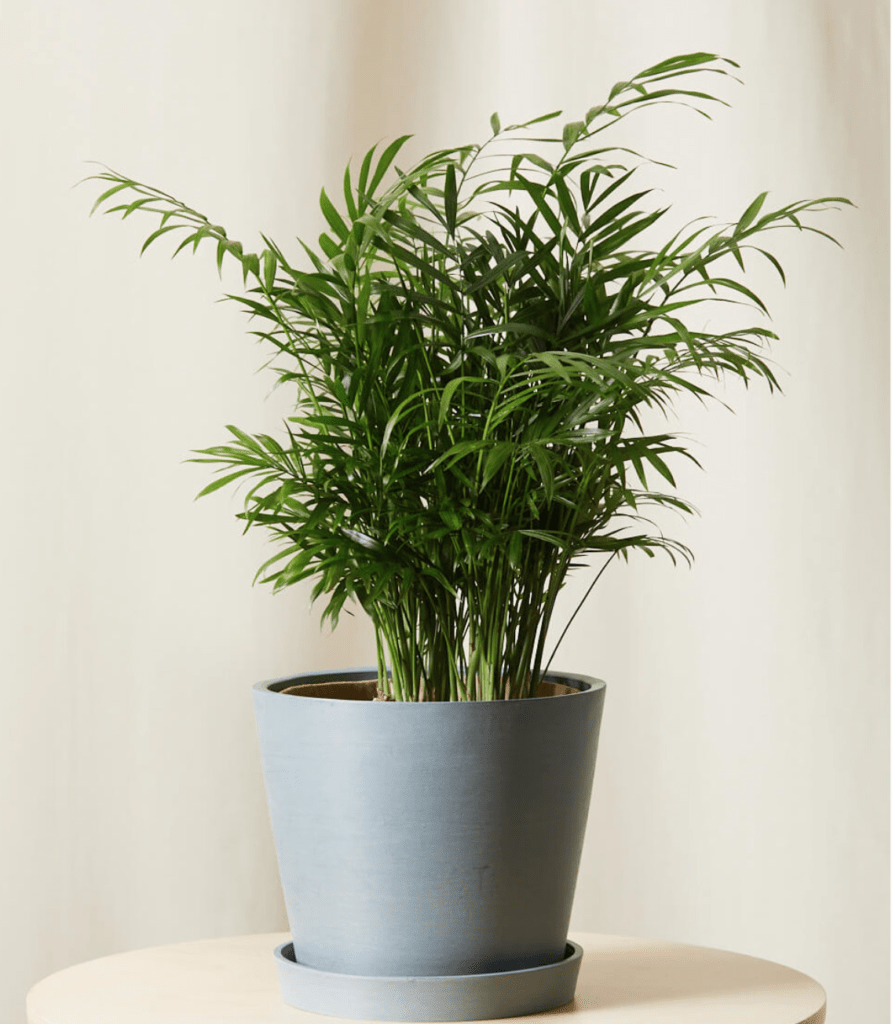
($35)
$43
“For over five years, this plant has been such a resilient and forgiving addition to my living room” – TheSill customer
4. Dragon tree (Dracaena)

Toxic
Low light
Grows to 6 feet
East/west/north
Toxic
low light
grows to 6 feet
East/west/north
Dragon Tree (Dracaena reflexa var. angustifolia, often sold as Dracaena marginata) works especially well when we want height without a wide canopy.
Its narrow trunk and arching leaves fit into floor spaces where a Kentia or Rubber Tree would eventually become too broad.
It tolerates relatively low indoor light, although we get stronger growth when we keep ours closer to bright indirect light.
Care tip: Let the upper portion of the potting mix dry between waterings and avoid keeping the roots continuously wet.
Best for: Narrow corners and smaller floor footprints.
Read also: Dracaena Reflexa care
Care tip:
- Water it every 1-2 weeks, allowing the soil to dry out between waterings to prevent root rot.
- Keep an eye on the leaf tips: browning may indicate that the air is too dry or that it’s getting too much fluoride from tap water.
Propagation tip:
- Cut a 4-6 inch stem section from a healthy plant, making sure it includes at least one leaf node.
- Strip the lower leaves and place the cutting in water. Ensure the node is submerged.
- Position the container in bright, indirect light and change the water every few days to keep it clean. Roots typically begin to appear in about 4-6 weeks
Symbolism and zodiac signs:
- Symbolizes strength, resilience, and fortitude. Scorpios who are known for their resilience are well suited for this plant!
Pros and cons

($28)
($43)

($35)
$178
“I water this plant once in three weeks in winter and it holds just great!”
5. Rubber tree

mildly Toxic
Low light
Grows to 10 feet
East/west/north
mildly Toxic
low light
grows to 10 feet
East/west/north
Low-light tolerance: Moderate
Rubber Tree (Ficus elastica) can tolerate lower light better than many large Ficus species, which is why we still include it here.
We would not choose it for the darkest corner, though. Ours performs best with medium to bright indirect light, and growth becomes slower as the available light decreases.
Its advantage is size: with enough vertical room, it can become a substantial indoor tree with broad, glossy leaves.
Care tip: Let part of the potting mix dry between waterings and avoid repeatedly moving an established plant between very different light conditions.
Best for: The brighter end of a low-light room when you want a large-leaved tree.
Also read: Burgundy Rubber Tree care and styling
Care tip:
- The Rubber Plant thrives in low to medium indirect light.
- Needs watering when the top inch of soil is dry. Avoid direct sunlight to prevent leaf scorch.
- Mist occasionally to keep its bold foliage glossy!.
Propagation tip:
- Cut a 6-inch stem with at least two leaves, place it in water until roots are 1-2 inches long (about 4-6 weeks), then transplant into well-draining soil
Symbolism and zodiac signs:
- Symbolizes abundance and good fortune — perfect for Taurus, known for their patience and love for nurturing greenery
Pros and cons


$43
“The Ficus is a statement piece in my living room. The variegated leaves are stunning and it’s very easy to care for”
Indoor trees that do not do well in low light
- Fiddle Leaf Fig (Ficus lyrata) – becomes leggy, drops leaves from the bottom up, and eventually stalls completely when kept away from bright windows.
- Ficus Audrey (Ficus benghalensis) – needs consistent bright light; in dim rooms it drops leaves in waves and develops thin, weak new growth.
- Norfolk Island Pine – suffers severe browning indoors without bright, steady light; low light causes entire lower tiers to die off.
- Schefflera (Umbrella Tree) – grows sparse, leggy, and bends aggressively toward the nearest light source; often collapses on one side.
- Areca Palm – prone to spider mites and browning in dim rooms; needs strong light to maintain fronds indoors.
- Olive Tree (Olea europaea) – low light causes leaf drop, weak new branches, and susceptibility to pests; completely unsuitable for dim rooms.
How to choose the low light indoor trees for your needs?

Which Low-Light Indoor Tree Is Easiest to Keep Alive?
For us, Corn Plant and Dragon Tree are among the easiest combinations of height, low-light tolerance and forgiving care.
If you want a palm, Parlor Palm is usually easier in ordinary indoor conditions than Majesty or Areca Palm.
Which Indoor Tree Handles the Lowest Light?
Lady Palm is our first choice for the dimmest conditions, followed by Parlor Palm and Kentia Palm.
Even these plants still need usable daylight. If the room is effectively windowless, use supplemental grow lighting.
What Is the Tallest Low-Light Indoor Tree?
Kentia Palm, Dragon Tree and Rubber Tree can all become substantial floor plants indoors.
Remember that low light slows growth considerably, so a tree advertised as reaching 8 or 10 feet may take many years to approach that size in a dim room.
Which Low-Light Indoor Trees Are Pet Safe?
If pet safety is a requirement, don’t rely on this general list alone. See our Pet-Safe Low-Light Indoor Trees guide, where we verify the pet-safety status of each recommendation and compare the strongest choices for cats and dogs.
Here are the top 5 things to consider:
How to create perfect environment for low light indoor trees to thrive

Here are the top 5 things to consider:
Use the Brightest Part of the Dim Room
“Low-light tolerant” does not mean the plant benefits from darkness. We still position the tree where it receives the most useful indirect daylight available.
Water Less Often as Light Decreases
Lower light means slower photosynthesis and slower water use.
We therefore check the soil rather than keeping the same watering schedule after moving a tree into a darker position.
Watch the New Growth
Stretching, smaller leaves, increasingly sparse growth or strong leaning toward a window can all mean the plant needs more light.
Move the Tree Seasonally if Necessary
A spot that receives adequate daylight in July may be substantially darker in December. We move some of our large plants closer to windows during winter rather than leaving them in the same position year-round.
Use a Grow Light if the Room Is Truly Dark
No living indoor tree can remain healthy indefinitely without usable light.
If a room has no window or receives almost no natural daylight, add an appropriate grow light rather than searching for a plant that “needs no sunlight.”
FAQ
What are the best low-light indoor trees for beginners?
Cast iron plant is great for beginners who are looking for low light indoor trees.
Which Indoor Tree Is Easiest to Keep Alive?
Corn Plant and Dragon Tree are two of our easiest choices. Both tolerate lower light and do not require the constant moisture or humidity that more demanding palms need.
Is There an Indoor Tree That Needs No Sunlight?
No living tree can grow indefinitely with no usable light.
Low-light houseplants generally tolerate roughly 50–250 foot-candles, but a completely windowless room requires supplemental grow lighting.
What Is the Best Tall Indoor Tree for Low Light?
Kentia Palm is one of our favorite tall options. Dragon Tree and Rubber Tree can also become substantial floor plants, although Rubber Tree performs better at the brighter end of low light.
Do Indoor Trees Need Less Water in Low Light?
Usually, yes.
Lower light slows growth and water use, so the potting mix generally stays wet longer. Always check the individual plant and soil rather than simply extending a fixed watering schedule.
Conclusion
Selecting and maintaining low-light indoor trees requires careful consideration of both their environment and their specific needs, especially since these have the potential to become fixtures like furnitures in your space for years. By choosing trees that complement your home’s aesthetic and ensuring they are safe around pets and children, you set a great foundation for them to thrive. In our 4 storied brownstone where we live as a community, we have about 16 indoor trees spread throughout and we love seeing them as giant pieces of living furnitures that see through the flow of roommates coming and going from the space. Let us know in comments if you found this helpful, or if you have any questions, or if you have any tips that we have missed and help the plant community out!